Philippines: Department of Science and Technology Opens Additive Manufacturing Facility



3D printing continues to take hold in the Philippines, and government officials from the Department of Science and Technology (DOST) are embracing technology with the unveiling of the first Manufacturing Centre (AMCen) in the Philippines, where they plan to develop not only in hardware, but also related processes, and 3D printing materials.
Philippine officials are following the Industry 4.0 model, working to develop 3D printing and additive manufacturing processes within their country to include:
- Aerospace and defense
- Biomedical / hardware
- Printed electronics
- Agricultural machinery
- Automotive
AMCen will feature two separate research facilities:
- The Multiple Materials Platform for Additive Manufacturing (MATDEV) – a laboratory-scale facility for design and materials development
- The Research on Advanced Prototyping for Product Innovation and Development using Additive Manufacturing Technologies (RAPPID-ADMATEC) – responsible for creating innovation designs and rapid prototypes and focusing on 3D printing with metal powders. Scientists will also develop methods for fabricating, repairing and maintaining older or obsolete parts.
Researchers will be testing further AM processes with a variety of materials too like ceramics, polymers, nanomaterials, and combinations thereof. They plan to harness advantages of 3D printing like overall affordability, speed in production, and less waste of materials.
{Photo credit: OMLC)
“Additive manufacturing has limitless potentials–from aircrafts and automobile to medical and fashion applications–it is possible to create products for the same or lower cost without compromising quality. We are hopeful that with the establishment of AMCen we can see more researches geared towards this cutting-edge technology,” said Dr. Enrico C. Paringit, Executive Director for the Philippine Council for Industry, Energy, and Emerging Technology Research and Development (DOST-PCIEERD).
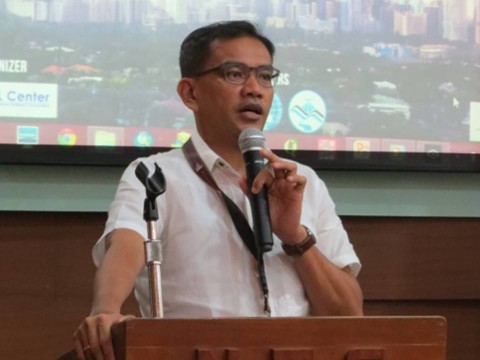
While the Philippines is already innovating in many industries with 3D printing, they plan to strengthen and expand efforts further at the facility, along with reaching out to academia within the country and enhancing research and development too.
Dr Rigoberto Advincula, Balik Scientist and Case Western Reserve University Professor, is slated to lead the new 3D printing center, along with researchers coming together from both the Industrial Technology Development Institute (ITDI) and the Metals Industry Research and Development Centre (MIRDC). Research and development efforts will strive to improve in quality and performance of the products created through 3D printing and additive manufacturing, along with enhancing strategies in manufacturing for the Philippines.

[Photo credit: OpenGov Asia]
What do you think of this news? Let us know your thoughts! Join the discussion of this and other 3D printing topics at 3DPrintBoard.com.
[Source / Images: OpenGov Asia; Republic of the Philippines]Subscribe to Our Email Newsletter
Stay up-to-date on all the latest news from the 3D printing industry and receive information and offers from third party vendors.
Print Services
Upload your 3D Models and get them printed quickly and efficiently.












You May Also Like
Aurora Labs Raises A$6M to Scale 3D Printed Turbojet Production
Australian metal 3D printing company Aurora Labs (ASX: A3D) is raising A$6 million ($4.2 million) to expand production of its small turbojet engines for defense and aerospace customers. The financing...
Russia’s 3D Printed Missiles & Can NATO Get Its Act Together?
For most of US history, however much the two major parties differed on domestic policy (in some cases a lot, overall less than you’d think), there was always essentially a...
Deals, Dollars and 3D Printing: What’s Moving in AM
There’s been plenty of business activity in additive manufacturing (AM) lately, with new deals, partnerships and investments in production. One of the bigger moves comes from Sweden, where investment firm...
Oerlikon Adds ATLIX’s xBUILD 5000, Plans More for 2027
Oerlikon has installed a new ATLIX xBUILD 5000 metal 3D printer at its facility in Huntersville, North Carolina, marking the first production deployment of the system worldwide. The machine will...