Additive Orthopaedics Receives FDA Clearance for 3D Printed Locking Lattice Plates



Additive Orthopaedics, LLC, headquartered in Little Silver, New Jersey continues to integrate biologics into their processes for patient-specific products for the foot and ankle. Their most recent advancement, delving further into the creation of 3D printed implants, has just received FDA clearance, allowing them to help patients around the world look forward to a better outcome.
With 510(k) clearance for their patient specific 3D printed locking lattice plates, Additive Orthopaedics begins the initial advance of their Game Plan™ surgical planning system that will be launched later in 2019. This segment of the system allows for lattice plates that assist in aligning and stabilizing small bones in the foot and ankle, to include:
- Osteotomies – the process of cutting out one or more bones to remove damage and allow the patient to have better mobility.
- Arthrodesis – fuses foot or ankle bones to help prevent pain in the joints, along with improving issues from arthritis or previous injuries which could have resulted in malformations.
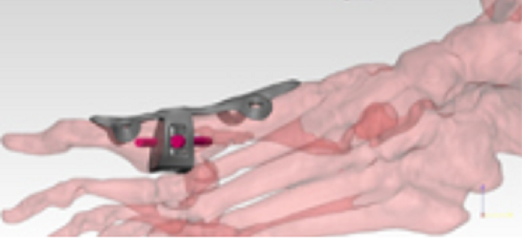
“There will always be a need for traditional off-the-shelf orthopaedic devices, but in cases of implant revisions, limb salvage, and trauma, using printing to manufacture a patient specific device can potentially lead to a better outcome,” said Greg Kowalczyk, President of Additive Orthopaedics. “Although we are still in the early stages for 3D printed patient specific implants, it has been a terrific journey developing the market in foot and ankle orthopaedics.”
We have followed this innovative implant manufacturer over the past few years, most notably after they completed their first round of seed funding and then went on to gain FDA approval for a 3D printed titanium digital fusion implant—their first product. Since, Additive Orthopaedics has expanded their work to include multiple comprehensive offerings such as the Hammertoe System, Bunion System, and other combinations. They continue research into biologics and tissue offerings, but 3D printing is a large part of what allows them to create implants never possible before.
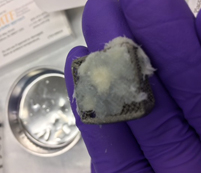 Along with the ability to create completely new types of surgical devices, 3D printing spans a wide range of industries—from aerospace to automotive, and from fashion to food. Affordability is one of the greatest bonuses in this type of production, whether in constructing a car or a DIY project in a home workshop.
Self-sustainability is also one of the most exciting quotients as the designer or engineer can take the whole manufacturing process into their own hands from A to Z—from the conceptual stages to designing and printing, to editing and making endless iterations affordably, to assembly and marketing. Cutting out the middleman for creating prototypes has changed the face of production for research scientists, architects, dentists, home design specialists, aeronautics engineers—and so many other individuals engaged in using progressive technology.
What do you think of this news? Let us know your thoughts! Join the discussion of this and other 3D printing topics at 3DPrintBoard.com.
Subscribe to Our Email Newsletter
Stay up-to-date on all the latest news from the 3D printing industry and receive information and offers from third party vendors.
Print Services
Upload your 3D Models and get them printed quickly and efficiently.












You May Also Like
3D Printed Chip Packaging Specialist XTPL Enters Japanese Market
The additive manufacturing (AM) industry naturally wants to move beyond prototyping to production at scale, and the industry is certainly starting to demonstrate success with that objective, especially in Asia....
UT Researchers Use 3D Printing to Develop “Tabletop EUV Lithography” Process
Photolithography, the semiconductor manufacturing process whereby lasers transfer patterns onto chemical layers coating a substrate, is one of the most amazing industrial processes humanity has ever created. It is also...
3D Printing News Briefs, May 30, 2026: RIMPAC 2026, Acquisition, Ceramic Implants, & More
We’re kicking things off with materials news in this weekend’s 3D Printing News Briefs. Then it’s on to a hybrid manufacturing system for a maritime exercise, an expansion of industrial...
The University of Utrecht: “3D Printing Could Change Who Gets to Become a Manufacturing Power”
For decades, manufacturing has mostly been controlled by countries with huge factories, lower labor costs, and industrial systems that took years, sometimes decades, to build. But Utrecht University human geographers...