Materialise Introduces New Simulation Module for Metal 3D Printing at TCT

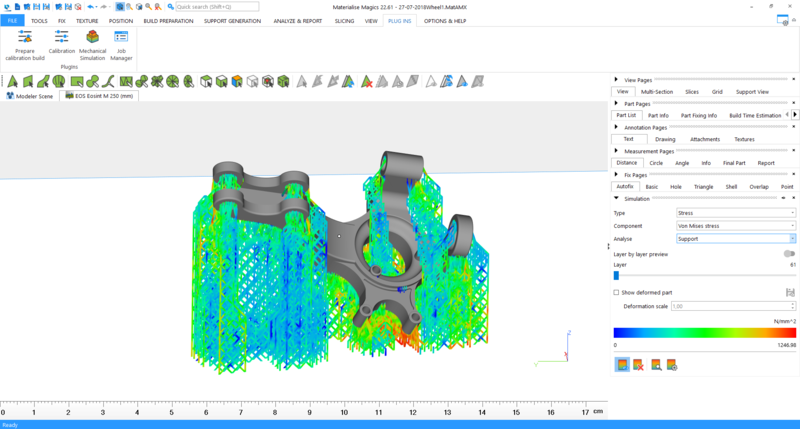
The TCT Show in Birmingham, England draws to a close today, but it’s been a packed few days with lots of new product announcements and presentations. One of those announcements came from Materialise, which introduced its new simulation software for metal 3D printing. Simulation software allows manufacturers to run through a build before running it for real, identifying trouble spots and reducing the risk of a failed print. On average, 15 percent of metal 3D prints fail, which can get extremely costly. Simulation creates a virtual prototype so that the first print can be the final print.
 Simulation often requires expert engineers who work closely with manufacturers and designers, but Materialise’s simulation software requires no expert knowledge. It’s easy to use and accessible to anyone. Rather than needing engineers to give input about things like optimal part orientation and support structure design, the software offers that input, and users can apply the results directly to the support generation and orientation tools in a Materialise Magics environment, with which the simulation software works closely – it’s available, in fact, as a Magics module.
The software can be used on a standard workstation without the need for high-end processing power, and can be used in combination with other computer-aided engineering (CAE) solutions for highly certified metal production. The module also includes an integrated calibration feature which guides users to the correct simulation settings for their metal 3D printer.
“As more companies adopt 3D Printing as an alternative manufacturing technology, service bureaus are operating in a more cost-competitive environment than ever. As a result, they are looking for ways to scale their operations, increase productivity and reduce overall costs,” said Stefaan Motte, Vice President and General Manager of the Materialise software division. “Software, and especially simulation software, will help drive down the primary cost. Our software suite will enable greater access to simulation capabilities and help increase productivity and efficiency.”
The Materialise 3D printing simulation module is based on an OEM version of the Simufact Additive Solver, a powerful, scalable software tool for the simulation of metal 3D printing processes. The module combines the simulation expertise of Simufact with the familiar environment of Materialise’s data and build preparation software. The software is available immediately; Materialise also plans to release its Magics 23 software by the end of this year.
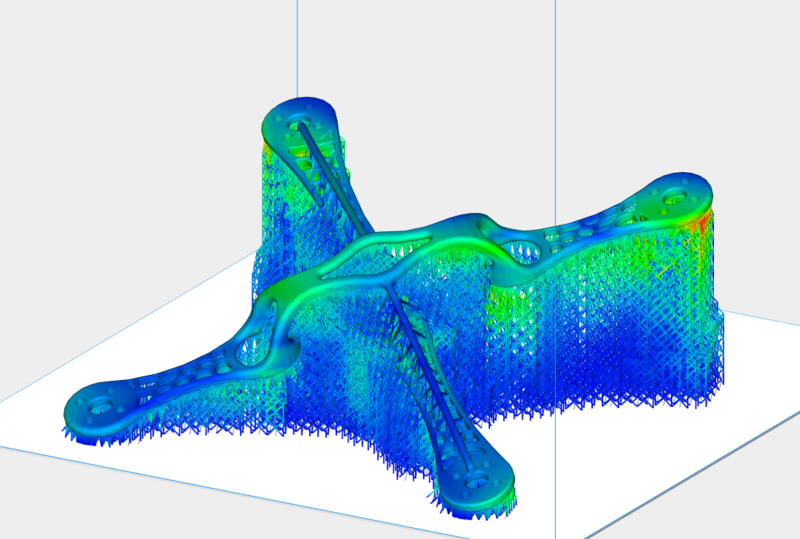
For companies that produce a large number of metal 3D printed parts, such as service bureaus, simulation is an invaluable tool. Any mistakes can be made in a safe environment, costing no money and wasting no time – and in metal 3D printing, errors are likely to happen, so simulation provides a way for those errors to be seen and addressed before the 3D printer is ever fired up. Simulation can be intimidating and complex, however, with multiple factors to address, which is why the expertise of experienced engineers is often required. Materialise’s new software takes away the intimidation factor and allows anyone to take advantage of the benefits of simulation, saving time, money and immense amounts of frustration.
Discuss this and other 3D printing topics at 3DPrintBoard.com or share your thoughts below.
Subscribe to Our Email Newsletter
Stay up-to-date on all the latest news from the 3D printing industry and receive information and offers from third party vendors.
Print Services
Upload your 3D Models and get them printed quickly and efficiently.













You May Also Like
The Manufacturing Race Behind the Drone Revolution
We are in the middle of a major manufacturing shift focused on the production speed and payload capacity of uncrewed aerial systems (UAS), or drones. A recent Manufacturing Dive article...
ADDMAN to Buy Up to $10.8M in Nickel 718 Powder from 6K Additive Over 30 Months
After years of buildup, we’re finally starting to see what the US metal additive manufacturing (AM) market could look like at scale. To be sure, it’s still not quite there,...
Metal AM in a Multipolar World, Part 2: How PBF and DED Could Change by 2035
The first decades of PBF development were heavily shaped by machine capability: more power, more lasers, larger build volumes, better recoating, and improved process monitoring. These developments will continue, but...
Advanced Manufacturing at IMTS 2026: 3D Printing and AI and Drones, Oh My!
Last week’s International Manufacturing Technology Snow (IMTS) in Chicago welcomed over 90,000 attendees to the jungle that is McCormick Place. With over 1.17 million square feet of exhibit space, and...