NextGenAM Project Launches First Pilot Facility


Last year, a project was announced: the NextGenAM collaborative project, dedicated to developing and implementing next generation industrial additive manufacturing technology. The partners involved include Premium AEROTEC, EOS, and Daimler. A goal of the project was to develop the basis of a future system for series production using 3D printing technologies. The project team has been working on assessing the additive manufacturing process to see what kind of potential it holds for automation, and now the first pilot plant has been launched at Premium AEROTEC’s technology center in Varel.
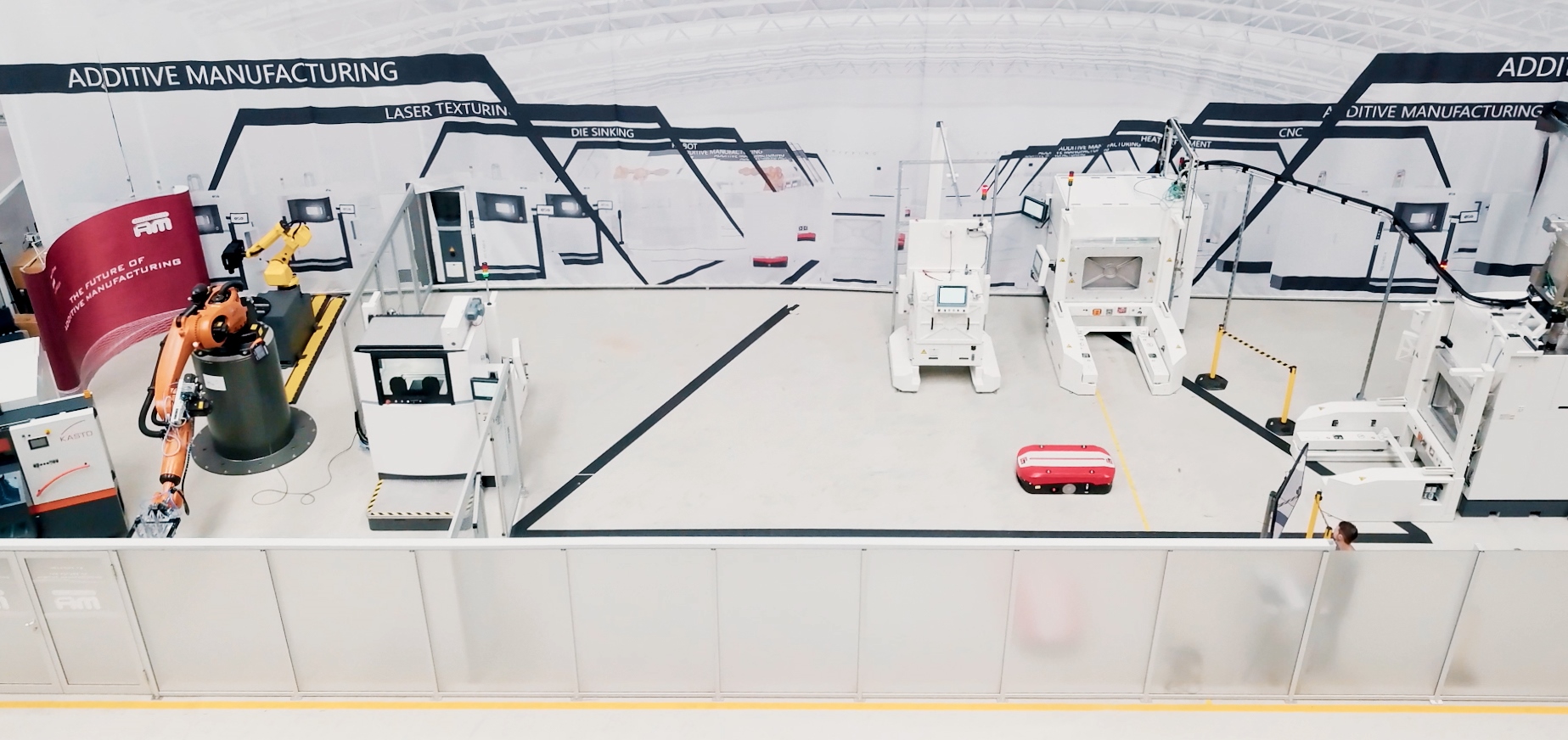
Aluminum is the material in focus here; the project aims to create a production cell that is capable of manufacturing aluminum parts for the automotive and aerospace industries in particular. Titanium has been the main material used for additive manufacturing in aerospace thus far, but one of the project’s goals is to also qualify aluminum for use in the industry. The facility contains several machines for additive manufacturing, post-processing, and quality assurance. All steps are fully automated and integrated, eliminating manual work altogether.
“The integration of the AM process in an automated production line is an important milestone for the broad application of our technology in series production scenarios,” said Dr. Tobias Abeln, CEO of Premium AEROTEC.
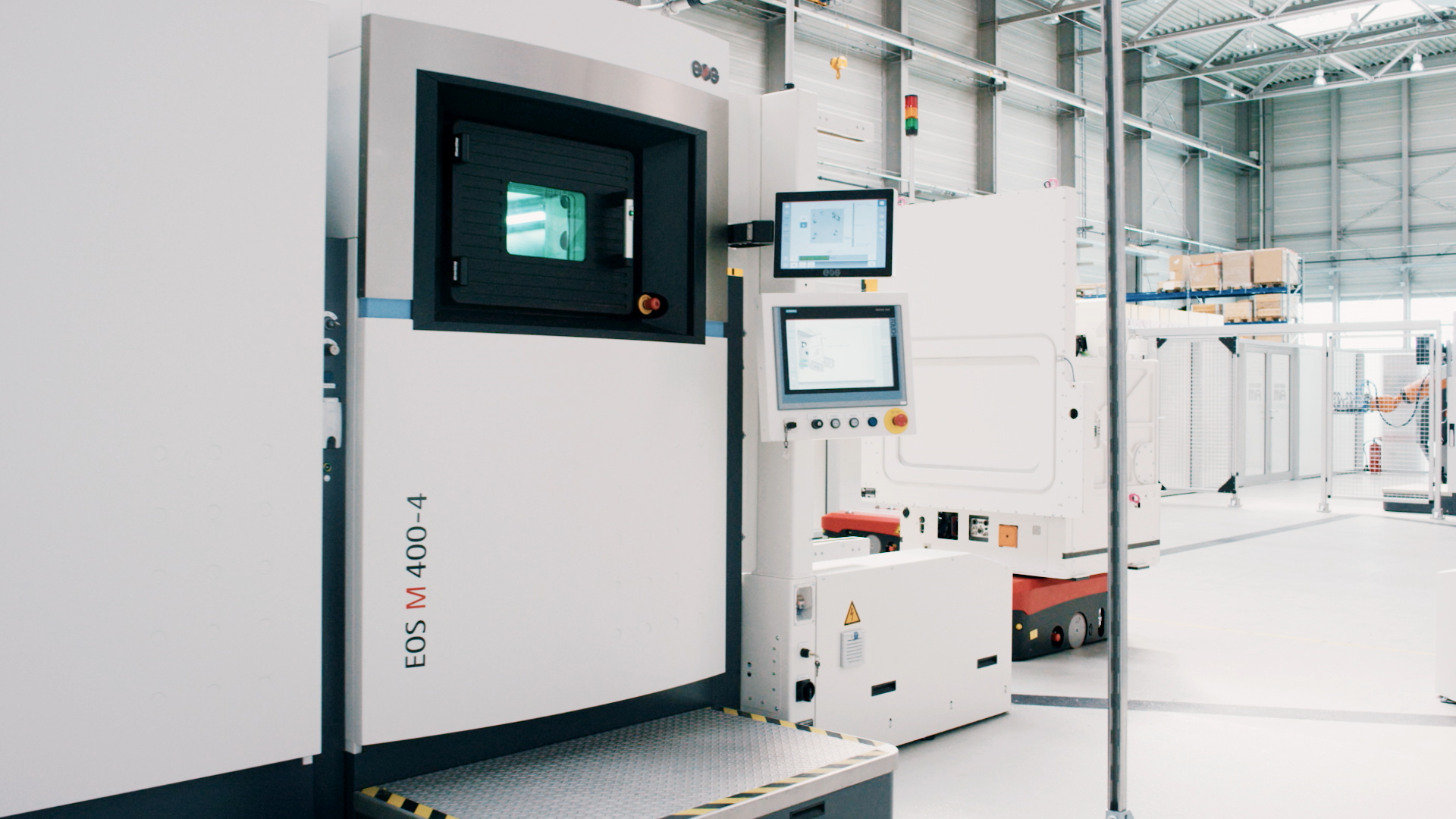
 Central to the plant’s operations is the EOS M 400-4 four-laser system, which is being used in combination with the EOS Shared-Modules concept. This means that the M 400-4 is equipped with a powder station and is connected to a standalone setup and unpacking station. Therefore, filling and emptying the system of metal powder, setting it up to prepare for a new build job, and unpacking the finished components can be carried out independently of and parallel to the 3D printing process, greatly increasing productivity.
Downstream post-processing has also been automated. A robot takes the build platform with the parts for the setup system and places it in a furnace for subsequent heat treatment. It then removes the platform again and takes it to a three-dimensional optical measurement system for quality assurance. The build platform is then conveyed to a saw, which separates the parts from the platform.
“In this project we have already succeeded in significantly reducing the production cost per part, thus creating an economic perspective for large-scale digital 3D printing factories,” said Dr. Thomas Ehm, CEO of Premium AEROTEC.

Over the next several months, the pilot process chain will be further tested and parts of the facility will be audited. Production data will be collected and analyzed with the goal of collating precise data on process times, profitability, and cost optimization.
“3D printing is well on the way to establishing itself in the automotive sector as an additional manufacturing method with great versatility,” said Jasmin Eichler, Head of Research Future Technologies at Daimler. “With this collaborative pre-development project, we are taking a significant step towards achieving cost-effectiveness in metal 3D printing throughout the process chain. The project lays the cornerstone for the future realization of larger quantities in the automotive series production process – with the same reliability, functionality, longevity, and economy as for components from conventional production.”
Discuss this and other 3D printing topics at 3DPrintBoard.com or share your thoughts below.
Subscribe to Our Email Newsletter
Stay up-to-date on all the latest news from the 3D printing industry and receive information and offers from third party vendors.
Print Services
Upload your 3D Models and get them printed quickly and efficiently.













You May Also Like
Hyundai & Kia Open Additive Manufacturing Solution Center in South Korea
Hyundai Motor Group (which, in addition to owning Hyundai, holds a large ownership stake in Kia) maintains an R&D center in Hwaseong, South Korea called Namyang, the company’s largest such...
Pusan National University & ORNL Develop Elastomeric Liquid Crystal Actuators
Researchers from Korea’s Pusan National University and Oak Ridge National Laboratory (ORNL) have developed 3D printed elastomeric actuators. In a paper published in Nature, the team used elastomeric liquid crystal...
3D Printing News Briefs, August 1st, 2026: Project Calls, Contact Lenses, Chairs, & More
We’re starting with the winners of two America Makes project calls in this first 3D Printing News Briefs of August! Then we’ll move on to AM quality control for aerospace,...
ORNL Origami Creates Large Foldable Structures
Oak Ridge National Laboratory (ORNL) is using a hybrid 3D printing method to make foldable panels. At the Department of Energy’s (DOE) Manufacturing Demonstration Facility (MDF) at ORNL, researchers turned...