Mosaic Manufacturing Introduces the New and Improved Palette 2 for Multi-Color, Multi-Material 3D Printing

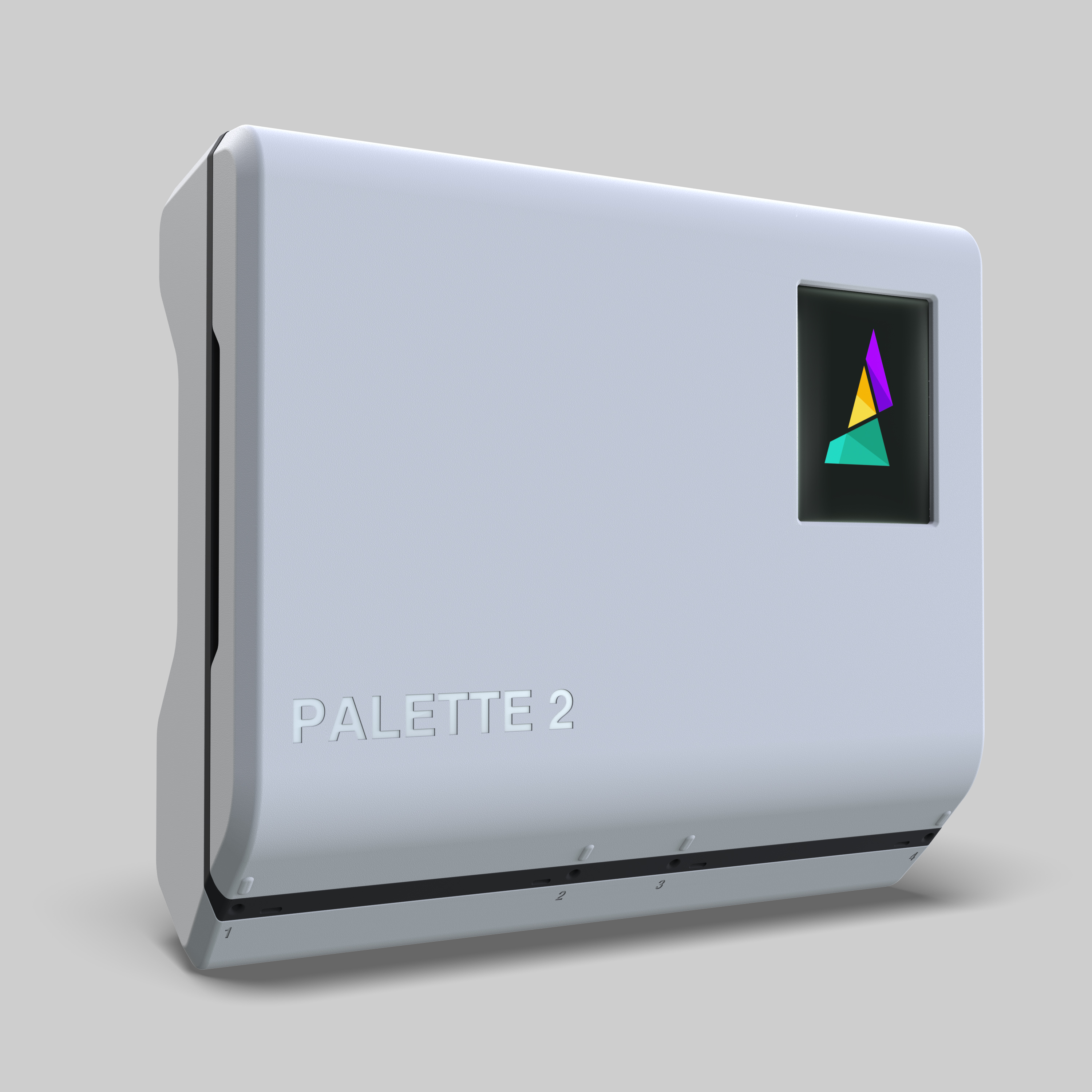 In 2015, Mosaic Manufacturing launched the Palette, a device that allowed any 3D printer to become a multi-color, multi-material machine. It functioned by combining up to four filament strands in one extruder. Later, the company would upgrade the device to the Palette+, which has been getting positive reviews from customers. Now Mosaic Manufacturing is introducing the Palette 2, a more deeply integrated, user-friendly version of its well-known device.
The Palette 2, like its predecessors, works with single-extruder 3D printers to create multi-color, multi-material prints. What sets the Palette 2 apart is that it integrates and communicates directly with the user’s 3D printer. It can still be added on to the 3D printer as an accessory, but its integrated mode makes it feel like a native part of the system, according to Mosaic Manufacturing. All the user has to do is hit print to create multi-color or multi-material parts, as easily as they would create single-material parts.
The Palette 2 is compatible with nearly all filament-based 3D printers on the market by connecting a USB cable and a filament feed tube. Mosaic Manufacturing compares its integration capabilities with those of the Intel Inside model, and the company has already formed partnerships with multiple companies including Dremel 3D, MakerGear, Raise 3D and Robo 3D to integrate Palette 2 into the next generation of their 3D printers.
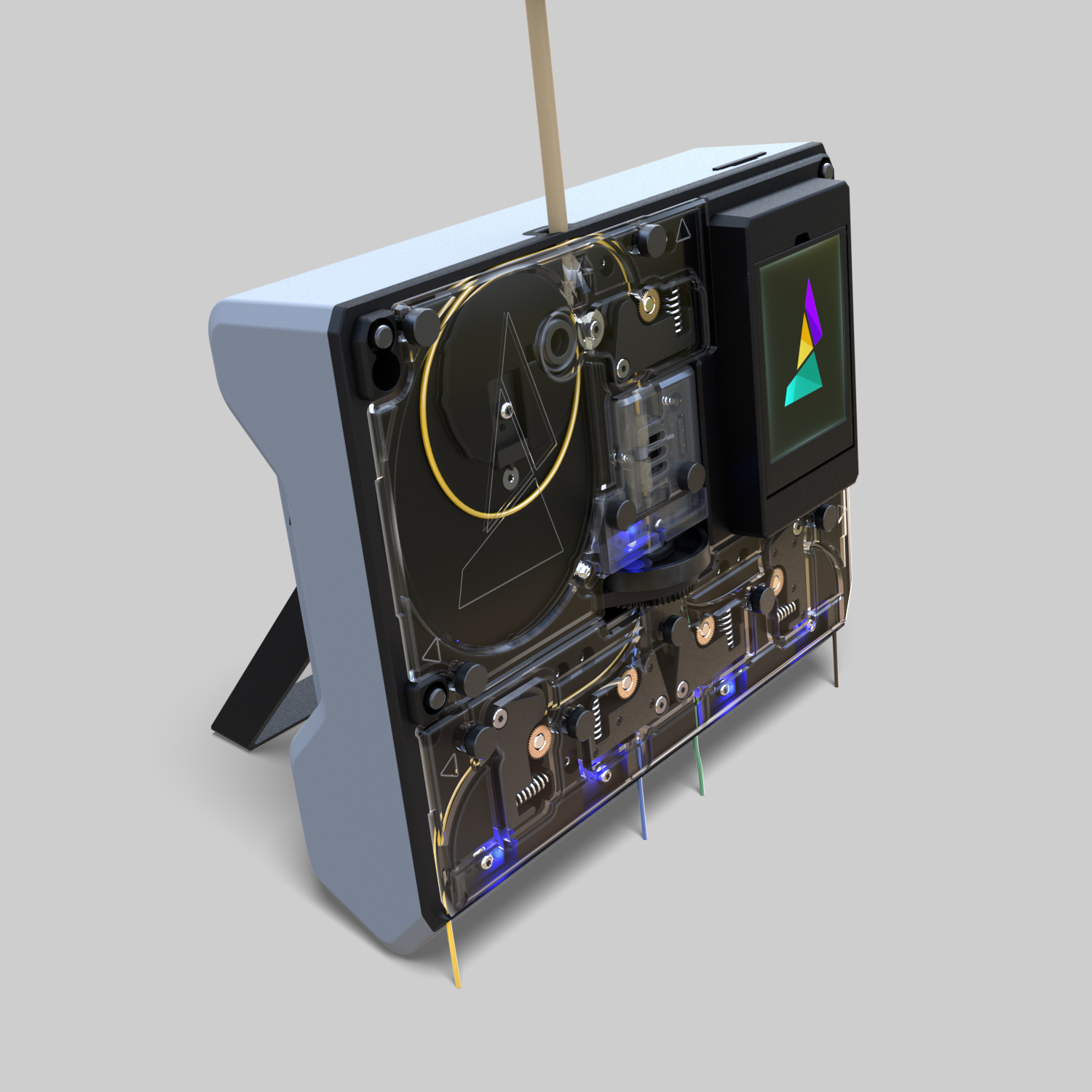 Other improvements to the Palette 2 include better print calibration and a more reliable printing experience, thanks to the device’s direct communication with the 3D printer. It’s more portable than its predecessors, too – it occupies less desk space, comes with a stand, and can be mounted to a wall or printer. It can also be transferred easily between printers. Installation is extremely easy, requiring no physical modifications to the 3D printer itself.
The Palette 2 has a continuous printing feature that automatically detects when one filament runs out and splices another to the end of the first one. It also features a full color touch screen so that users can customize prints directly from the Palette 2. Mosaic Manufacturing will be releasing a professional version of the Palette 2 called the Palette 2 Pro, which will operate 20% faster and come with a longer warranty.
Pre-orders for the Palette 2 start at $499 ($599 MSRP), which is far less expensive than the original Palette, which retailed for $999, and the Palette+, which cost $799.
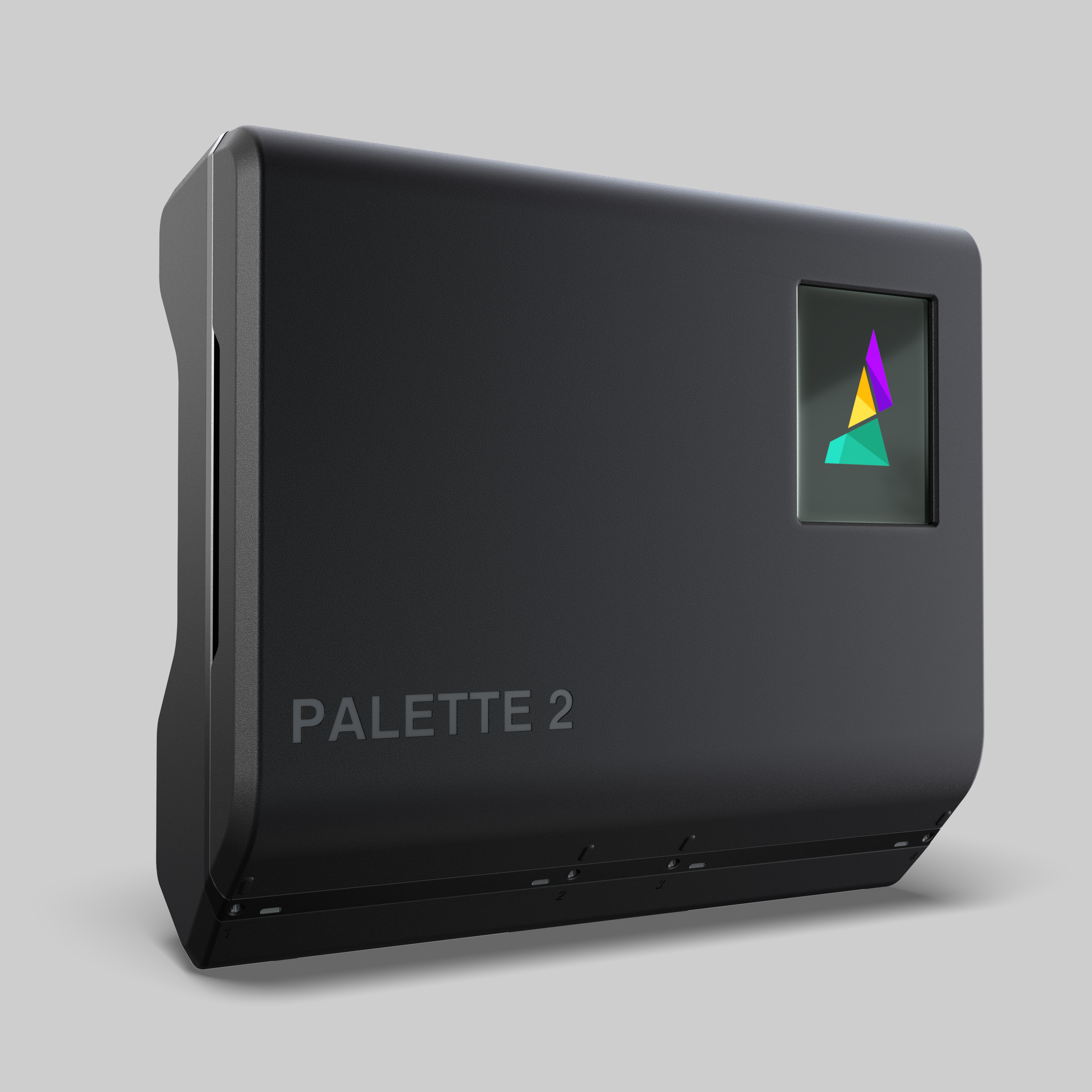
The Palette 2 Pro
In addition to the Palette 2, Mosaic Manufacturing is launching a cloud platform called CANVAS. Software for multi-material, multi-color 3D printing systems was lagging behind the hardware, the company points out, so Mosaic developed CANVAS, a simple, browser-based slicer designed for multi-material 3D printing. Its features include version control for print settings, data-driven settings optimizations, and will soon allow users to “paint” or colorize 3D printable files in an intuitive and simple way.
CANVAS promises to streamline workflow, decrease processing times, decrease or even remove transition material, organize files, and increase the quality of 3D prints over time. The software is free and can be used for single-material 3D printing as well as multi-material.
Mosaic Manufacturing was founded in 2014, and the Palette 2 has been in the works since 2016.
Discuss this and other 3D printing topics at 3DPrintBoard.com or share your thoughts below.
[Images: Mosaic Manufacturing]
Subscribe to Our Email Newsletter
Stay up-to-date on all the latest news from the 3D printing industry and receive information and offers from third party vendors.
Print Services
Upload your 3D Models and get them printed quickly and efficiently.











You May Also Like
3D Printing News Briefs, April 22, 2026: DINOs, Post-Processing, AM for Aerostructures, & More
We’ll start with event news in today’s 3D Printing News Briefs, as AMUG presented its DINO Award to six members at this year’s conference, and Axtra3D celebrated its five-year anniversary...
Euler Viewer for Metal LPBF 3D Printing Released
Icelandic software startup Euler has released Euler Viewer, a real time build viewer for metal LPBF. The product does not need to be installed, and doesn’t require hardware to be...
3D Printing News Briefs, April 8, 2026: LiDAR Scanning, Vapor Smoothing, FDM Optimization, & More
We’ll kick off today’s 3D Printing News Briefs with some 3D scanning news from Artec 3D, and then move on to new America Makes Project Calls. Then, Raise3D and AMT...
Most 3D Printing Metals Are Adapted. This One Was Designed with AI
A research team from the University of South China and Purdue University developed a new type of steel designed specifically for 3D printing, using machine learning to guide the process....