Patient-Specific 3D Printed Spinal Solutions by Anatomics

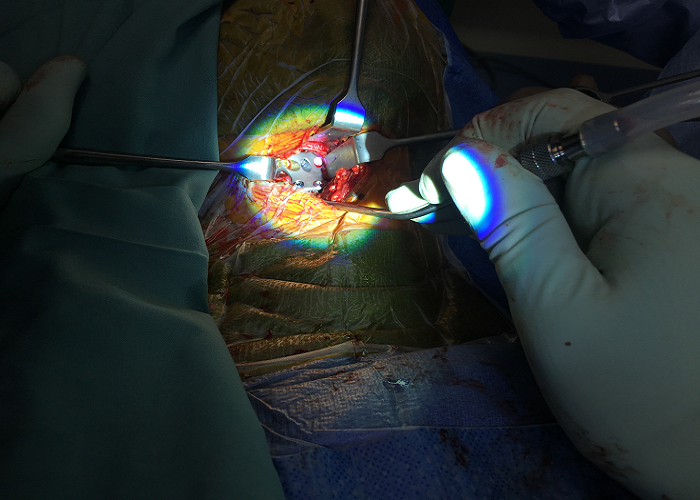
3D printed anterior cervical cage
Australian medical device company Anatomics has a very prolific 3D printing portfolio in the healthcare industry, from assisting with a 3D printed heel bone to 3D printing the first titanium sternum and set of ribs and vertebrae. Anatomics founder Paul D’urso, MD, a neurosurgeon at Epworth Healthcare, began his medical 3D printing research way back in 1991, four years before starting the not-for-profit Anatomics, which has since helped over 5,000 patients with its custom 3D printed medical solutions.
D’Urso said, “Anatomics has lead the world in custom 3D printed spine technology for over 20 years and is proud to have developed numerous world first applications.”
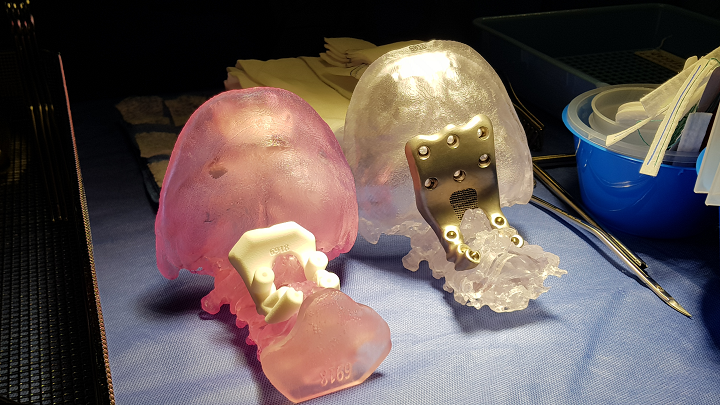
3D printed occipito-cervical plate
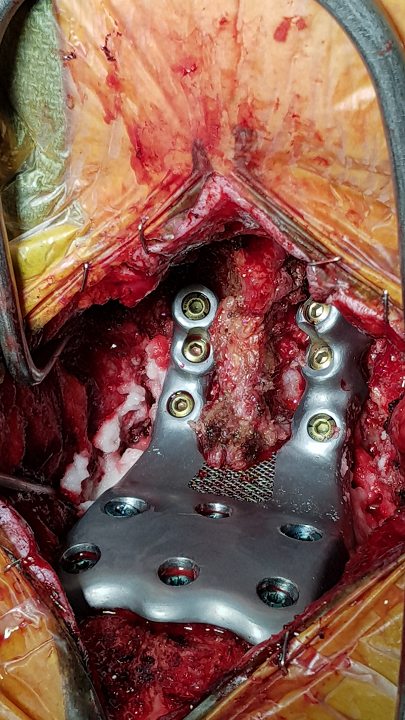
D’Urso has a particular interest in developing spinal applications for biomodelling, and at the recent 3DHEALS conference in San Francisco, reported that he’s used 3D printing in nearly 700 spinal fusion procedures, including what D’Urso tells us is “the world’s first custom occipito cervical plate.”
“In the future Anatomics plans to create disruptive Spinal Solution Centres that will enable Community Based Personalised Healthcare allowing surgeons and hospitals to 3D print a range of spinal implants and share designs through-out the world,” D’Urso told 3DPrint.com.
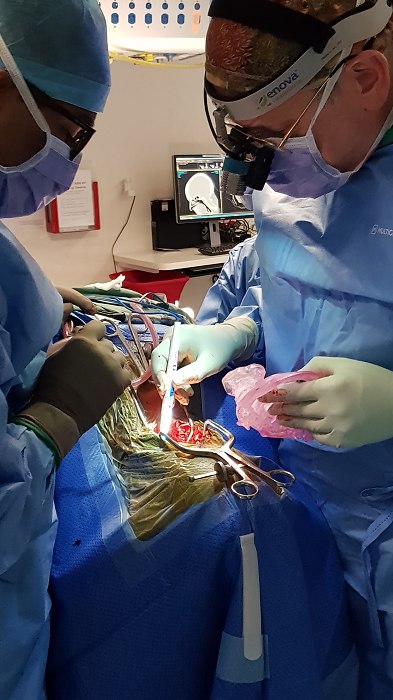 The success of some of the innovative 3D printed solutions that D’Urso and Anatomics have developed, including 3D printed custom spinal implants, have recently been described in articles and research papers printed in various publications, such as the European Spine Journal and the Journal of Clinical Neuroscience.
The latter paper, titled “Designing patient-specific 3D printed devices for posterior atlantoaxial transarticular fixation surgery,” discussed how biomodelling and 3D printing are both useful tools for pre-surgical planning, developing titanium implants and patient-specific tools, and intraoperative stereotaxy – a minimally invasive surgical procedure which uses a 3D coordinate system to locate small targets inside the body and then perform an action, like an ablation, biopsy, injection, or implantation, on them.
The abstract reads, “Atlantoaxial transarticular screw fixation is an effective technique for arthrodesis. Surgical accuracy is critical due to the unique anatomy of the atlantoaxial region. Intraoperative aids such as computer-assisted navigation and drilling templates offer trajectory guidance but do not eliminate screw malposition. This study reports the operative and clinical performance of a novel process utilising biomodelling and 3D printing to develop patient specific solutions for posterior transarticular atlantoaxial fixation surgery. Software models and 3D printed 1:1 scale biomodels of the patient’s bony atlantoaxial spine were developed from computed tomography data for surgical planning. The surgeon collaborated with a local medical device manufacturer using AnatomicsC3D to design patient specific titanium posterior atlantoaxial fixation implants using transarticular and posterior C1 arch screws. Software enabled the surgeon to specify screw trajectories, screw sizes, and simulate corrected atlantoaxial alignment allowing patient specific stereotactic drill guides and titanium posterior fixation implants to be manufactured using 3D printing. Three female patients with unilateral atlantoaxial osteoarthritis were treated using patient specific implants. Transarticular screws were placed using a percutaneous technique with fluoroscopy and neural monitoring. No screw malposition and no neural or vascular injuries were observed. Average operating and fluoroscopy times were 126.0 ± 4.1 min and 36.7 ± 11.5 s respectively. Blood loss was <50 ml per patient and length of stay was 4–6 days. Clinical and radiographic follow up data indicate satisfactory outcomes in all patients. This study demonstrates a safe, accurate, efficient, and relatively inexpensive process to stabilise the atlantoaxial spine using transarticular screws.
-

- Anterior cervical cage
-
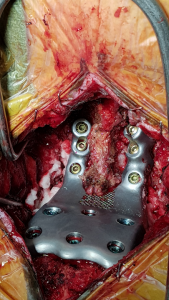
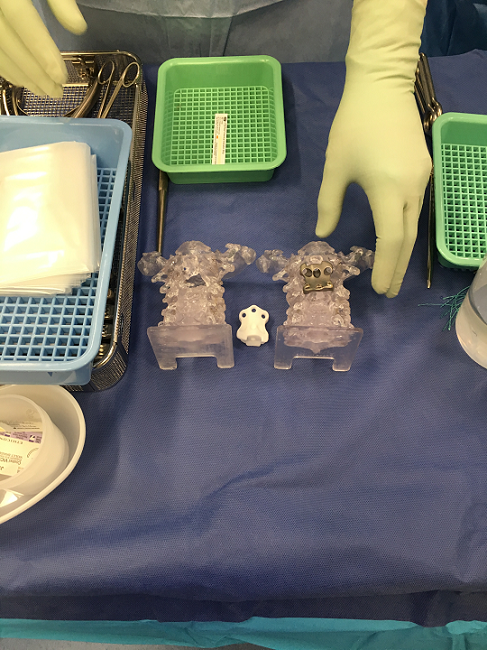
- Occipito-cervical plate
The paper also explained how operative ergonomics and the placement of atlantoaxial transarticular screws can both be simplified using 3D printing. Authors include Ganesha K. Thayaparan, with Epworth’s Department of Neurosciences, and Anatomics’ Mark G. Owbridge, Robert G. Thompson, and D’Urso.
Discuss this and other 3D printing topics at 3DPrintBoard.com or share your thoughts in the comments below.
[Images provided by Anatomics]Subscribe to Our Email Newsletter
Stay up-to-date on all the latest news from the 3D printing industry and receive information and offers from third party vendors.
Print Services
Upload your 3D Models and get them printed quickly and efficiently.












You May Also Like
3D Printing News Briefs, November 27, 2025: Awards, Sand Binder Jetting, Tabletop Gaming, & More
To all those who celebrate, happy Thanksgiving! In today’s holiday 3D Printing News Briefs, we’re starting off with some exciting news: the winners of this year’s Formnext Awards! Then, we’ll...
3D Systems New Product Releases at Formnext 2025: SLA Printer, Materials, & More
3D Systems (NYSE: DDD) reported that its Q3 numbers showed signs of stabilization, even with lower revenues, and CEO Jeffrey Graves told investors that a “strong pipeline of new products positions us...
Sintokogio Buys Bosch’s Ceramics Unit, Plans Global AM Expansion
Japan’s Sintokogio Group is buying Bosch Advanced Ceramics to expand its work in 3D printed technical ceramics. The agreement was signed on November 18 and formally announced at the Formnext...
3D Printing News Briefs, November 22, 2025: Rebranding, Integration, Electronic Eyes, & More
We’ll start with a new software tool from AON3D in today’s 3D Printing News Briefs, and then we’ve got a lot of business, from Conflux Technology and Prima Additive to...