Keytech’s Unique 3D Printer Filaments Include Color Mixing Rods, Heat Deflection & More
When you go to print something out on your 2-dimensional desktop printer, you don’t think twice about what kind of toner or ink cartridge that you are using. In reality, your options are very limited and you probably purchase the most affordable ink you can, just to save money. However, when it comes to 3D printing, your options have still remained pretty limited, with choices such as PLA or ABS. These are two different types of plastics, each with their own slightly different properties. Recently, we have begun to see a bit of an influx in new material options, with the realization by filament manufacturers that people desire variety.
Now there are nylon filaments that can bend, wood filaments that look and feel almost like the real thing, and even bronze filaments that many people would mistaken for real metal. Over the course of the past year, we have seen a rather large influx of these new material options hitting the market. The more options we have, the more things we can print, and the better off the 3D printing space becomes.
One company, Keytech Solutions, believes that we have only begun to see the potential that material science has when it comes to 3D printing. They themselves have been working on creating unique, and relatively unheard of products which could be the start of something quite interesting.
Double Colour Rod
One of the most unique options that they offer, is a filament that they call ‘Double Colour Rod’.
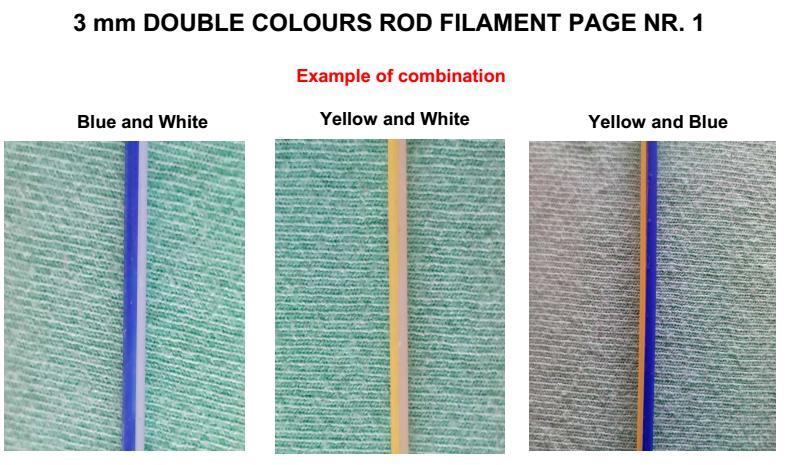
“I’ve developed a system to put together two different half parts of 3 mm rod filament to create a new color,” explained Stefano Corinaldesi of Keytech to 3DPrint.com. “For example, if you put [together] half yellow and half blue you will get a green colour. This solution is possible only with 3 mm filament because 1.75 mm is too small.”
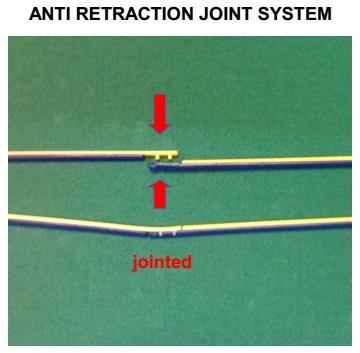
Basically how it works, is you take 2 different color filaments and attach them together using Keytech’s system. Then, using a 3D printer that has the ability to extrude 3 mm filament, you can print with it like you would any other PLA or ABS material. When melted and extruded the two colors mix together creating a new color combination.
This isn’t the only innovative new material that Keytech offers when it comes to 3D printing. “Keytech 3D Printing filaments are made with highly special polymers, mostly never used in 3D Printing until today,” the company explains.
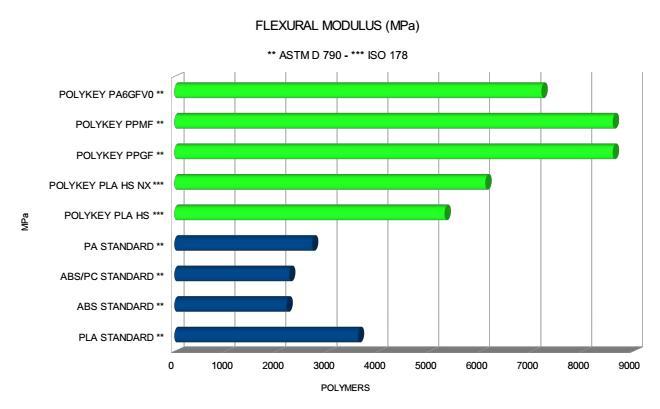
Some of these other materials that they have come up with include the following:
- Polykey PA6GFV0
- Polykey PPMF
- Polykey PPGF
- Polykey PLA HS NX
- Polykey PLA HS
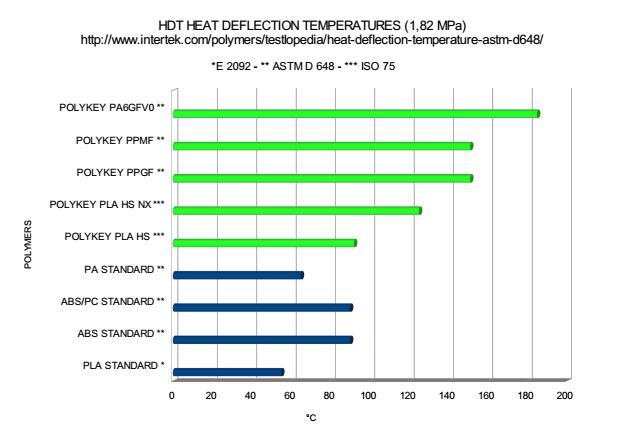
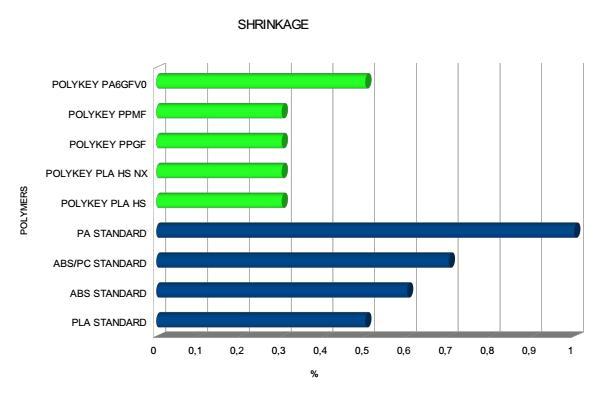 These all feature properties that aren’t seen in your typical ABS or PLA filaments, including lower degrees of skrinkage, less moisture absorption, greater flexibility, and higher degrees of heat deflection. They are priced at 50€ per 100 grams, and come unspooled, in loose coils that are shipped in plastic bags within a carton box.
Keytech also offers custom solutions to companies who wish to create filament with their own unique polymers. It’s called TAILOR MADE 3D Printing Filament (TM3DPF). They do this by taking various 3D printable polymers and mixing them together to get just the right polymer needed for a particular FFF 3D printing job, based on the physical properties of each material.
 Without a doubt, we have not yet even come close to breaking the surface as far as the material options available for 3D printing. Companies like Keytech, however, are moving us steadily in the right direction.
For those of you wishing to order this filament, the company does not yet have a website available for placing custom orders, so they ask that you contact them via email. What do you think? Would you have use for any of these interesting materials? Discuss in the Keytech filament forum thread on 3DPB.com.
Subscribe to Our Email Newsletter
Stay up-to-date on all the latest news from the 3D printing industry and receive information and offers from third party vendors.
Print Services









You May Also Like
New Business: Temporary, Migratory, & Modular 3D Printed Architecture
If we look at potentially emerging 3D printing businesses, then architecture has not been fully explored. Yes, there is a lot of house 3D printing going on worldwide. From deployable...
3D Printing News Briefs, April 19, 2025: Material Extrusion Standard, Metal Powder, & More
In today’s 3D Printing News Briefs, we’re covering a proposed standard for material extrusion, before moving on to business and metal powder. We’ll end with a commercial store’s robotic 3D...
Japan Unveils World’s First 3D Printed Train Station
Japan is now home to what we believe is the world’s first train station built with 3D printing technology. Located in Arida City, just south of Osaka, the new Hatsushima...
restor3d Raises $38M to Expand 3D Printed Orthopedic Implants
Backed by $38 million in new funding, restor3d is pushing ahead with the launch of four personalized implant lines, set to roll out in 2025 and 2026. This latest venture...