Using Virtual Reality to Travel Inside the Human Brain

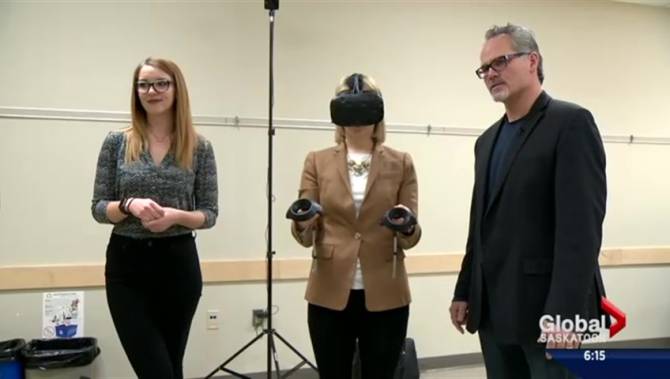 It’s hard not to be fascinated by virtual reality. The fantasy of being able to immerse yourself in a nonexistent environment and navigate as if you are part of it would have seemed only an idea fit for movies not that long ago. Using that technology for entertainment has been a no-brainer, but a recent exploration at the University of Saskatchewan has demonstrated that the brain might actually be the perfect environment for a more serious side of VR. Dr. Ivar Mendez, head of the Department of Surgery at U of S, explained:
“We created this 3D brain where the surgeon can enter the brain, look at a brain tumor, can see the relationship of the brain tumor with other brain structures and potentially plan a surgical procedure.”
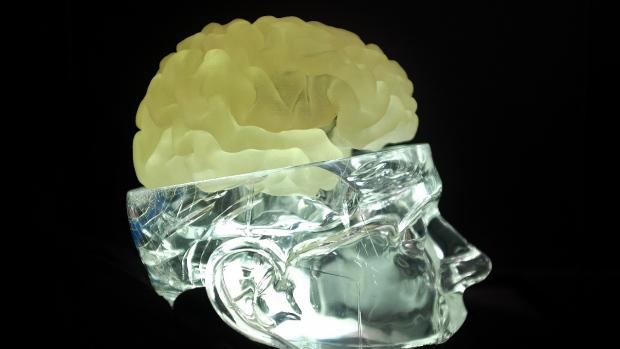
This journey into the brain began when Dr. Mendez was attempting to insert a single electrode into a patient’s brain that would stimulate two target areas at once. However, he found that because of the complexity of the structure of the brain, available brain mapping software was simply not up to the task of providing him with the detailed information he needed. He assembled a team of engineers, MRI technicians, neuropsychologists, and radiologists who worked diligently over a seven-month period to create a system that could translate MRI data into a 3D model. With this process in hand, Mendez began to wonder about the possibilities of creating an immersive interaction with the brain through VR:
“The 3D brain was the initiation of the virtual reality brain because the process of converting the data from the patient’s MRI to the computer language to do 3D printing was very similar to the language being translated into the render of a virtual reality environment.”
Once he had decided to seriously explore this avenue, Mendez got in touch with the Saskatoon computer software company Sprockety to develop the customized virtual reality software necessary to convert the 3D mesh that was created by the MRI data into a virtual environment.
The ability of a surgeon to immerse him- or herself in the brain of a patient prior to performing an operation has obvious benefits. What Dr. Mendez hopes is that it will also provide valuable experience to students in the classroom, where hands-on learning opportunities are limited for reasons that should be equally obvious to anyone who isn’t a mad scientist. Mendez explained his hopes for the VR brain environment’s impact on learning:
“A medical student can enter the virtual reality environment and really understand the different structures within the brain, the 3D arrangement of those nuclei, and areas of the brain that are related to function. Until you actually can piece the brain together in your mind and see how everything is structured from the inside out, it’s so difficult to understand. The virtual reality just makes it so much easier to parse through the 3D structures of the brain.”
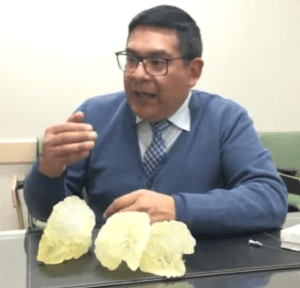
Dr. Ivar Mendez
Advanced technologies such as VR and 3D printing have become an increasingly common tool for medical education as well as for use by doctors as they are preparing to undertake surgical interventions. It is as close as one can get to a practice run without doing damage and eases the gap that has long divided in-class learning with hands-on experience. The prize in mind was described by Sprockety’s CEO Bruce Cory:
“The ultimate goal is to be able to turnaround a brain in a short time so that it can be used for surgical planning to improve surgery. Maybe allow surgeons to perform the surgery virtually before it’s done in real life and that to me can only mean a better surgery in the end.”
After all, practice makes perfect. Discuss in the Virtual Reality Brain forum at 3DPB.com.
[Source: Global News]
Subscribe to Our Email Newsletter
Stay up-to-date on all the latest news from the 3D printing industry and receive information and offers from third party vendors.
Print Services
Upload your 3D Models and get them printed quickly and efficiently.











You May Also Like
“A More Complete End-to-End Solution”: Stratasys Launches Post-Processing Partnership Program
I think it’s safe to say that post-processing is no longer considered the “dirty little secret” of 3D printing that it once was, with users realizing that finishing is just...
Why SiC-Dedicated Additive Manufacturing Is Gaining Industrial Relevance
Silicon carbide is not a material problem—it’s a manufacturing one. Silicon carbide (SiC) has become a critical material across semiconductors, aerospace, energy, and defense. Its exceptional thermal stability, chemical resistance,...
Championing a Made-in-America Future for Additive Manufacturing
As the additive manufacturing industry continues its rapid global evolution, one theme has risen to the top of strategic conversations: the importance of strengthening domestic production to support national competitiveness...
Friendshoring and Additive Manufacturing: Turning Australia’s Research Strength into Commercial Impact
Global supply chains are being re-written. After decades of globalisation driven primarily by cost efficiency, geopolitical tensions, trade disputes and pandemic-era disruptions have exposed the risks of concentrating manufacturing and...