Indian Company Protoprint Transforms Waste into 3D Printing Filament for Commercial Use

 This week, we reported on New Zealand-based Waikato University’s revolutionary FDM technology-based 3D printing method that allows anyone to print complex objects by converting waste material into thermoplastic filament, and we’ve seen several initiatives around the world focused on bringing waste material into reuse via 3D printing. An Indian company called Protoprint is leading a similar project but on a more commercial aspect and global scale.
Protoprint, a social enterprise founded by environmental engineer Sidhant Pai and his parents in 2012 to address poor employment conditions and increasing pollution levels, secured a partnership with SWaCH to transform high-density polyethylene (HDPE)-based products such as plastic bottles into filament for 3D printers.
SWaCH, short for Solid Waste Collection and Handling, is a cooperative formed by waste pickers and workers at a waste disposal site in Pune, India. Workers at SWaCH provide Protoprint with the necessary waste material which Pai and his team use to create filaments.
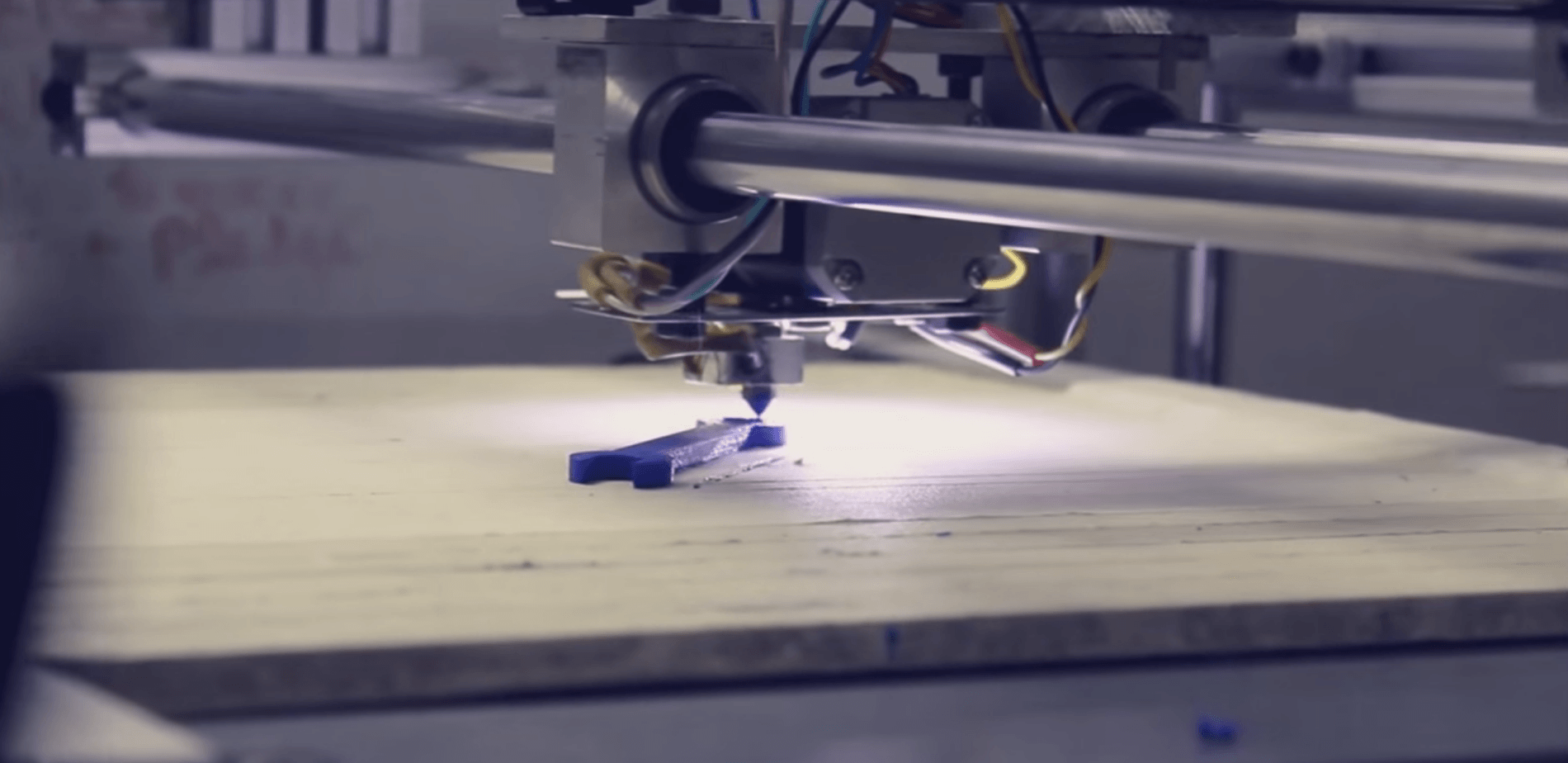
Protoprint’s 3D filament in use
Ultimately, Pai plans to sell and distribute these plastic filaments to 3D printing companies around the world. He believes a global distribution of waste material-based enterprise-grade 3D printing filament could significantly decrease the waste production rate in its local waste disposal site at Pune and provide a much improved working condition for the local waste pickers
“Our focus was on looking into different ways to add value to the waste, we were agnostic about the specific product. It [3D printing filament] added a tremendous amount of value to the waste plastic while still being relatively simple to manufacture at the dump,” said Pai.
Protoprint compensates waste pickers at SWaCH with around $4.35 per kg for the HDPE material. On average, Indian waste pickers earn around $0.18 per kg for the same type of recycled waste material SWaCH provides to Protoprint. Thus, the entire project is granting SWaCH and other local waste pickers in Pune with substantially higher income and better opportunities to support their families financially.
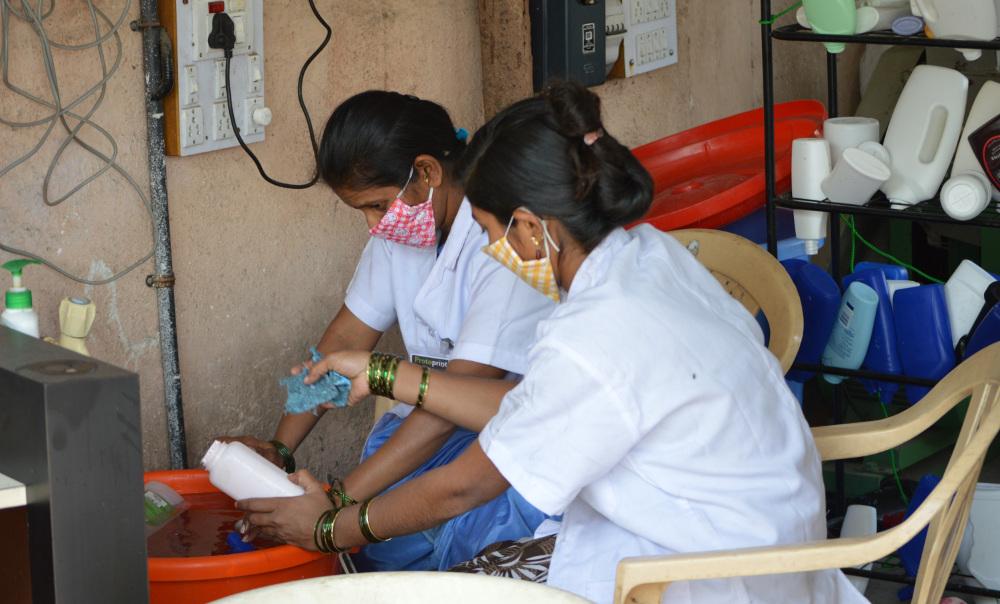
Waste pickers working in Pune, India
The compensation rate offered by Protoprint to local waste pickers is even higher than the average earnings of US-based HDPE waste pickers. According to Plastic News Research, a prominent organization established to provide important market data for the plastics industry, US-based waste pickers could earn $1.30 at best per kg for HDPE-based products such as water bottles. Which means Protoprint is offering around 4x the income US-based waste pickers could make.
At the moment, average household income in the US is $51,939, which is 14 times higher than the average annual income of Indian citizens and residents. Thus, Protoprint is providing its local community a truly rare and heartfelt opportunity to sustain a consistent and high income for the first time.
More importantly, the world’s second largest premium market research firm MarketsandMarkets forecast the 3D printing materials market to reach a $1.4 billion market cap by 2021. If the demand for eco-friendly and waste material-based 3D printing filaments continue to rise, Protoprint will see a significant increase in revenue, local waste pickers will receive a better opportunity to provide for their families, and the waste production rate of local Indian communities will substantially decline. Discuss in the Protoprint forum at 3DPB.com.
[Sources: The Guardian, Protoprint / Image Credit: Protoprint]
Subscribe to Our Email Newsletter
Stay up-to-date on all the latest news from the 3D printing industry and receive information and offers from third party vendors.
Print Services
Upload your 3D Models and get them printed quickly and efficiently.











You May Also Like
From Geometry Bottlenecks to Design Velocity: How AI-Generated 3D Assets Are Reshaping Additive Manufacturing
For much of additive manufacturing’s history, progress has been constrained by both printing hardware and geometry — often in different ways and at different stages of adoption. Hardware limitations around...
Palette 300 Launches at CES 2026: AtomForm Debuts Its 12-Nozzle, 36-Color 3D Printer
Las Vegas’s Consumer Electronics Show (CES) 2026 is officially in session (January 6-9). As desktop 3D printers are arguably as important to the additive manufacturing (AM) industry today as at...
2026: The Year of the Low Cost Print Farm
The rise of high-speed, reliable desktop Material Extrusion and Vat Polymerization systems by Creality, Bambu, Elegoo, and Prusa Research, the onward march of Formlabs in Pro LPBF and VP, as...
Will Growth in Robotics Spawn More 3D Printing?
The bankruptcy of Roomba contains within it a story of value engineering, relentless innovation by Chinese firms, and a novel segment that became ho-hum. At the same time, robot lawn...