GE Aviation Conducts First Test of 3D Printed Advanced Turboprop Engine Components

 GE has been in the news quite a bit lately for business reasons. Their acquisitions of major 3D printing companies, as well as their proposed acquisitions and failed acquisitions, have kept them consistently in the headlines over the last month. The fact that their business dealings have been dominating the news, however, doesn’t mean that they haven’t been busy doing what they do best – inventing and innovating.
In July, GE Aviation announced that they would be developing a plane with a partially 3D printed engine for Textron Aviation. The Cessna Denali, a private turboprop plane, would use 20% less fuel than comparable models, while providing 10% more power, thanks in part to a streamlined engine design with multiple 3D printed parts – 35% of its parts, in fact, more 3D printed components than any other production engine in the history of aviation. This week, GE revealed that they have made significant progress. Over the course of the last year and a half, the company designed and built a demonstrator engine to test 12 additively manufactured parts for the eventual Advanced Turboprop (ATP) engine, and this week they put it to the test.
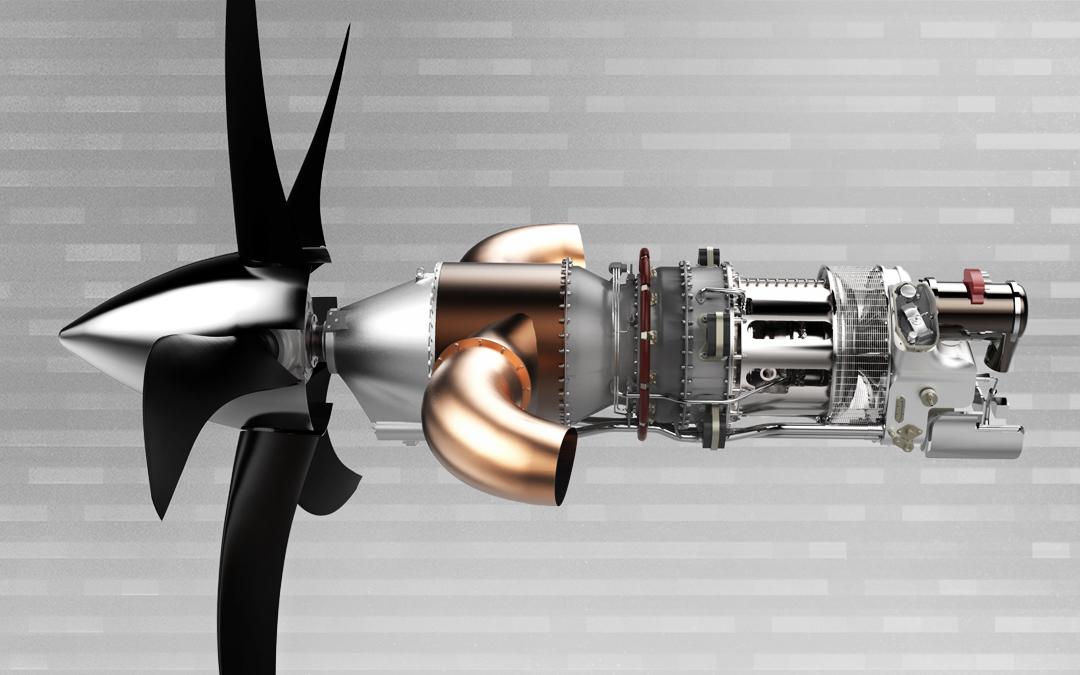
The CT7 technology demonstrator engine, dubbed the a-CT7, features 12 3D printed parts, replacing more than 855 conventionally manufactured parts, thanks to 3D printing’s ability to create large, complex assemblies in one piece rather than manufacturing and then assembling multiple smaller components. According to Gordon Follin, ATP Engineering GM at GE Aviation, using 3D printing does more than just save money and time.
“Typically, the weakest element of an assembly is where parts come together,” he told The Bike Shop. “It’s a place where you can have air leakage, or you can have wear between parts if there’s any sort of relative motion. And by using additive, you eliminate the leakage paths. You eliminate potential wear paths as well.”
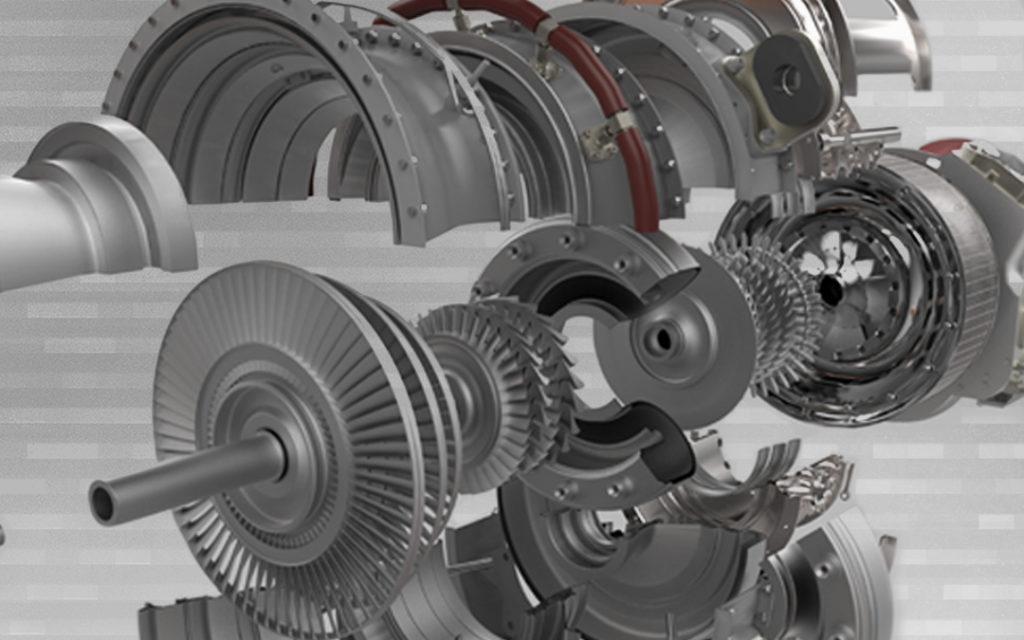 Additive manufacturing also allows the engine to be much lighter than a conventionally manufactured one by eliminating the bolts, welds and other parts needed to attach components together. The 3D printed parts include both major structural components and smaller, more complex parts throughout the engine, a few examples being the inlet frame, exhaust case, sumps, bearing housings, frames, combustor liner, heat exchangers, and stationary flowpath components. It will also feature the 3D printed fuel nozzles first introduced earlier this year in GE’s new LEAP engine.
The same engineering team responsible for designing the LEAP fuel nozzles led the design of the a-CT7’s 3D printed components. Thanks to 3D printing, the test engine was able to be completed and tested much more quickly than it would have been otherwise – the ATP combustor rig tests were completed six months ahead of schedule, while the combustor liners were printed in a mere two days.
“A huge benefit of additive is expedited test schedules,” said Follin. “For a program like ATP, one of our big philosophical points of emphasis is getting hardware to test faster instead of spending too much time with models on a computer. By putting real hardware on test as quickly as we can, we can use the resultant data to help us design the next iteration for a better product, and we get that product much faster than if we were to use conventional manufacturing methods.”
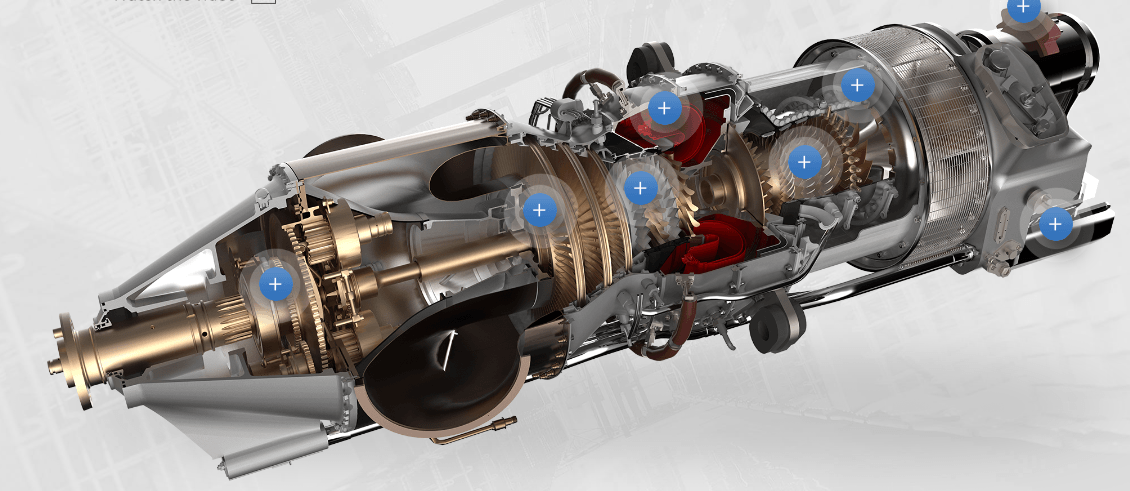
A second a-CT7 demonstration engine will be tested in the coming months, featuring even more 3D printed parts, and GE plans to carry out the first full ATP engine test by the end of 2017. The 1,240shp-rated ATP will be the first in a new series of turboprop engines in the 1,000shp to 1,600shp range. The completed Cessna Denali will have a range of 1,600 nm and speeds in excess of 28 kts. Additional features will include an aerodynamic titanium compressor, cooled turbine blades for higher thrust and better fuel efficiency, and integrated electronic propulsion control. Discuss in the 3D Printed Turboprop forum at 3DPB.com.
[Sources: GE Aviation / Aerospace Manufacturing & Design]
Subscribe to Our Email Newsletter
Stay up-to-date on all the latest news from the 3D printing industry and receive information and offers from third party vendors.
Print Services
Upload your 3D Models and get them printed quickly and efficiently.











You May Also Like
2026: The Year of the Low Cost Print Farm
The rise of high-speed, reliable desktop Material Extrusion and Vat Polymerization systems by Creality, Bambu, Elegoo, and Prusa Research, the onward march of Formlabs in Pro LPBF and VP, as...
3DPOD 287: 3DP/AM Market Data and Applications with Scott Dunham, AM Research
Scott Dunham models all the data at Additive Manufacturing Research. He has been predicting the growth of the 3D printing market in segments, materials, and applications for over a decade....
3D Printing Stocks in 2025: Performance and Market Trends
In 2025, the best-performing 3D printing stocks weren’t mostly the classic Western printer makers. Some of the strongest performers were digital manufacturing platforms and software-intensive players; these are businesses that...
Who Merged, Who Was Acquired, and Who Disappeared in 3D Printing in 2025
2025 was a year of change for 3D printing, with much of the year’s activity coming from mergers, acquisitions, restructurings, and company exits. Together, these moves indicate a broader shift:...