University of Alabama’s Office of Archaeological Research Uses 3D Technology to Rebuild the Past

 It’s interesting to think about how much technology is used to look back in time, so to speak. I still can’t wrap my mind around the fact that it’s possible to see back millions of years in space, but on a more earthbound level, technology is able to make even ancient history clearer and more tangible than ever before. 3D technology, in particular, allows us to restore ancient objects and even rebuild things that no longer exist.
3D printing and scanning are just part of the arsenal of technology used by the University of Alabama’s Office of Archaeological Research (OAR) to bring the past into the present. We’ve written about archaeologists who have used 3D scanning and printing to reproduce and study fossils and ancient artifacts, but researchers at OAR have been using 3D modeling to reconstruct entire towns. Jeremiah Stager, a cultural resources assistant at OAR, was able to virtually rebuild an entire Alabama town as it existed in the early 20th century.
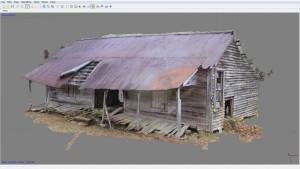
3D model of a Tasso Plantation dog trot. [University of Alabama]
“It brings archaeology, history and a little bit of anthropology together,” he said. “3D modeling really connects well with people, especially kids. When I’m excavating at a park and a group of visitors comes up to me, and I’m trying to show them the dirt stains, which we think are really interesting, sometimes it’s hard for people to envision what was there. With 3D modeling, I’m trying to tell a story, help them re-imagine what it was like.”
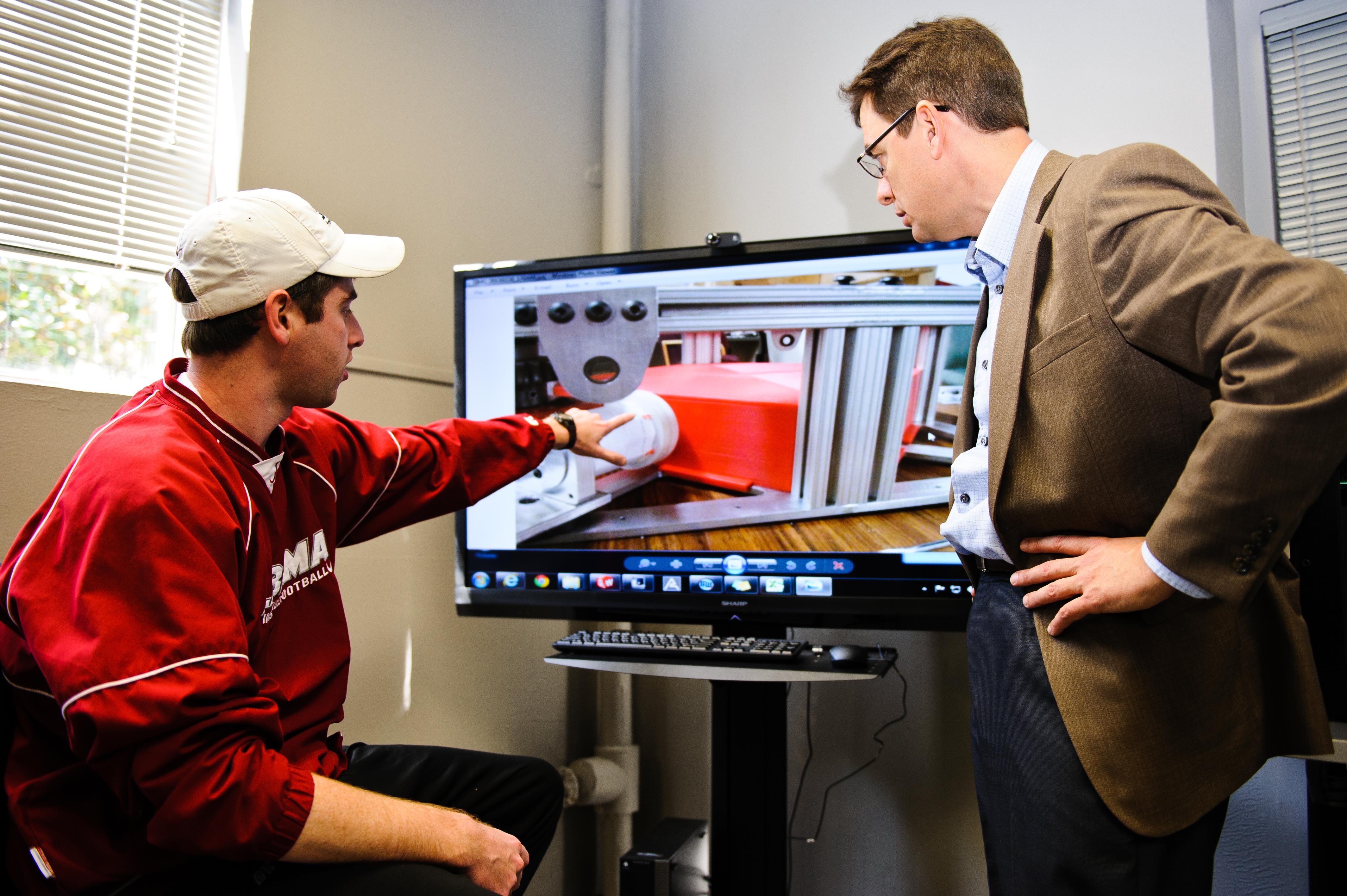
Dr. Andrew Graettinger, director of the UA 3D Printing Lab, discusses a design with a student. [University of Alabama]
“Sometimes artifacts break,” Stager said. “It would be good to get a good scan and then print them while they are still whole. It would also provide a better experience for museum visitors. While having the ‘real’ artifact behind a case looks cool, and it’s really neat to look at or read about, being able to interact with it often gives people a much better experience. It is a huge tool in connecting with the public.”
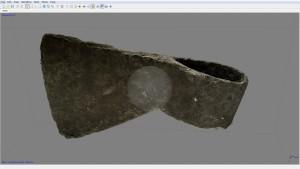
3D model of a British trade axe. [University of Alabama]
As technology continues to advance, OAR and other archaeological organizations will continue to use every method they can to discover and preserve pieces of the past that otherwise may have been lost forever. There’s still so much that we don’t know, but as time moves forward, the past is becoming much more visible. Discuss this story in the Rebuilding History forum on 3DPB.com.
Subscribe to Our Email Newsletter
Stay up-to-date on all the latest news from the 3D printing industry and receive information and offers from third party vendors.
Print Services
Upload your 3D Models and get them printed quickly and efficiently.











You May Also Like
Alloyed Develops New 1000°C Alloy for 3D Printed Flight-Ready Jet Engine Parts
Nickel-based superalloys and music (Bing Crosby and Fred Astaire, for starters) were best in the 1930s. Inconel and Hastelloy were invented in that decade, along with Scotch tape, the car...
Scaling AM Suppressor Production: Oerlikon AM & ATLIX Rise to the Challenge
End-of-barrel suppressors, oftentimes referred to as silencers, function by capturing and redirecting high-pressure propellant gases through carefully engineered internal structures and channels. By disrupting the gas flow before it exits...
From Material Maturity to Fleet Execution: What Comes Next for Additive Manufacturing in the U.S. Navy
Additive manufacturing is steadily moving from experimental use toward routine application in U.S. Navy shipbuilding, sustainment, and much more. In recent years, the Navy, working through its Maritime Industrial Base...
Fully Automated, “Continuously Re-Nested” Industrial 3D Printing: AMIS Launches AMIS Runtime
Automation is already a pillar of global manufacturing strategy, even as its practical limitations for continued expansion signal that manufacturers will require quite some time to figure out how to...