Materialise Announces Partnerships With Three South Korean 3D Printer Manufacturers



Materialise has been busy lately. The company, known for collaborating with 3D printer manufacturers to design customized software, announced today that they have established three new partnerships with South Korean printer manufacturers to create custom software suites for their printers. The new software, in all three cases, will be designed with a strong emphasis on accessibility, allowing both experts and novices to easily navigate and streamline the 3D printing process.
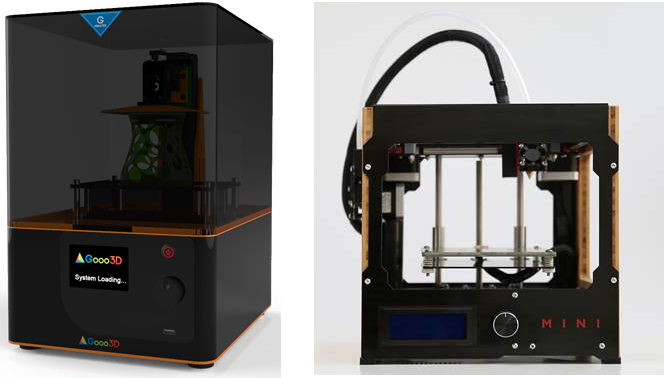
 Last week we wrote about the G Printer, the UV DLP 3D printer designed by Gooo3D that is gaining attention for being the first of its kind to have an embedded support system eliminating the need for a PC or network. Materialise announced today that they will be designing the printer’s software, which will be called G Printer Studio. The software, like the printer, will be designed to make 3D printing as uncomplicated as possible for users, allowing them to easily slice, repair and print their models. Incorporated into G Printer Studio will be Materialise’s fully automated support generation software, which will make the printer even more self-contained, as users will no longer need to generate support manually.

South Korean company Lincsolution will be one of the latest companies to benefit from Materialise’s customized Builder software, which has already been custom-designed for several companies to facilitate smooth communication between printers and software. The new Builder suite will be tailored to Lincsolution’s Link Pro desktop FDM printer, which is mostly used in the fields of education and research. The Link Pro software will combine a Build Processor framework with elements from Magics and will be designed to be fast and user friendly to make printing easy for 3D printing novices. Materialise’s 3DPrintCloud will also be in the mix, allowing for quick fixes to even the most error-filled designs.
“It is a great opportunity for us to collaborate with Materialise,” said Keunsik Choi, CEO of Lincsolution. “As a machine manufacturer, we find it important to stay competitive by adding a software solution to complete our desktop 3D printer offer.”
 Former’s Farm will also be benefiting from Builder Software. The Busan-based company, which also specializes in desktop FDM printers, is pretty well-rounded, manufacturing and distributing filament and providing print services for prototyping companies in addition to manufacturing printers. Their partnership with Materialise will generate the Form Builder software, which, like Lincsolution’s software, will incorporate 3DPrintCloud and will be designed to smooth the printing process for all users regardless of their levels of expertise.
“I believe that co-operating with Materialise can bring a marvelous change in the home 3D printing field that goes beyond the 3D printer,” said Ji-Hoon Kang, CTO of Former’s Farm. “This software can extend our usage of 3D printers.”
With these new partnerships, Materialise can expect to continue to build their reputation for collaboration. If they keep up this way, it won’t be surprising if they end up cornering the 3D printer software market. Let’s hear your thoughts on these partnerships in the Materialise forum thread on 3DPB.com.
Subscribe to Our Email Newsletter
Stay up-to-date on all the latest news from the 3D printing industry and receive information and offers from third party vendors.
Print Services
Upload your 3D Models and get them printed quickly and efficiently.













You May Also Like
SWISSto12 Closes $70 Million Series C Round
Swiss satellite manufacturer SWISSto12 has closed a $70 million Series C round. This follows $84.8 million that the company received from ESA and ESA member states, and previous rounds that...
Rocket Lab Buys Iridium in $8 Billion Deal, Creating a New SpaceX Rival
Rocket Lab is buying Iridium for $8 billion in a cash-and-stock deal worth $54 per share. Shareholders will receive $27 in cash plus additional Rocket Lab common stock. The company...
SWISSto12 and HPS/LSS Build Unfurling Antenna for Next-Gen Satellite
SWISSto12 is to work with HPS/LSS. High Performance Space Structure Systems and Large Space Structures are two separate firms that work together on large antenna reflectors. The two will work...
Japan’s Space Compass Corporation Buys a SWISSto12 Satellite
Japanese firm Space Compass Corporation has agreed to buy a SWISSTo12 GEO optical data relay satellite. The compact Hummingsat will be used for Space Compass’ optical data relay service. Space...