Chinese Turn to Customized 3D Printed Braces for Scoliosis Treatment

The medical applications for 3D printing continue to expand, encompassing numerous areas within both internal and external medicine. For instance we’ve see dozens of different 3D printed medical implants, as well as 3D models used for surgical preparation, and of course we also have seen the vast array of external 3D printed devices such as braces and prostheses.
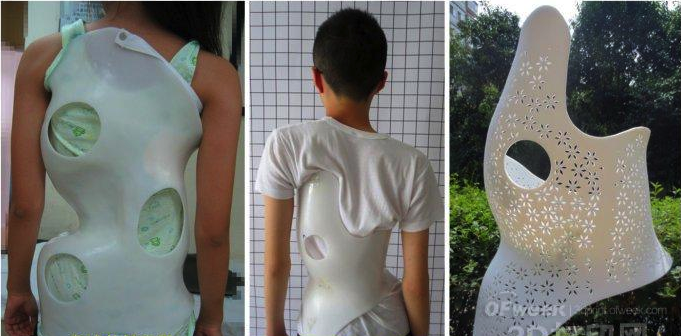
Last June the Rock Hill, South Carolina-based company, 3D Systems, unveiled their bespoke back braces which were entirely 3D printed and used to correct the curvature of the spine caused by severe scoliosis. Because the braces could be completely customized based on the shape of the patient’s body as well as their corrective needs, they were both more efficient and more comfortable for the patient to wear.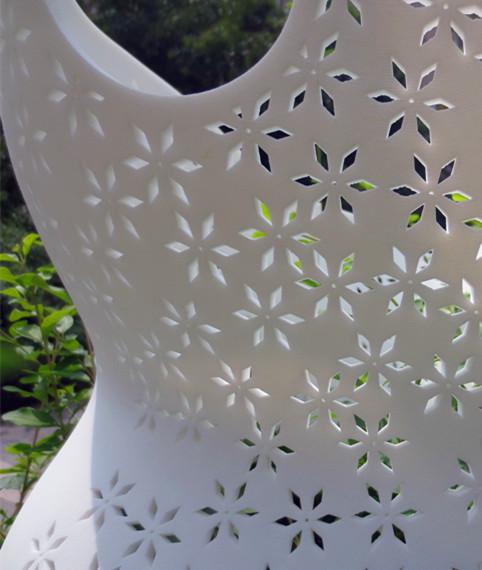
Here we are a little over a year after 3D Systems unveiled their innovative new braces, and now the Chinese are looking into the technology to treat similar conditions which include mild to moderate scoliosis.
The braces currently used in the medical field are clunky, uncomfortable, large and do not allow for the circulation of air. Considering that the braces are supposed to be worn for the majority of the day, these issues often lead children to find way to remove them. Embarrassment is often a reason that kids take their braces off, as they protrude out of clothing, and oftentimes other children poke fun at these abnormalities. 3D printing, however, can overcome almost all of the shortcomings of current corrective braces, and that’s just what Dr. Hans-Rudolf Weiss, MD and Orthopedic Surgeon in Gensingen, Germany has been working on with Chinese researchers at the National Rehabilitation Aids Research Center in Beijing.
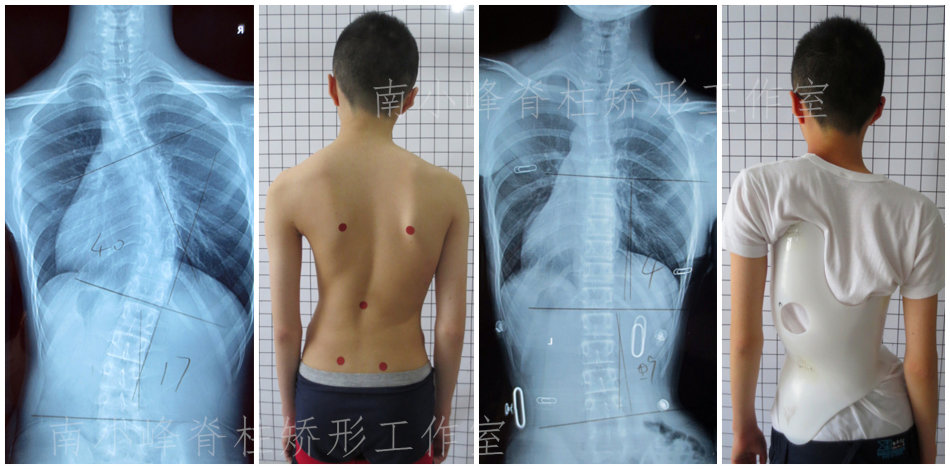
They have been able to utilize 3D printing to create customizable braces, which are slimly fit to the patient’s body and possess intricate patterns to increase air flow, while reducing the buildup of heat. The braces are fabricated using thermoplastics, making them incredibly light, but also strong enough to support the realignment of the patient’s back, as well as all the activities that children are used to taking to part in.
Dr. Weiss along with the National Rehabilitation Aids Research Center are continuing to develop these braces even further, making them more robust, lighter, and less noticeable. It’s research like this which continues to surprise many within the medical field, gradually driving additional funding towards the space. Let us know your thoughts on Dr. Weiss’ work and what these braces will ultimately mean for those suffering from Scholiosis. Discuss in the 3D Printed Back Brace forum thread on 3DPB.com
Subscribe to Our Email Newsletter
Stay up-to-date on all the latest news from the 3D printing industry and receive information and offers from third party vendors.
Print Services
Upload your 3D Models and get them printed quickly and efficiently.











You May Also Like
3D Printing News Briefs: February 19, 2026: Market Data, Africa, Metal Parts for Defense, & More
We’re starting with some business news for you in today’s 3D Printing News Briefs! The Wohlers Report 2026 is now available, Carbon announced its new Chief Technology Officer, and Farsoon...
“A More Complete End-to-End Solution”: Stratasys Launches Post-Processing Partnership Program
I think it’s safe to say that post-processing is no longer considered the “dirty little secret” of 3D printing that it once was, with users realizing that finishing is just...
Why SiC-Dedicated Additive Manufacturing Is Gaining Industrial Relevance
Silicon carbide is not a material problem—it’s a manufacturing one. Silicon carbide (SiC) has become a critical material across semiconductors, aerospace, energy, and defense. Its exceptional thermal stability, chemical resistance,...
3D Printing News Briefs, February 5, 2026: Advisory Board, Virtual Twins, & More
We’re starting with business in today’s 3D Printing News Briefs, including a new website launched by Metamorphic AM. Massivit appointed two senior leaders to its advisory board, and Dassault Systèmes...