3D Printed Wind Turbine for Urban Areas Charges Batteries and Small Electronic Devices

Whether you’re trying to get your home at least partially off-the-grid or are just looking for methods for using less electricity and saving money, Instructables contributor Jeff Heidbrier, of 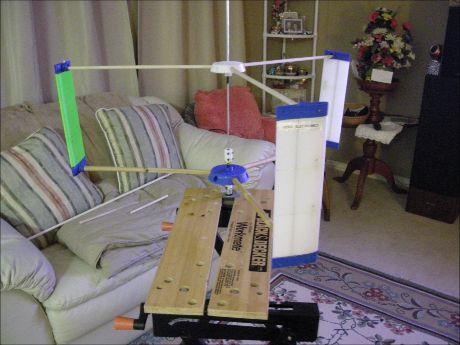 Mansfield, Texas, has a 3D printed DIY project for you. Heidbrier–or “Soliton,” which is his Instructables screen name–designed what he calls “an Experimental/Educational Wind Turbine.”
Heidbrier’s Hero Electronics Wind Turbine HE01 is what is known as a vertical axis wind turbine (VAWT). This particular design capitalizes on urban winds, which tend to come from different directions. It doesn’t have a “tail,” so it doesn’t need to shift position in order to begin spinning. It can be used to generate electric power for tasks like charging batteries or powering small electronic devices. The wind turbine is designed for low speed, so Heidbrier warns against trying to use it in areas of high wind speeds. In fact, it may sound completely counterintuitive, but if you live in an especially windy place or, conversely, a place where there’s little wind on an ongoing basis, you may be better off using solar power as your energy alternative.
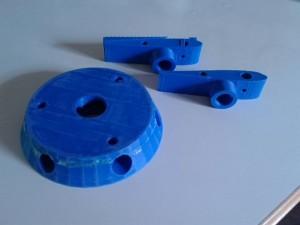 That said, Heidbrier seems to have modest and realistic expectations for the small wind turbine he designed and, in addition to being a moderately useful energy source, the project should provide a great learning experience.
This small wind turbine can be constructed using simple hand tools and the 3D printed parts can be printed in either ABS or PLA thermoplastic.
Heidbrier provides a list of materials and electronic components you will need for this project. Note that he warns that “variations in components, tolerances, or construction methods may cause the performance…to differ.” It seems best to go with the items on his list and follow his instructions closely. Here’s the supplies list:
- Stepper motor with 1.4 or 1.8 deg./step, 12 v with 5mm shaft
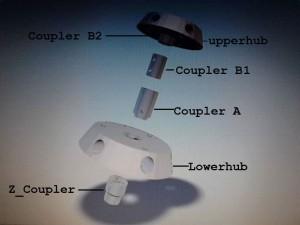
- Aluminum tubing 7/32 x .014 K&S – 5.56mm x 355mm. K&S stock #1112
- 12” of aluminum tubing 3/16 x .049 K&S stock #3060
- 3’ of aluminum tubing 5.54mm (not needed if you are gluing the blades together)
- 5mm – 3” steel rod
- Black electrical tape
- 3 bamboo or aluminum rods 18” long, 15mm diameter
- 5 M31-10 socket head cap screw with nuts, McMaster-CARR 0.5mm pitch
- Adhesive: hot glue, epoxy of any type
- Hardwood dowel rods diameter .378 x 3, approximately 18” long
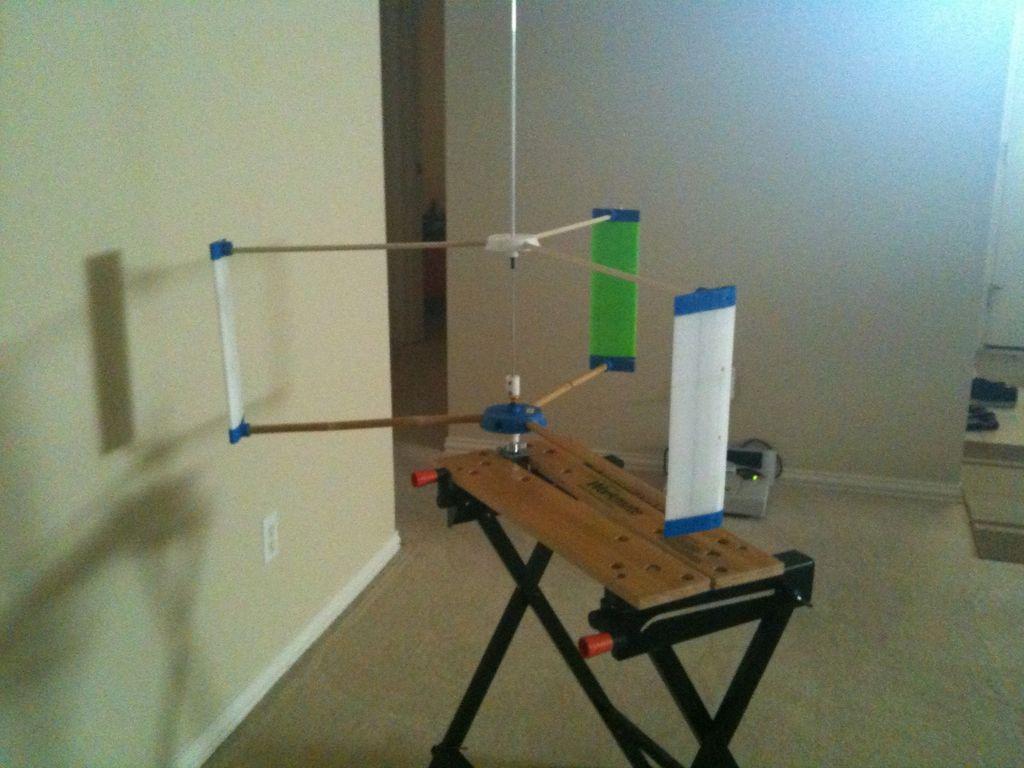 The comments section following Heibrier’s instructions includes some positive feedback as well as a video of the wind turbine in action. Apparently, one of his friends doubted the operational viability of the device, remarking, “You can’t do that…It will never work.” The confident and clearly competent maker’s rebuttal is amusing: “So, after it was completed, I tried everything to keep it from working but, no luck, it worked anyway!”
Let us know what you think of this bamboo-based turbine in the Urban Wind Turbine forum thread at 3DPB.com.
Subscribe to Our Email Newsletter
Stay up-to-date on all the latest news from the 3D printing industry and receive information and offers from third party vendors.
Print Services
Upload your 3D Models and get them printed quickly and efficiently.













You May Also Like
The Money Behind AM: What to Watch at AM Investment Strategies 2026
For years, simply being a 3D printing company could attract attention from investors. New machines, new materials, faster speeds, and the promise of mass production were often enough to get...
3D Printed Football Helmets Are Amazing Business. They’re Also So Much More
NFL football is by far the most popular sport in the US, followed by college football (a state-of-affairs oddly similar to the fact that the world’s largest air force is...
Continuous Composites Wins Navy SBIR for 3D Printed UAVs
In a diversification effort, Continuous Composites has decided to seek work outside of the courtroom. The company that has been successful in defending its patent portfolio in composite 3D printing...
When Data Becomes the Differentiator: Qualified Material Data is Changing the Future of Structural Additive Manufacturing
For years, additive manufacturing has promised engineers greater design freedom. The challenge wasn’t printing the part—it was proving the part belonged on an aircraft. Designing a lightweight bracket or consolidating...