What’s In the Box? NASA Unboxes the First Objects 3D Printed in Space

“What’s in the box? What’s in the box?”
– Brad Pitt as David Mills from the movie Se7en (1995)
 When the engineers at NASA’s Marshall Space Flight Center in Huntsville, Alabama, unbox cargo returning from the International Space Station, it’s a bit more of an involved process than simply tearing the box open and then experiencing the pure joy of stepping on the bubble wrap.
But thankfully, the NASA unpacking process is nowhere near as goofy, or schadenfreude-filled, as watching very sad people unbox overhyped stuff on YouTube.
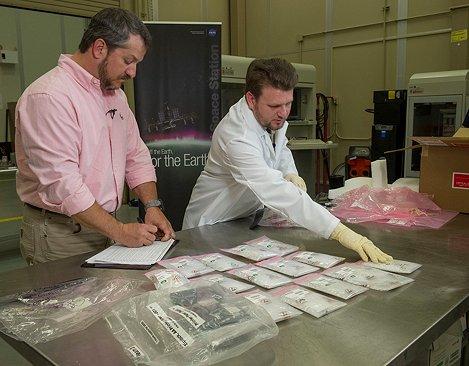 The NASA team was tasked with cataloging the first items manufactured in space with a 3D printer, and those objects were part of the 3D Printing in Zero-G Technology Demonstration.
The project on the ISS is meant to demonstrate how additive manufacturing can be used to make parts and tools in space, and resupply and provide logistical support for explorations of Mars or even asteroids.
From the moment ISS Commander Barry “Butch” Wilmore installed the printer as part of the ISS Microgravity Science Glovebox late last year, with his famous “emailed” wrench that you could print at home, the crew has manufactured other items in addition to that wrench. While these items were sent back as part of a resupply mission, the printer itself is still aboard the station for use throughout the coming year.
NASA says the ISS provides “a one-of-a-kind laboratory for demonstrating additive manufacturing in the microgravity environment.” The 3D printer even has its own Twitter account.
The project has thus far resulted in the 25 different items (from a total of 14 different designs) including the wrench and some calibration coupons. They were boxed up and made their way back to Earth on the SpaceX Dragon in February, and they were then delivered to Alabama for testing.
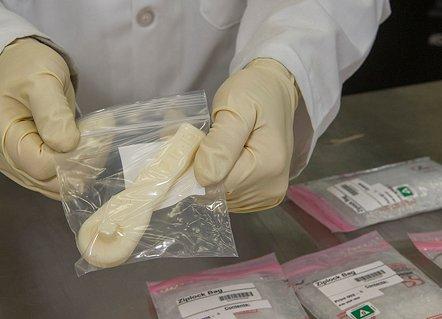 The first objects will now undergo testing such as structured light scanning to compare the part made in space with the original CAD model. Since NASA also printed the same pieces on Earth, scientists will be able to directly compare quality of objects created in 1-G (on Earth) and in Zero-G (on the ISS). They’ll also be examined in minute detail, checked for durability, strength, and structural soundness, as well as checked with an electron microscope.
NASA worked on the project with Made In Space, the California company that is also building an Additive Manufacturing Facility which features a next-generation printer for installation on the station. Made In Space says the printer will be available for use by commercial and government groups through the Center for the Advancement of Science In Space, or CASIS.
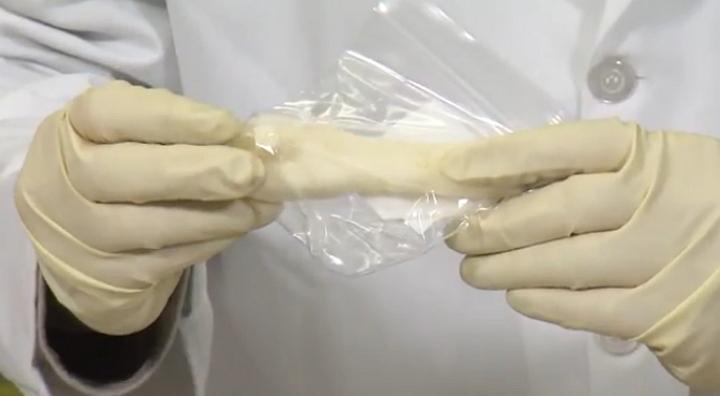
If you for one moment think NASA isn’t taking the project seriously, you can watch as Quincy Bean unboxes the “special cargo,” seen in the video below. Bean is the principal investigator for the space station printer, and to his credit, he manages to restrain himself as he removes and inspects those first items made in space with the 3D printer. Bean says that to protect the parts, they’ll remain sealed in bags until they can be tested.
What useful items can you see being 3D printed in space? Let us know in the What’s In the Box forum thread on 3DPB.com. Check out NASA’s unboxing video below.
Subscribe to Our Email Newsletter
Stay up-to-date on all the latest news from the 3D printing industry and receive information and offers from third party vendors.
Print Services
Upload your 3D Models and get them printed quickly and efficiently.











You May Also Like
Ceramitec 2026 3D Printing Wrap Up
I was surprised by just how many 3D printing companies and 3D printing projects there were at Ceramitec this year. I came away from the show convinced that the ceramics...
RusselSmith Brings Additive to Ghana’s Maritime Sector
Nigerian firm RusselSmith is in talks with Ghana’s Maritime Authority (GMA) to bring 3D printing to Ghana’s maritime sector. The Commonwealth Enterprise and Investment Council (CWEIC) helped make the discussion...
The Blueprint for Industrial Serial Production
Lithoz is kicking off the 2026 trade fair season with a powerful showcase of real-world applications of ceramic AM serial production capabilities alongside new material upgrades. The company is stepping...
Fraunhofer ILT Tests 3D Printed Titanium Reactors to Generate Hydrogen Onboard Heavy Vehicles
The Aachen-based Fraunhofer Institute for Laser Technology (Fraunhofer ILT) is to research titanium aluminide hydrogen reactors and heat exchangers. The hope is that lightweight, better-performing 3D printed components will make...