RusselSmith Brings Additive to Ghana’s Maritime Sector


Nigerian firm RusselSmith is in talks with Ghana’s Maritime Authority (GMA) to bring 3D printing to Ghana’s maritime sector. The Commonwealth Enterprise and Investment Council (CWEIC) helped make the discussion possible. This is an encouraging sign of increased capacity and expertise in additive manufacturing in Africa. And rather than an outside company parachuting in, this showcases manufacturing capabilities developed in Nigeria being deployed across the region.
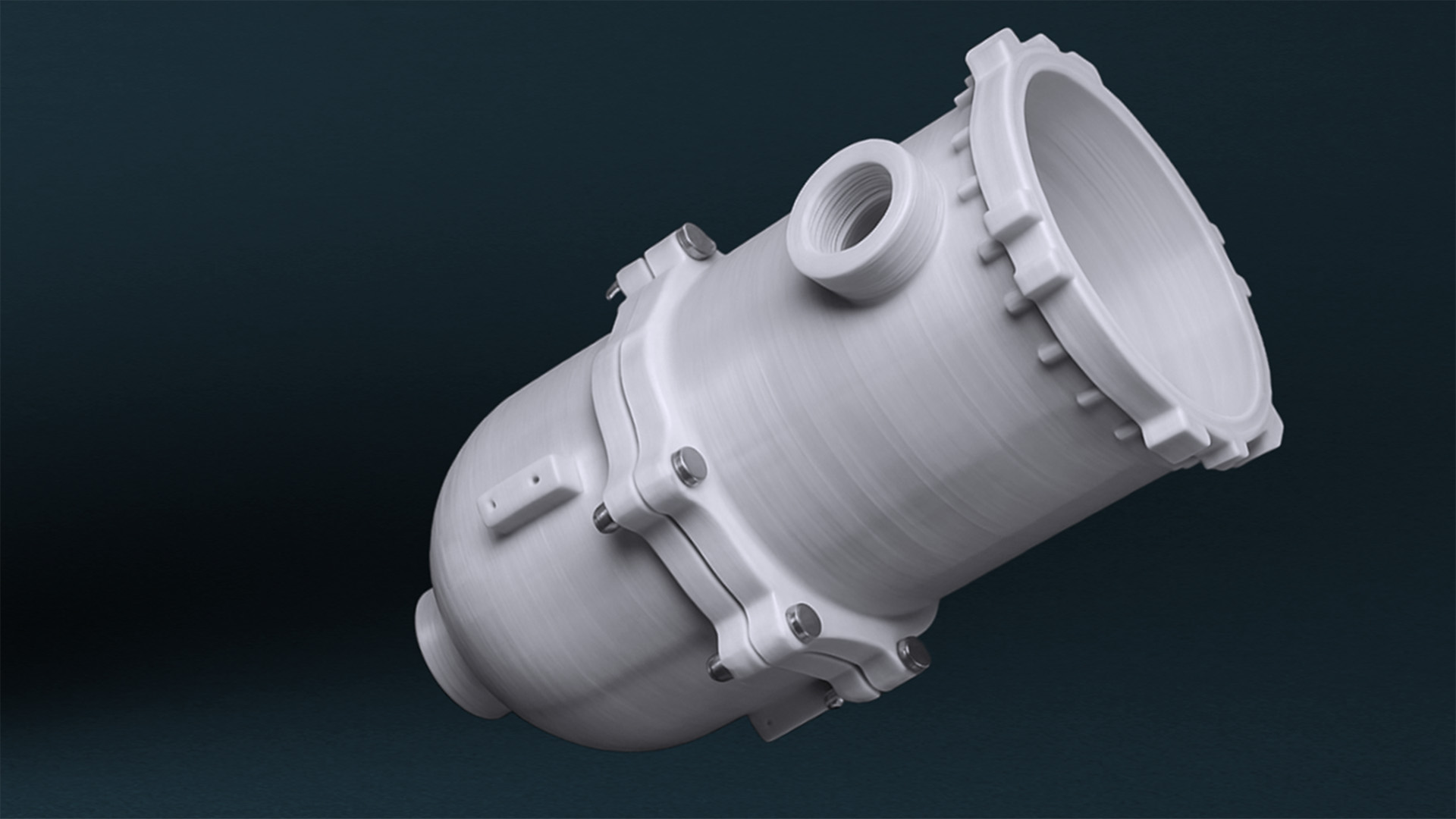
3D printed bag filter housing used in an industrial application. Image courtesy of RusselSmith.
RusselSmith has been active in advanced manufacturing for over two decades and has been working in additive for over seven years. RusselSmith CEO Kayode Adeleke said that Africa is estimated to have only 2% of the 3D printing market and,
“What we are building in Nigeria is advanced manufacturing infrastructure and exportable expertise. The interest from Ghana and other countries in the region validates our approach. When African countries can access advanced manufacturing capabilities locally, we reduce dependence on international supply chains, create high-value jobs, and retain economic value within the continent. What we are building in Nigeria is advanced manufacturing infrastructure and exportable expertise. The interest from Ghana and other countries in the region validates our approach. When African countries can access advanced manufacturing capabilities locally, we reduce dependence on international supply chains, create high-value jobs, and retain economic value within the continent.”
RusselSmith is working on the Omnifactory in Lagos. That is meant to grow into a Mega Omnifactory, an expanded production hub for Nigeria and beyond. Targeted industries include energy, maritime, and defense. As well as localizing, manufacturing lead time reduction and spare part lead time reduction are key goals.
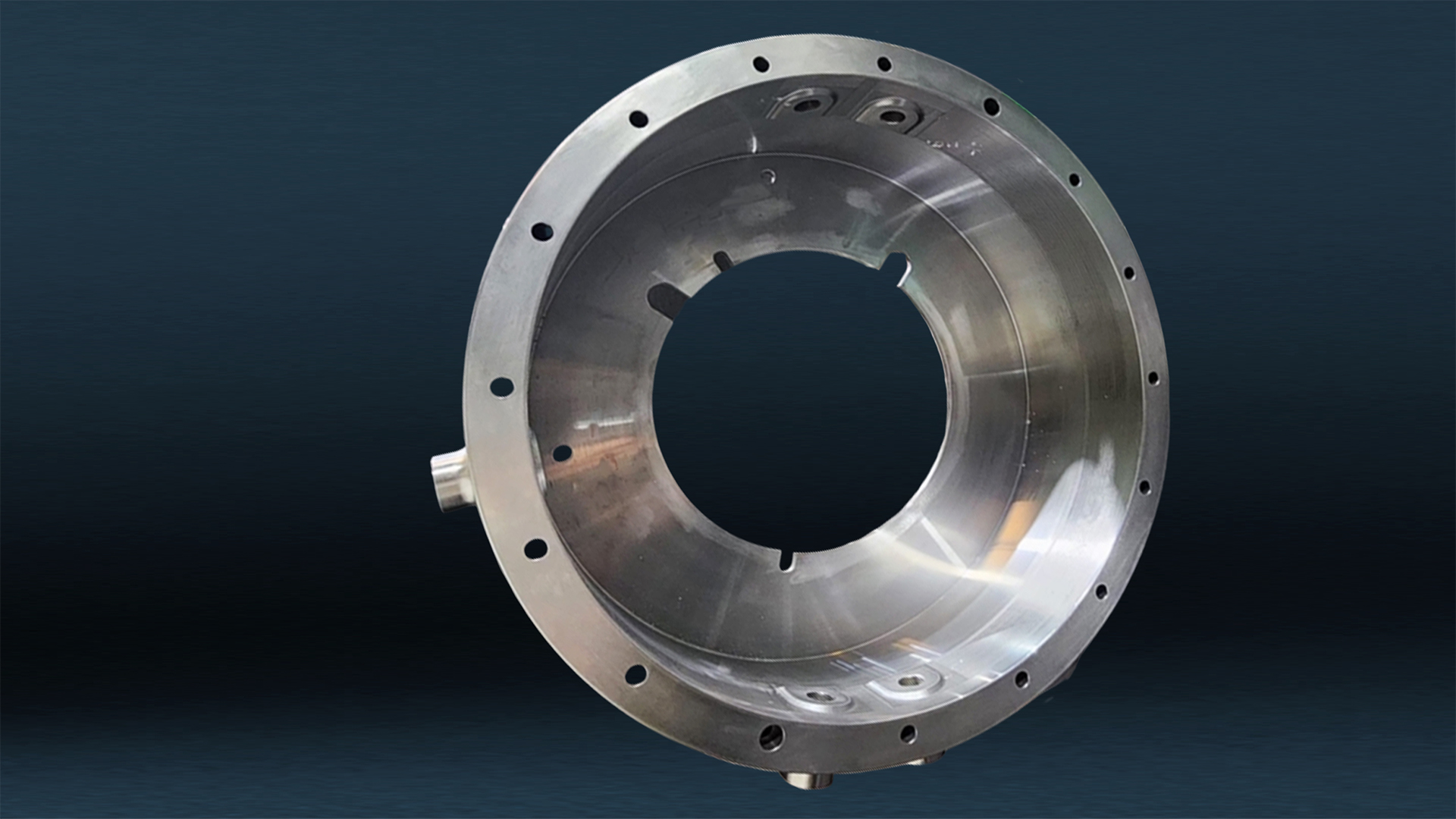
3D printed compressor coupling used in an industrial application. Image courtesy of RusselSmith.
RusselSmith is working on 3D printing boats up to 12 meters long in polymer. Additionally, the company offers 3D scanning services for reverse engineering parts. The company can also deploy digital warehouses, do DfAM, and print parts as a service. The company uses cold spray and LPBF 3D printing in stainless steel (316L, 17-4PH), tool steel, Ti, aluminum, and superalloys. It also offers polymer 3D printing for CF-reinforced materials, ULTEM 9085, PEEK, and elastomers. The firm has Roboze polymer machines and SPEE3D WarpSPEE3D cold spray. It has made a compressor coupling with Submerged-Arc Additive Manufacturing (SAAM) and EM12K wire, along with other industrial components across sectors such as maritime, oil and gas, and defense.
Previously, the Nigerian Upstream Petroleum Regulatory Commission (NUPRC) granted the firm permission to use PEEK 3D printed for oil field services MRO. The company has also partnered with 3YOURMIND and has shown that it can deliver on getting parts made. I really love what RusselSmith is doing. We lack systems integrators, companies that support the design-to-part workflow, and companies that are pushing additive into new regions. By doing everything at once, RusselSmith is showing us how to build a regional hub for additive manufacturing. In oil-rich Africa, spare parts are especially problematic because countries and distant fields are even harder to reach than other places. This makes Additive MRO very cost-effective indeed. With local knowledge and deep energy market expertise, RusselSmith is developing an integrated MRO solution coupled with digital warehousing. In effect, the firm is operating like an Immensa. Likewise, in solving the challenges of making parts to spec from scratch, the company enables oil and gas firms. Traditionally, African countries have been energy-rich, but almost all of the inputs and much of the money have been taken out of the economy with little flowing back in. There has been little local capacity building as well. In mastering additive, RusselSmith could perhaps leapfrog international firms in deriving the right parts locally, profitably. We know that for many parts, this will not work. But given the region’s huge offshore and onshore assets, the firm only needs a few parts for this endeavor to make a lot of sense. And if it scales up in volume, then this can grow considerably.
Subscribe to Our Email Newsletter
Stay up-to-date on all the latest news from the 3D printing industry and receive information and offers from third party vendors.
Print Services
Upload your 3D Models and get them printed quickly and efficiently.













You May Also Like
50,000 Orders and Counting: EPlus3D & Chinese AM Services Provider Are Scaling Liquid Cooling Solutions for AI Servers
An under-appreciated story driving the additive manufacturing (AM) industry this year has been the divergence between what’s driving the market in China and what’s driving it everywhere else. Let’s start...
Seven Trends Reveal What’s Next for 3D Printing at TCT Shenzhen 2026
TCT Shenzhen 2026 opened on October 14 in Hall 15 of the Shenzhen World Exhibition & Convention Center in Bao’an, and ran through October 16. The event brought together equipment...
With Increased Aerospace & Defense Focus, CORE Industrial Partners Buys More Manufacturing Firms
Private equity’s march into manufacturing continues with CORE Industrial Partners’ latest acquisitions. CORE purchased Fathom a few years ago, and later bought 3DXTECH LLC, Triton 3D LLC, and Gearbox3D. It...
Can India’s AM Push Help Make it a Viable Supplement to China?
Diversifying manufacturing supply chains to locales outside of China has nothing to do with actually cultivating “substitutes” to the Chinese economy. The real stakes are these: China is an irreplaceable...