Teachers Are Using 3D Printed Manipulatives to Help Children Understand Math

 It’s all about a “hands-on” approach for a group of California teachers who are using what they call “manipulatives,” toys and tools to help kids learn by doing with 3D printing. A group of developers from the MIND Research Institute, a nonprofit educational group in Irvine, California, are helping teachers build those manipulatives, and saving money in the process.
MIND says a single year of its ST Math® educational technology program in classrooms can have a significant impact on the performance of students. They say one school performing at the 50th percentile in the state moved up to the 66th according to a recent study by the independent education research firm WestEd.
The study was based on information gathered from 209 second through fifth grades and more than 19,980 students at 129 California schools who fully implemented the program.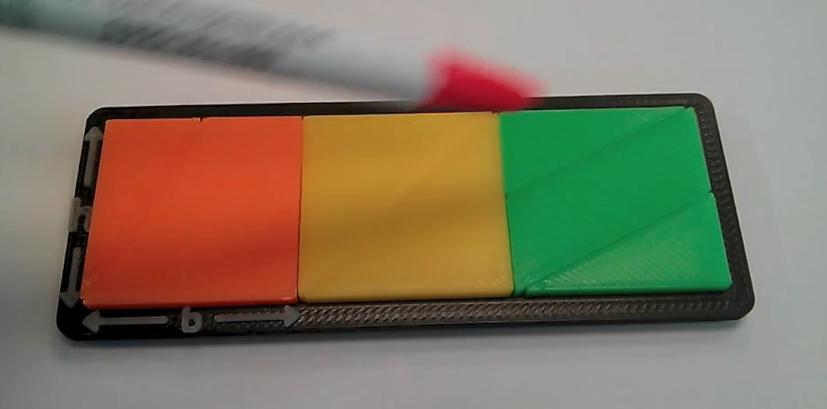
Ki Karou, a game-based learning designer at MIND, says in the past it’s been difficult to get students the tools they need because of cost and purchasing issues.
“We’ve seen this [3D printing] as a new tool that not just us, but other people, can use to get into the hands of kids,” Karou says.
Karou says the MIND Research Institute rolled out their 3D printing manipulatives for the first time last fall at the University of California, Irvine.
“Kids especially learn best through hands-on experiences,” Karou told scpr.org. “Manipulatives as a class of objects are really a way of taking these abstract symbols and bringing them to life so that kids can get more of a concrete understanding of how the math works.”
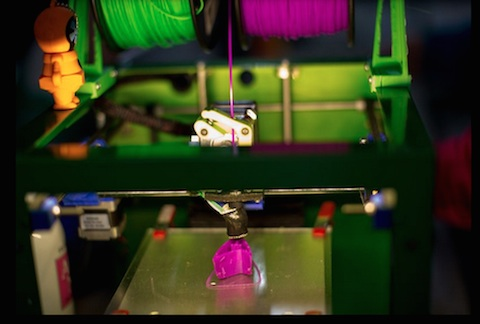 One benefit of 3D printing, according to MIND, is that if a teaching tool should happen to be broken or lost, teachers can print out a replacement and get back to work.
But using 3D printers to teach math concepts does present a new set of challenges. Karou says it might be necessary for a school district to provide some new resources to make the idea work effectively.
“You’re going to need someone who’s really a dedicated staff,” Karou says. “Someone that really understands how to use the technology and can explore that and find how to bring it into the curriculum.”
The students at Pasadena Unified Schools are already using computer-aided design tools — and 3D printers — to build objects for their math and art classes.
The MIND Research Institute has a six-person content development team, which works on building teaching tools to give students the conceptual help they need to understand math concepts.
The co-founder and CEO of the MIND Research Institute, Matthew Peterson, says learning math will be more attractive to students once they make the transition from word-based learning to visual learning techniques.
“This simple innovation of removing the language barriers is able to elevate math proficiency everywhere we put it,” Peterson says.
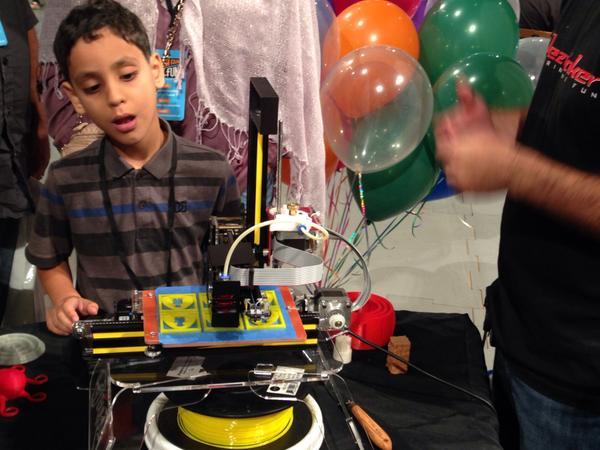 Meagan Mead of MIND says there are a number of ways a 3D printer can advance students’ conceptual understanding of fundamental and complex mathematics. She says a 3D printer “is a perfect example of an input/output” system, that a final printed product can demonstrate that it’s made up of a network of ‘x,y,z’ coordinates used to create the structure of an object, and that the technology can be used to show students concepts like how to intersect a plane with a cube.
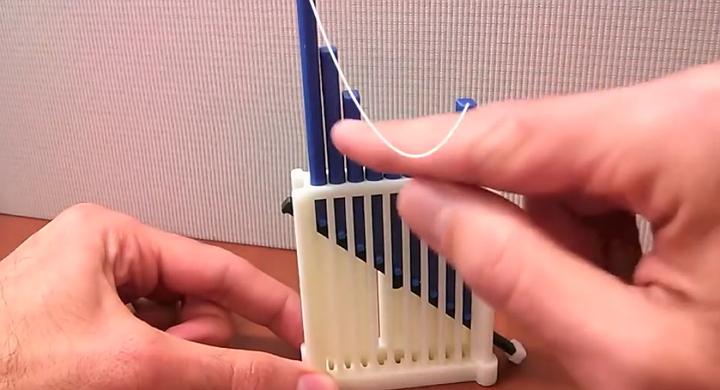
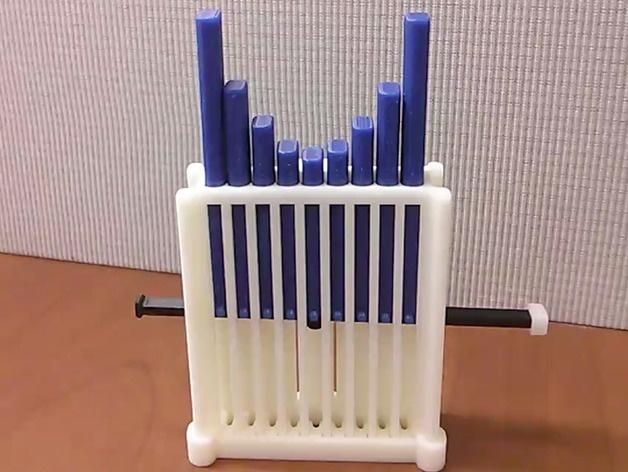
Do you think using 3D printed manipulatives will change the course of math education in the coming years? Let us know in the 3D Printed Manipulatives forum thread on 3DPB.com. Check out the video below of a 3D printed parabola manipulative to see how it clearly demonstrates a mathematical concept.
Subscribe to Our Email Newsletter
Stay up-to-date on all the latest news from the 3D printing industry and receive information and offers from third party vendors.
Print Services
Upload your 3D Models and get them printed quickly and efficiently.











You May Also Like
Reuniting ExOne and voxeljet: An Investor’s View on Building a Global Industrial Sand Printing Leader
Authored by Whitney Haring-Smith, Chair of the Board, ExOne Global Holdings & Managing Partner, Anzu Partners At Anzu Partners, we invest with conviction in industrial technologies that create categories—and then...
Adoption of Advanced Powder Metal Manufacturing in the Global Small Arms Space – SHOT Show 2026 Additive Manufacturing Analysis
Back in 2013, I remember being completely blown away when a company called Solid Concepts reportedly additively manufactured nearly a complete firearm as a proof of concept. Although desktop polymer...
AM-Europe, operated by CECIMO: Positioning Additive Manufacturing at the Core of Europe’s Industrial Competitiveness
As European industries face growing pressure to strengthen resilience, reduce supply chain risks, and meet sustainability objectives, additive manufacturing (AM) is emerging as a practical and strategic solution. Closely align...
Five Imperatives for CAD and PDM In The Additive Era
Additive manufacturing has reached an inflection point. Hardware capabilities continue to advance, materials portfolios are expanding rapidly, and automation is reshaping post‑processing and production workflows. Yet many additive programs still...