Bacteria And 3D Printing Collide to Form Art

While bacteria most likely won’t have their own Saturday morning cartoon any time soon, they have received quite a lot of attention over the years, not all of which has been negative. Despite the apparent bacteria-cidal 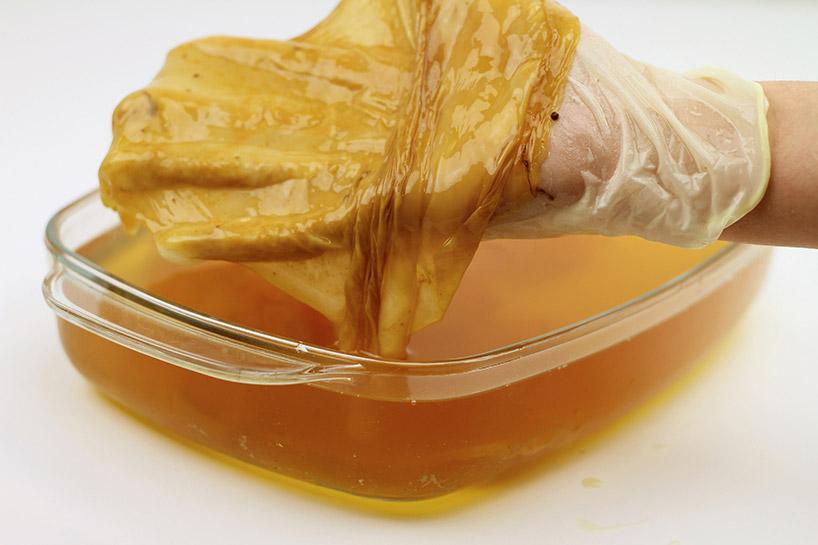 mania gripping hand sanitizer addicts, the positive and negative attributes of bacteria is much more of a mixed bag. It is true that bacteria are responsible for salmonella and gonorrhea among other horrors, there are also types of bacteria that eat human sewage and produce, as a convenient byproduct, rocket fuel. This is of little consolation to someone suffering gastrointestinal discomfort, but interesting nonetheless.
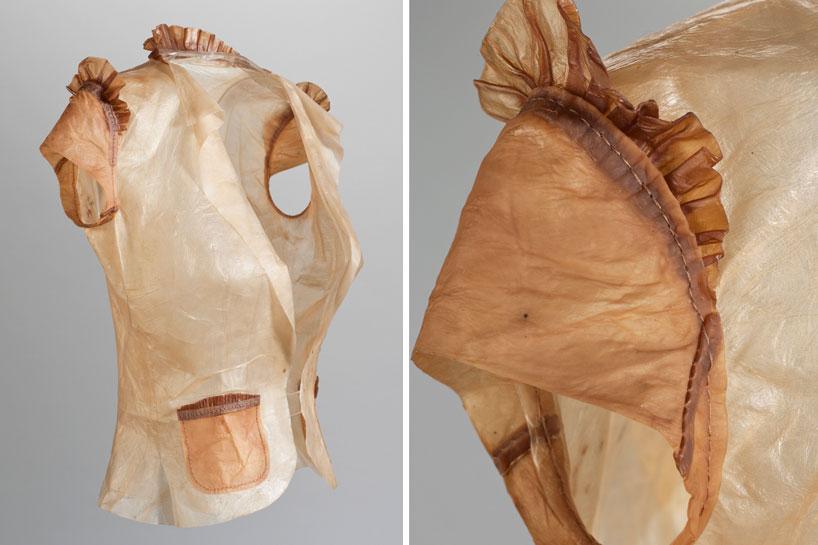
If you are a fan of sourdough bread or kombucha tea, you may positively adore bacteria. However you feel about the “wee beasties” they have captured the imagination of artist Sammy Jobbins Wells who used them to produce the surface of a garment. With a feeling much like human skin, the surface the bacteria create is given form by an underlying skeleton designed using the Delaunay Triangulation, as well as being placed over 3D printed molds in order to later dry and take form. It is reminiscent of the activity that many remember from childhood of spreading a layer of glue on your hand and then peeling it off in a single sheet.
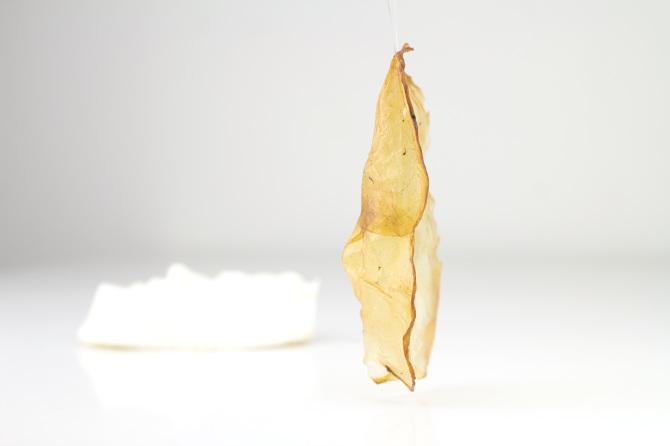
The bacteria is placed over a 3D print of a face, left to dry and then removed.
However, instead of spreading something on a surface to dry, this surface is grown using acetobacter xylinum, a strain of bacteria that consumes glucose and produces a microbial cellulose textile. This method of textile production is completely sustainable in that it consumes no energy for its production. The material itself is tensile and irregular, characteristics which interested Wells as she considered the intersection between the precision of digitally generated forms and natural biological processes.
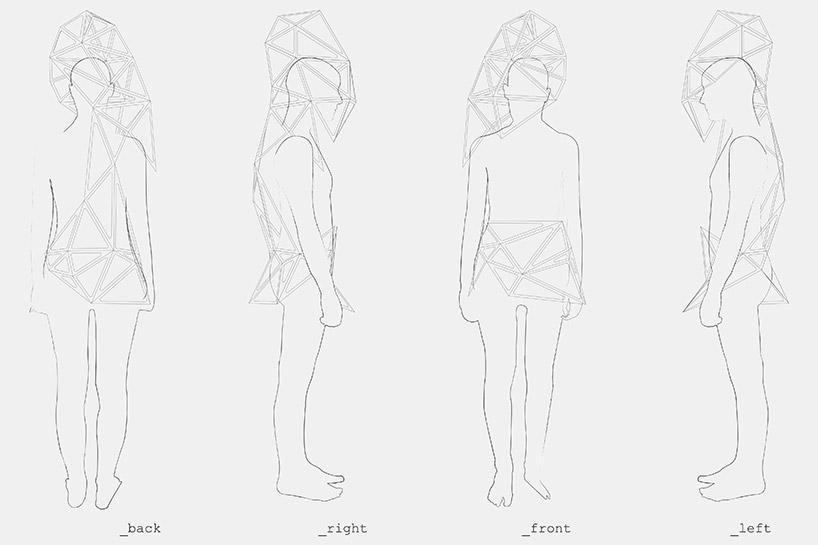 The underlying structure, created in Grasshopper, was inspired by the forms of antique animal bone corsets in that they provide rigid structures inhibiting free movement and, especially with the added ‘skin’, modify the overall surface of the body. Well’s creations wrap the waist and pelvis area, are directed up the back and finally encase the head of the wearer. The algorithmically generated forms are produced using rapid prototyping equipment and then the cellulose is able to contract and develop over the forms creating a perfect fit.
Suzanne Lee’s Bicouture Jacket
Wells is not the first artist to work with growing textiles. The London-based designer Suzanne Lee, a senior research fellow in the School of Fashion/Textiles, has created a series of garments in which she uses textiles created from bacterial cellulose. Her ‘biocouture’ jacket was produced by millions of bacteria that were grown in bathtubs of sweet green tea. What differentiates Well’s work is her interest in the interplay of digital and biological – sometimes conceived of as being binary opposites.
Wells hails from Australia but recently moved to pursue an MA in digital media at the University of the Arts in Bremen, Germany. Let’s hear your thoughts on Wells’ work, in the 3D printed bacteria art forum thread on 3DPB.com.
[Source: Cargocollective]Subscribe to Our Email Newsletter
Stay up-to-date on all the latest news from the 3D printing industry and receive information and offers from third party vendors.
Print Services
Upload your 3D Models and get them printed quickly and efficiently.











You May Also Like
3D Printing News Briefs, October 30, 2025: EASA Certification, Ultrasonic Metal Atomization, Kickstarter, & More
In today’s 3D Printing News Briefs, a Fortune 500 company has grown its deployment of 3DPrinterOS. The Aviation AM Centre achieved an important certification for metal additive manufacturing on EOS...
3D Printing Webinar and Event Roundup: August 25, 2024
3D printing webinars and events are picking up this week! In today’s roundup, Stratasys continues its advanced training and U.S. tour, and HP will hold the next session of its...
Blue Laser-powered M600 3D Printer Launched by Meltio
Founded in 2019 as a joint venture between Additec and Sicnova, metal 3D printer OEM Meltio develops and manufactures high-performance and easy-to-use metal 3D printing solutions that use its patented wire-laser metal...
3DPOD Episode 188: Clare Difazio of E3D – Growing the Industry, and Growing With the Industry
Clare DiFazio’s journey into the 3D printing industry was serendipitous, yet her involvement at critical moments has significantly influenced the sector. Her position as Head of Marketing & Product Strategy...