Roos Meerman Creates Art By Blowing Air Into Heated 3D Prints

Many people believe that there is a divide between science and art, but this false duality is belied by some of the greatest minds in history – from Aristotle, to da Vinci, to Einstein, to name just some of the heavyweights. There is no need to build a bridge between these two cultures of human thought as, rather than forming two objects in a binary system, they are instead located on a continuum that stretches the entirety of human knowing.
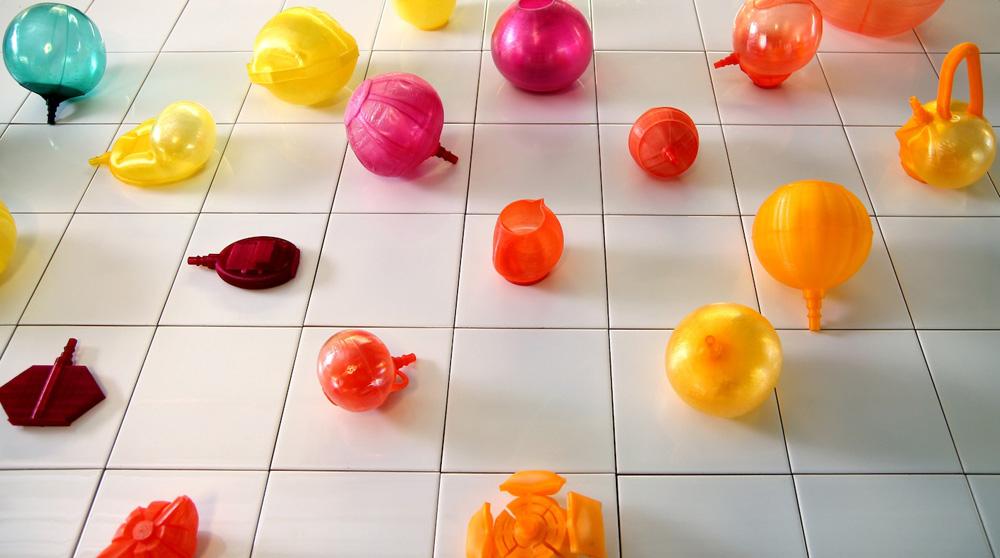
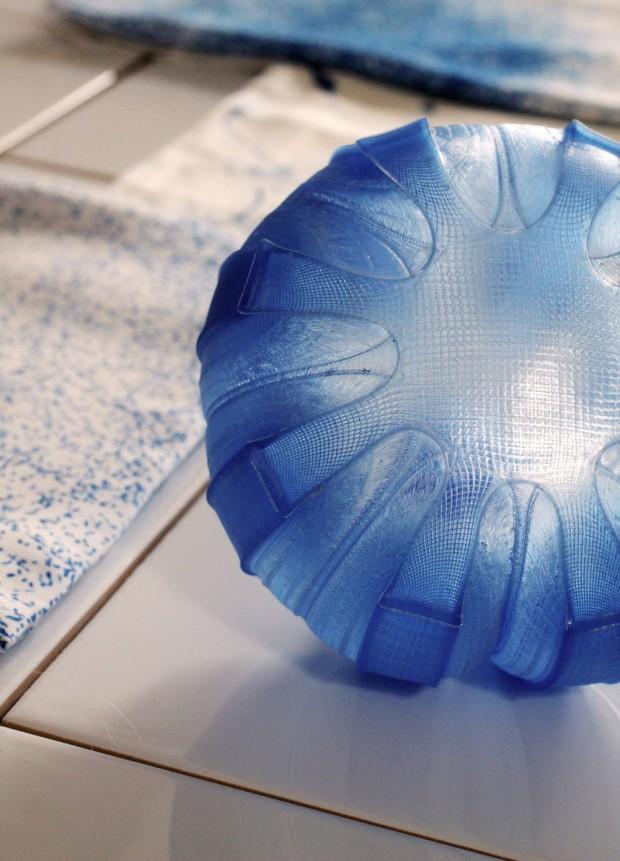
 Artist Roos Meerman practices at the heart of this continuum where materials science and aesthetics inform each other to create objects of startling beauty. Her project Aera Fabrica combines the potential of 3D printing with the process of glass blowing. The objects that she prints are modified after they have been created by using air to inflate them and temperature to control shaping, just as glass blowers have been doing for centuries but with a modern twist. Meerman described the explorations in her studio as, “giv[ing] space to knots in wood, shade of color in leather, bubbles in glass, and the collapse and contraction of porcelain to create unique materials and products.”
The final form of the object is only constrained by the way in which the 3D print was designed. Rather than being a formless blog of molten glass for which solely the artist determines the possible outcome, in this case, the final form is created at the intersection of the artist’s guidance and the objects inputs. Meerman explained: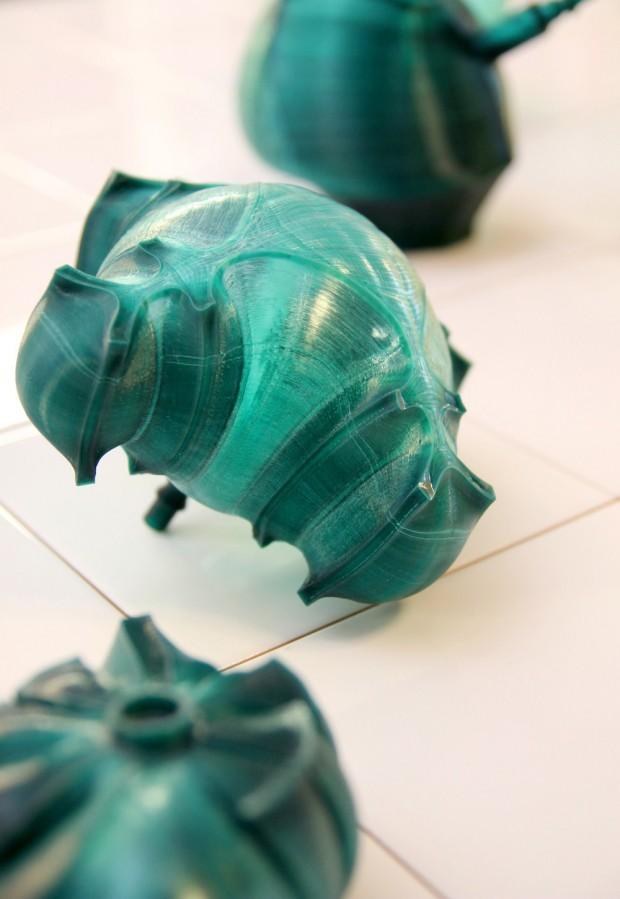
“For me, designing starts with experimenting with material: dipping, heating, melting, stretching, breaking, or freezing the material. I try to transform the tendencies and characteristics of the material and to provoke specific forms. I try to find interesting characteristics and the limits of the material by playing with it. My goal is to control the material but in such a way that it retains its freedom of movement, so the result is always unique.”
Meerman’s work continually explores the way in which mechanical data and traditional artistic production interact to create beauty. For her project Canorgraphy, for example, she created a machine that produced sound waves causing attached pens to vibrate and move over the surface. In this manner, elaborate patterns were created on textiles, one of the oldest forms of human production.
In all of her work, it is not possible to fully predict the final product based on the initial parameters. There is an element of surprise in each object and a near impossibility for exact replication. For Meerman, this is the ultimate exploration of the mechanics of natural production as even very similar circumstances can lead to minute variations within constraint. Each flower is slightly different than every other although based on the same set of instructions.
The 3D printed DNA for her objects Aera Fabrica imposes a set of constraints but also an avenue for metamorphosis and variation. Therefore, the pieces created do not lose the connection with the natural processes of the world simply because they have as their midwife, an advanced technology. Let’s hear your thoughts on this unique form of art in the Roos Meerman forum thread on 3DPB.com. Check out some of her amazing work below.
Subscribe to Our Email Newsletter
Stay up-to-date on all the latest news from the 3D printing industry and receive information and offers from third party vendors.
Print Services
Upload your 3D Models and get them printed quickly and efficiently.











You May Also Like
Würth Additive Group & B9Creations Announce Strategic Partnership at AMUG 2026
Last week, hundreds of additive manufacturing users (and a few journalists, like me!) met in Reno, Nevada to attend the 2026 Additive Manufacturing Users Group (AMUG) Conference. I’ll share more...
TV’s Scarpetta Suggests We Can 3D Print Full Human Organs. Reality Is… Not Yet
Having spent a good part of my journalistic career covering crime stories, it’s hard for me to stay away from any crime or medical forensic drama. So when Scarpetta premiered...
TCT Asia 2026: Empowering Asia · Connecting the World
TCT Asia, now in its 12th year, is more than just a 3D printing exhibition — it embodies its original concept: Time Compression Technology, a vision of making the entire...
Getting Down to Business at AMS 2026: Desktop Revolution, Dental Market & More
At the recent Additive Manufacturing Strategies (AMS) 2026 in blizzard-stricken New York City, those who were able to make it through the wind and snow got right down to business....