ArtiVasc 3D: Hybrid Inkjet & Laser 3D Printing Process Bio-Fabricates Artificial Blood Vessels

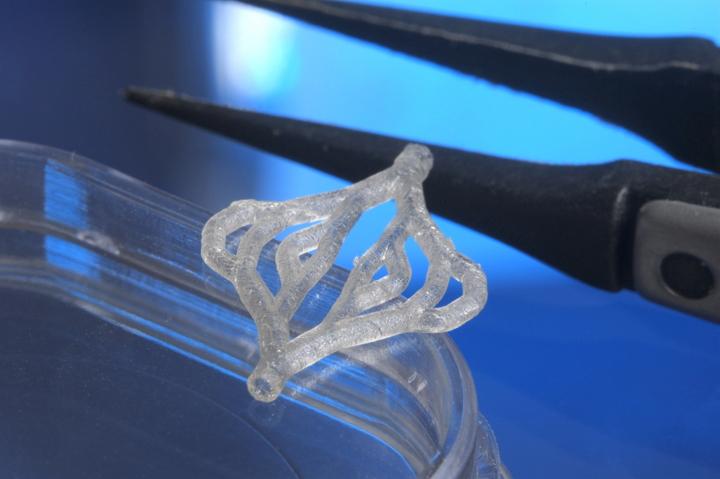 ArtiVasc 3D is set to unveil a micro- and nano-scale manufacturing technology which promises the generation of entirely “vascularised bioartificial tissue.” What it means is tissue which can use nutrition and metabolism and the “bioartificial vascularised skin” engineered using ArtiVasc 3D may well be the first system capable of creating replacement tissue for human use.
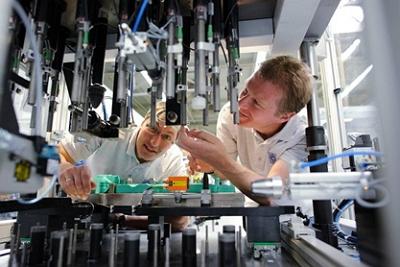 A multidisciplinary team of experts in biomaterial development, angiogenesis, tissue engineering, cell-matrix interaction and rapid manufacturing methods are working toward a fully automated and standardized manufacturing method to create tissue which can be used as transplant material for trauma treatment in humans.
The group also says these engineered tissues will be ideal as an in vitro skin equivalent for cosmetics, pharmaceutical and chemical substance testing.
The project is focused on creating an artificial, three-layered “perfused skin model.”
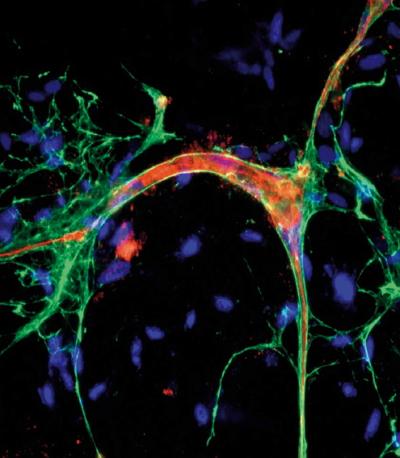 Led by the Fraunhofer Institute for Laser Technology (ILT), the research and development group has developed a 3D printing process which hinges on the production of artificial blood vessels.
This work has led to what the group says is a means of cultivating a full-thickness skin model – and at greater layer thicknesses than was previously possible.
Vascularization is the key to the process, and it’s one of the most challenging issues in the development of soft tissue. It’s a required process to supply cells with nutrition within the multiple layers of tissue such as artificial skin. At this juncture, it’s only been possible to build the upper layers of the skin – the epidermis and dermis. Those layers have a total thickness of up to 200 µm on the outside the human body, but a complete skin system includes subcutaneous tissue, and that layer may be up to several millimeters thick.
ArtiVasc 3D says their goal is “enabling significantly more complex tissues to be cultivated in vitro by developing artificial blood vessels.”
To make it happen, the scientists at ILT say they’ve combined the freeform methods of inkjet printing with stereolithography, and using those processes, they’ve achieved a very fine resolution for constructing branched, porous blood vessels with layer thicknesses of about 20µm. Using mathematical simulations, they developed the data needed for the construction of these branched structures, and that means the constructs will allow uniform blood supply.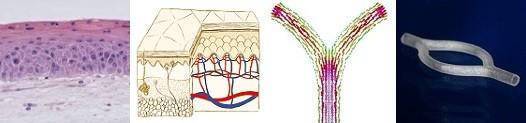
An acrylate-based synthetic polymer, developed specifically for the project, allows the team to construct optimized vessels with a pore diameter in the range of hundreds of microns, and as compared to conventional methods, the ArtiVasc 3D method is the first to arrive at branched and biocompatible vessels in this size.
“A toolbox has been developed that can respond flexibly to diverse materials, shapes and sizes. These results can be viewed as a precursor to a fully automated process chain for the production of artificial blood vessels, and which can also be integrated into existing lines,”
they say in their concluding report. “Another highlight of the project is the successful breeding of adipose tissue in a novel bioreactor. The combination of the fatty tissue with an existing skin model allowed the production of a full-thickness skin model which has a thickness of up to 12mm.”
And ArtiVasc 3D says the project may well prove to be the foundation for more bold feats of three-dimensional tissue engineering such as the construction of larger structures, perhaps even whole organs.
The researchers are prepared to present their findings at Fraunhofer ILT on October 28-29, 2015, in Aachen, Germany.
What do you think of this initiative which promises a solution to the toughest problems when it comes to 3D printing human tissues and skin? Let us know in the ArtiVasc 3D forum thread on 3DPB.com.
Subscribe to Our Email Newsletter
Stay up-to-date on all the latest news from the 3D printing industry and receive information and offers from third party vendors.
Print Services
Upload your 3D Models and get them printed quickly and efficiently.











You May Also Like
3D Printing News Briefs, November 29, 2025: Submarine Industrial Base, Running Shoe, & More
In this weekend’s 3D Printing News Briefs, we’ve got more news from Dyndrite, which has launched the NXG Slice Viewer for Nikon SLM Solutions. Farsoon Europe has news to share...
Clecell Turns Stem Cells into 3D Printed Human Skin in the Lab
South Korean biotech startup Clecell has achieved what many tissue engineers have long sought: a reproducible, full-thickness human skin built entirely from induced pluripotent stem cells (iPSCs), using bioprinting. Clecell’s...
3D Printing News Briefs, October 25, 2025: Strategic Investment, Inner Ear Organoids, & More
In this weekend’s 3D Printing News Briefs, we’ll start off with some business news, as Xact Metal announced continued double digit growth in Q2 and Q3 of 2025, and the...
3D Printing News Briefs, September 6, 2025: SBIR Awards, Regenerative Medicine, & More
In this weekend’s 3D Printing News Briefs, we’ll start with some exciting funding news, as NIST has awarded over nearly $2 million to small businesses working to advance AI, additive...