Cutting-Edge or Cutting Corners? The In-situ Inspection Dilemma



For years, in-situ monitoring has been positioned as the answer to real-time quality control in additive manufacturing (AM). The promise? Immediate insights into the build process, fewer post-inspection costs, and greater confidence in part quality. But the reality has been far more complicated.
Many early in-situ monitoring systems failed to deliver meaningful, usable data. They relied on visual monitoring or subjective thermal cameras – methods that lacked repeatability and objective measurement, leading manufacturers to mistrust the technology altogether. The misconception that any in-situ monitoring is beneficial has allowed inadequate solutions to persist, leaving users frustrated when the data proved unreliable.
The Pitfalls of AI-Driven Monitoring
Artificial intelligence is a powerful tool, but when applied using subjective data sources, can lead to misleading and dangerous conclusions. Many companies have turned to AI-driven in-situ monitoring, training models on visual data to predict part quality. The problem? These models are only as good as the data they are trained on, and in many cases, that data is subjective and not trained on the machine you are using.
Unlike manufacturing processes that rely on unit-based, quantifiable inspection methods, AI-driven monitoring using visual images introduces a layer of uncertainty. A model trained on past builds might detect anomalies, but it cannot explain why they occur or ensure repeatability across different machines, materials, or production environments.

Figure 1- Fringe Inspection measures every layer of the build, outputting a heightmap (right) compared to a subjective visual image of the build (left), courtesy of Phase3D
This approach leaves manufacturers trusting a black box—one that lacks the objectivity, precision, and traceability required for quality-critical industries like aerospace, medical devices, and defence. Without a clear understanding of the root cause of failures, manufacturers are left reacting to problems instead of preventing them.
Phase3D: A Different Approach to In-Situ Inspection
At Phase3D, we believe the industry deserves more than black-box AI solutions. Fringe Inspection™ provides objective, quantifiable, and repeatable data, measuring every layer of the build to detect anomalies which lead to build failures or part failure during inspection.
Unlike traditional monitoring systems that rely on visual images, heat signatures, or indirect indicators, Fringe Inspection™ delivers unit-based measurements, creating a digital twin of the 3D profile of every layer to detect variations in powder distribution like recoater streaks, part protrusions, and other build-failing anomalies.
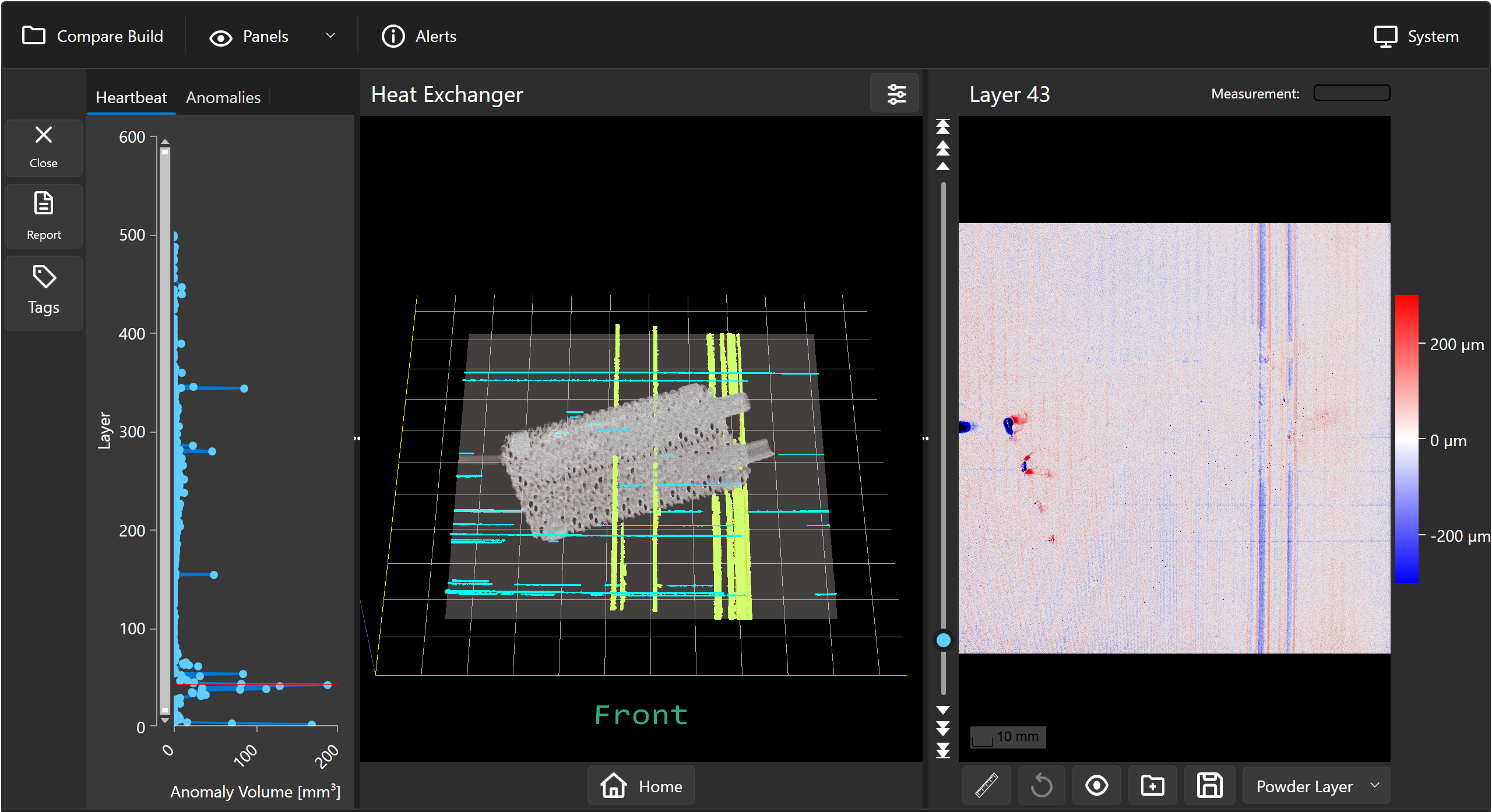
Figure 2 – Fringe Operator is a visualization and analysis tool for customers to identify anomalies that cause build failures in real time, courtesy of Phase3D
Phase3D’s impact on the industry means manufacturers no longer have to guess whether a part is good or bad—they can measure exactly what is happening in the build. By identifying the root cause of defects, Fringe Inspection™ enables users to make informed decisions about their builds rather than relying on black box AI-generated predictions.
The Value of Early Detection
The ability to detect and quantify anomalies at the layer level presents a significant opportunity for manufacturers. Instead of relying on expensive post-inspection techniques—such as CT scanning, X-ray, or destructive testing—to validate parts, Fringe Inspection™ enables manufacturers to catch issues early and reduce the number of defective builds.
This does not eliminate the need for post-inspection—but it makes it far more economical. Instead of spending resources inspecting parts that were already defective during the build, manufacturers can now focus post-inspection on certifying high-quality components.
The impact is twofold:
- Improve delivery timelines—Manufacturers can prevent defective parts from being completed, increasing printing utility.
- Decreased costs—By catching bad parts early, companies can allocate post-inspection resources more efficiently.
By using Fringe Inspection™, manufacturers gain a proactive approach to quality control—one that improves efficiency, reduces costs, and increases confidence in AM as a production-ready technology.

Figure 3 – Fringe Qualification tracks build performance across a fleet of printers to track waste for every machine and material, courtesy of Phase3D
The Future of AM Inspection
For AM to scale into a mainstream manufacturing process, in-situ inspection must move beyond passive monitoring and into actionable, data-driven process control. The industry cannot afford to cut corners by relying on unvalidated AI predictions. Instead, manufacturers need reliable, transparent measurement technologies that provide repeatable, traceable, and trusted data.
Fringe Inspection™ is already being adopted by leaders in aerospace, defense, and research organizations who require high-confidence inspection data. By providing layer-by-layer analysis, manufacturers gain real-time insights that drive better decision-making, reduce risk, and accelerate AM’s adoption as a scalable, production-ready process.
We will be presenting more on Fringe Inspection™ and more at Additive Manufacturing Strategies (AMS) 2025, where industry leaders come together to explore the future of AM technologies.
Learn more about Fringe Inspection™ and Phase3D at www.phase-3d.com.
Subscribe to Our Email Newsletter
Stay up-to-date on all the latest news from the 3D printing industry and receive information and offers from third party vendors.
Print Services
Upload your 3D Models and get them printed quickly and efficiently.












You May Also Like
Two Days Until AM Investment Strategies 2026: What Will Industry Leaders Have to Say?
AM Investment Strategies 2026 Nov. 5 · 12 p.m. ET · Free online event RESERVE YOUR SPOT ↗ With Formnext 2026 just around the corner, the 3D printing industry has...
Formnext 2026 Preview: Ceramics 3D Printing, Post-Processing, & More
In just a few weeks, it will be time for the biggest trade show extravaganza in the additive manufacturing (AM) industry. Soon, we’ll all be hopping planes bound for Frankfurt...
AM Investment Strategies 2026 Sets the Stage for AMS 2027
AM Investment Strategies 2026 Nov. 5 · 12 p.m. ET · Free online event RESERVE YOUR SPOT ↗ A one-hour online discussion featuring some of the biggest names in 3D...
Several New Engineering and Dental 3D Printing Materials Recommended
In 3D printing, the printer determines how a part is made — the material determines what can be made. Rather than another general-purpose material, the new ANTINSKY lineup answers specific...