Peugeot Fractal Concept Car Features A Wild 3D Printed Interior

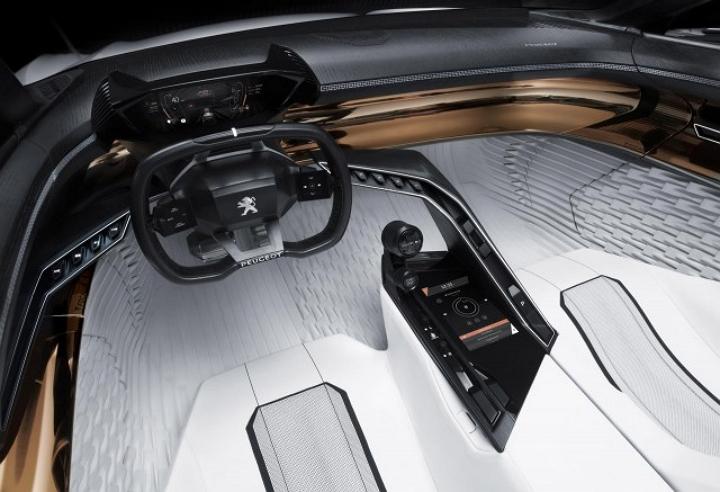
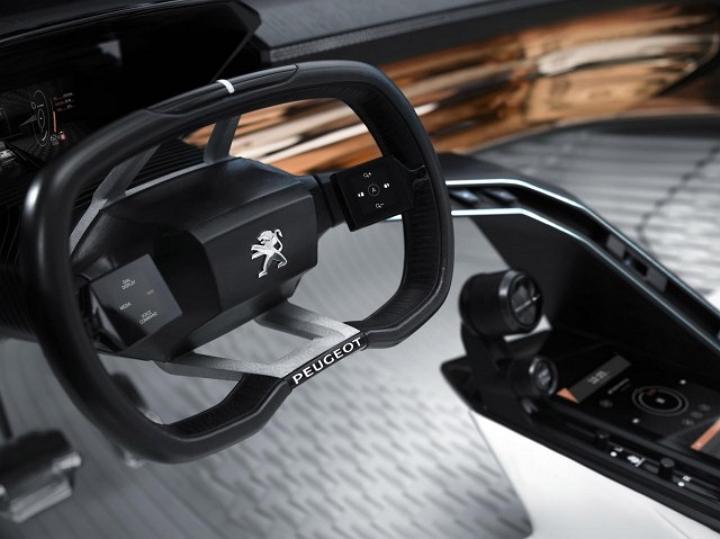
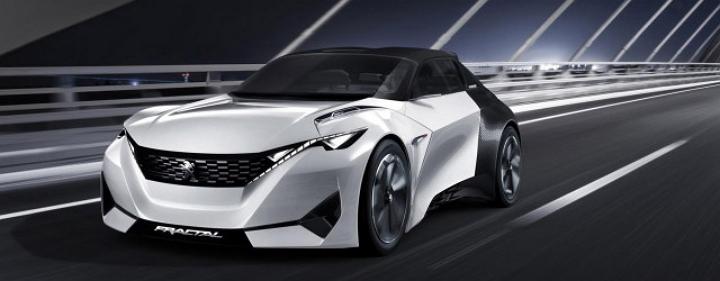
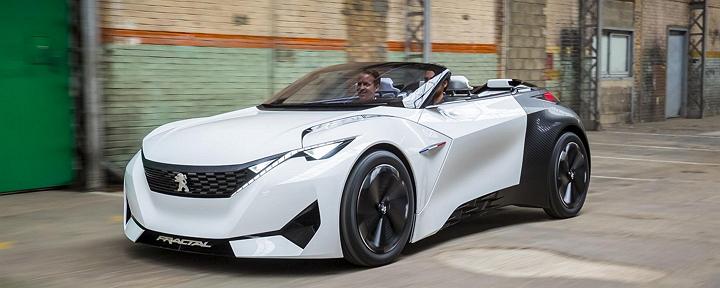 The Peugeot Fractal is a concept electric urban car, but perhaps the most interesting feature of the vehicle is what the company is calling the Peugeot i-Cockpit, a 3D printed exploration of what a vehicle’s interior might be in the future.
Peugeot’s Citroen research unit, StelLab, and Focal, a French electro-acoustic sound system firm, have created a 13-speaker sound design that features “tactile bass systems” which are built into the back of each seat to create what the companies says is the ‘spatialization’ and ‘dynamization’ of the acoustic environment inside the car.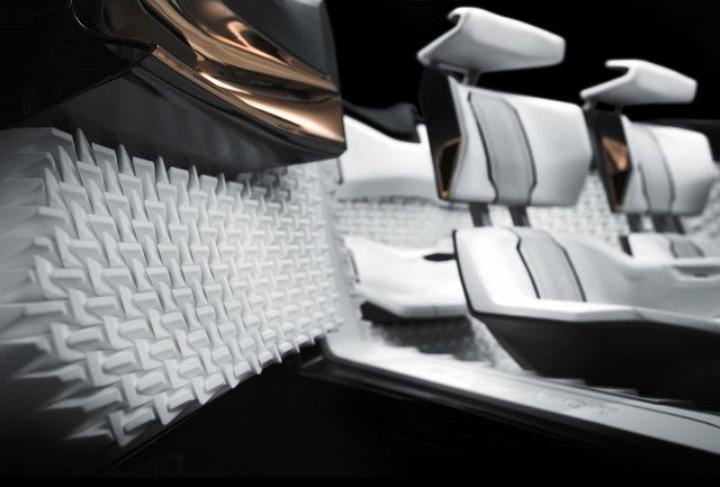
Designed and developed in partnership with sound designer Amon Tobin, the Peugeot Fractal also includes a heads-up display with an HD holographic screen and a polycarbonate strip that delivers additional information and creates an impression of depth.
They call the car an “ideas incubator,” and 3D printed parts represent just over 80% of the interior trim surfaces in the vehicle. The design uses anechoic materials formed via generative design. These anechoic chambers, while they reduce the intensity of sound waves and noise levels, also tune the sound environment by causing those waves to bounce from one surface to another, and Peugeot says the design would have been impossible to create with conventional methods.
Covering more than 15 square meters of the car’s interior, the design process used algorithms to correctly configure the materials to ensure acoustic efficiency, and 3D printing allowed the team to create the highly complex parts and surfaces required.
The Fractal is driven by a pair of 40 kW/h lithium-ion batteries, housed in the vehicle’s floor tunnel to lower the center of gravity and improve weight distribution, and the juice flows to a pair of electric motors located on the front and rear axles.
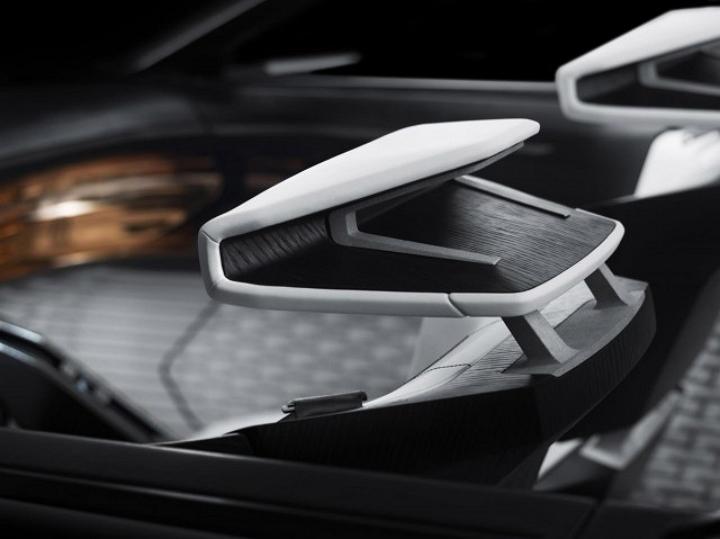
But it’s the i-Cockpit concept with its ergonomics, ambiance, choice of materials inspired by auditoriums and recording studios and 3D textile mesh which covers the seats that make the car a groundbreaking piece of conceptual art.
An American start-up company, SubPac,developed the tactile bass system which offers “a new physical sensory experience” where the bass travels through a solid medium. It means that the driver and passengers experience the sound waves through their body rather than through the airwaves to avoid unwanted interference in the interior’s environment.
Brazilian sound designer Tobin also tuned the Peugeot Fractal’s external sound production as well, and pedestrians and cyclists experience different sounds to mark the car’s acceleration and deceleration.
“Peugeot Fractal is the fruit of collaboration between artists exploring new horizons. We worked with the designers to pool our resources of inspiration. The style is inspired by the sound, and my design draws on the Peugeot Fractal’s looks and materials,” Tobin says.
While it’s not blazing fast – the 1,000 kg Fractal goes from 0 to 62mph in 6.8 seconds – four-wheel-drive electric steering does allow for outstanding efficiency in the city and stability at high speed.
Peugeot plans to roll out the Fractal for the public at the The Frankfurt International Motor Show on September 15.
What do you think about this concept car from French manufacturer Peugeot, the Fractal? Let us know in the 3D Printed Peugeot Fractal forum thread on 3DPB.com.
Subscribe to Our Email Newsletter
Stay up-to-date on all the latest news from the 3D printing industry and receive information and offers from third party vendors.
Print Services
Upload your 3D Models and get them printed quickly and efficiently.













You May Also Like
Solid Rocket Motors: the First Big Scaling Test for AM in the US Defense Sector
The additive manufacturing (AM) industry has become obsessed with the opportunity for drones, and there’s certainly good reason for that. But before drones, the big focal point in AM for...
Why the AM Industry Should Pay Attention to Schneider Electric’s $22.6B PTC Acquisition
By late 2024, there was already enough signaling of the additive manufacturing (AM) industry opportunity in the data center infrastructure market for AM Research to write a report on the...
AM Demand Signals: Reshoring the Robotics Supply Chain
The Federal Communications Commission (FCC) recently banned the sale in the US of “almost all” new mobile robots sourced from foreign countries. IEEE Spectrum (the link in the first sentence)...
3D Printing Financials: $28M in China, U.S. Deals and a Metal AM Comeback
Money continues to go into additive manufacturing (AM). From a $30 million raise for a Chinese metal 3D printing company to new funding for naval AM and a European company...