University Student Uses 3D Printing Technology for Snowboard Binding System


 The BOA System is a proprietary closure device made of of steel lace, nylon guides and a mechanical reel and it’s used to provide closure to boots and other wearables. A turn of a knob tightens down the mechanism, and with more than 25 million products using the system worldwide, it’s no less than a reinvention of the way shoes, medical braces and sporting equipment are fitted.
 When surfer and entrepreneur Gary Hammerslag founded it in the 1990s, the inventor was frustrated by what he saw as the shortcomings of traditional laces on snowboard boots and hockey skates. So he began to prototype a better way of making them fit and stay on duty. In relatively short order, snowboarding brands from K2 to Vans began using the device, and those early adopters were quickly joined by manufacturers in golf, cycling, utility and safety and medical products.
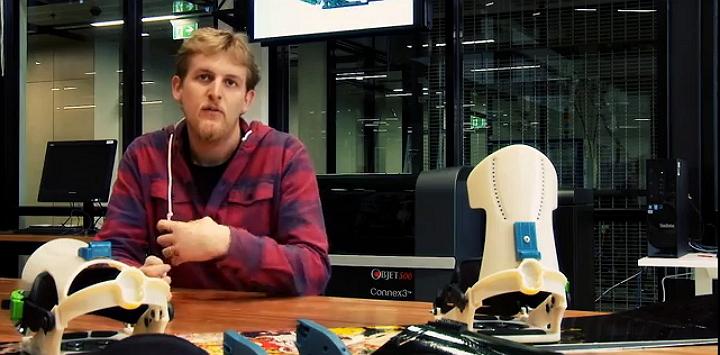
Robert Leen, a snowboarder and design student, was working on a 3D printed snowboard binding, and planned to incorporate the BOA Closure System. Leen’s project, supervised by Paul Collins and Clara Usma-Alvarez at the Centre for Advanced Design in Engineering Training at Deakin University, helped Leen create his product.
Called the GripTight BOA System, the prototypes were 3D printed on a Connex3 Objet500 Polyjet machine supplied by Objective3D.
The Centre for Advanced Design in Engineering Training focuses on engineering training, and it houses virtual – and real – prototyping facilities which allow students like Leen to develop solutions from imagination to concept.
Leen, now a Research Assistant at Deakin University in Mechanical and Industrial Engineering, put his experience as a snowboard instructor with Hakuba Snowsports to work on the design and development of the GripTight BOA System.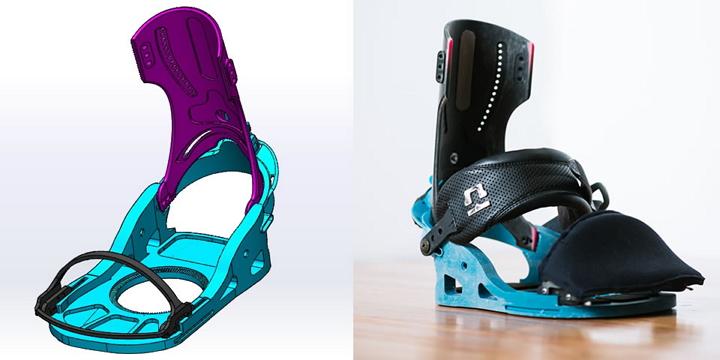
“The motivation for my project came from my wanting to tie my love of snowboarding into my engineering studies,” Leen says. “We sent a survey out to almost 300 enthusiasts and professional snowboarders all around the world, and they identified that they needed a binding that was pain free as well as responsive.”
The designer says while it was largely the feedback he and the team at Deakin received from the focus groups which led to the success of the project, the proof was in the moment the product was first tested.
Leen says the uncertainty involved in putting on the bindings – and then heading down the mountain – was wiped away on the first run he took down the mountain while wearing the new design. He says those results validated the amount to effort put in over the course of the design process.
What do you think of this 3D printed snowboard binding system by Australian university student Robert Leen? Let us know in the 3D Printed Snowboard Binding forum thread on 3DPB.com. Check out more about the project in this video:
Subscribe to Our Email Newsletter
Stay up-to-date on all the latest news from the 3D printing industry and receive information and offers from third party vendors.
Print Services
Upload your 3D Models and get them printed quickly and efficiently.













You May Also Like
Russia’s 3D Printed Missiles & Can NATO Get Its Act Together?
For most of US history, however much the two major parties differed on domestic policy (in some cases a lot, overall less than you’d think), there was always essentially a...
3D Printing News Briefs, October 21, 2026: Digital Twins, AI CAD Service, AR Smart Glasses, & More
In today’s 3D Printing News Briefs, America Makes announced the winners of its MIAMI Project Call, and AM Europe released a new report. Artec 3D launched its new Artec Twins...
3D Printing News Briefs, October 10, 2026: Drones, WAAM, Ceramics, & More
We have a packed 3D Printing News Briefs for you this weekend! First, America Makes celebrated the recent National Manufacturing Day with 3D printed drones, and then it’s on to...
The Manufacturing Race Behind the Drone Revolution
We are in the middle of a major manufacturing shift focused on the production speed and payload capacity of uncrewed aerial systems (UAS), or drones. A recent Manufacturing Dive article...