FUSE Seeks Indiegogo Funding to Weld Two Spools of 3D Printer Filament Together Mid-print


Don’t we all just love sending a 3D model to our printers before bed, and waking up to the excitement of a finished product in the morning? I have been doing this for quite a while now, as it allows me to work on a model  during the day, and then print it out when time has no meaning to me, when I’m unconscious.
There are issues you may face, however, when following this sort of time management philosophy. A power outage could be a catastrophe, perhaps one which would be unavoidable anyhow, even if you were awake watching a print. Other issues could be simple misprints, which if left unattended, can turn a ruined object, into a ruined object with lots of wasted filament. The biggest concern I usually have when printing out a large project is that I will run out of printer filament before my print has finished.
Depending on the printer in use, it is possible to try and feed a new spool of filament into the machine just as the old filament comes to an end. This process can be extremely tedious, and often leads to issues within the print. Other printers simply will not allow for new filament to be added during a print, which pretty much leaves no other option. That’s until now….
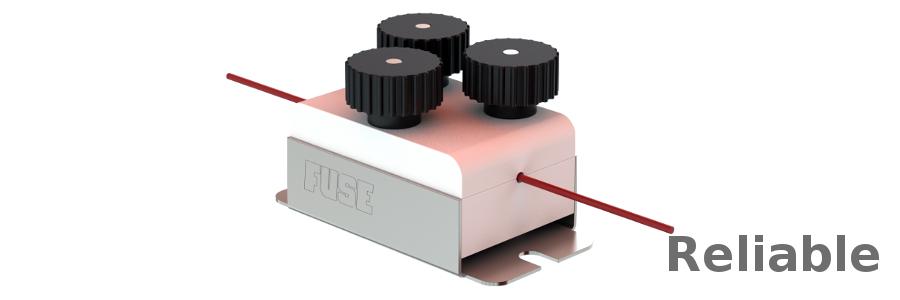
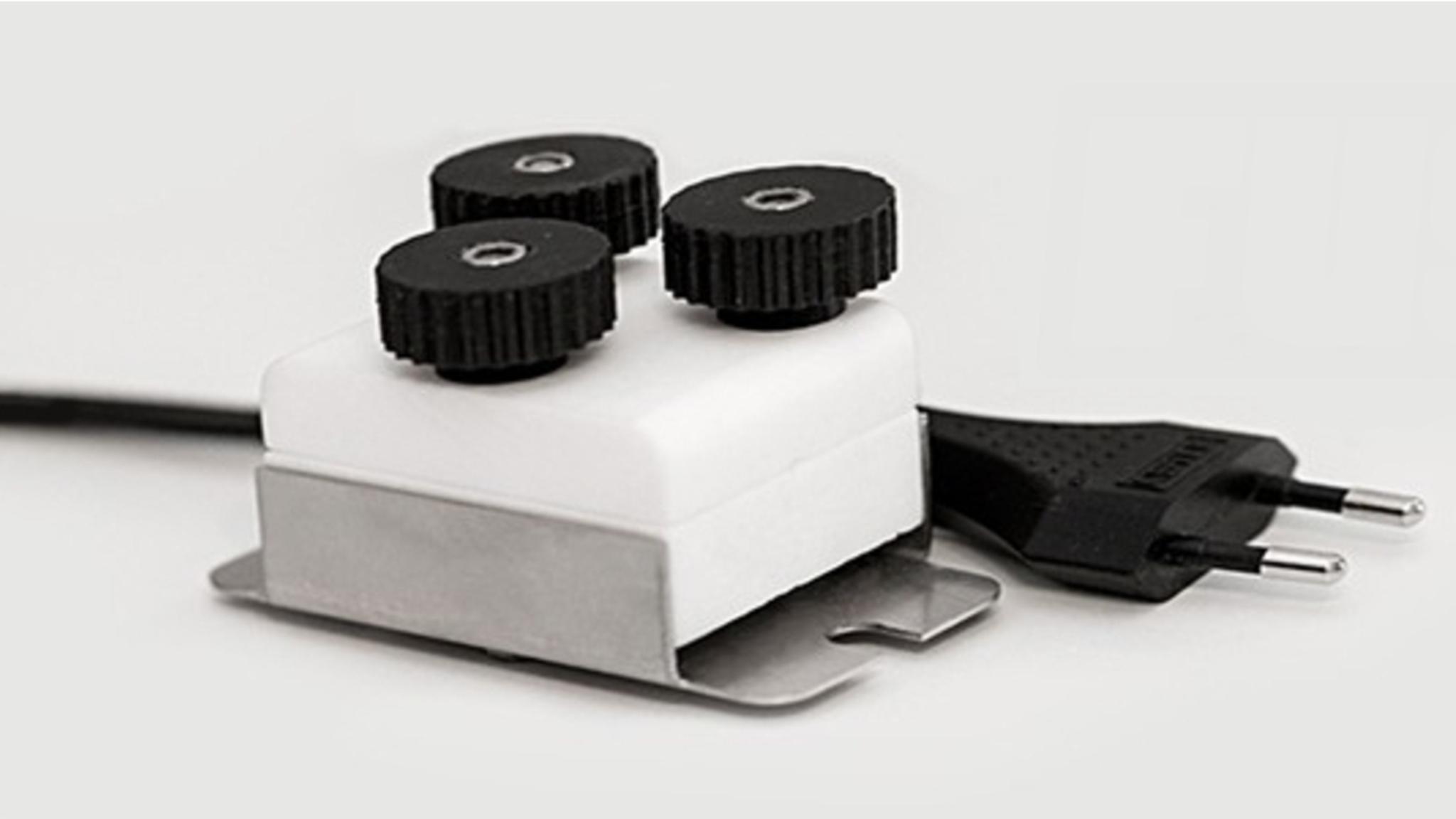
One man named Pedro M. Librero believes that he has a solution to this all too common problem. He has launched an Indiegogo crowdfunding campaign this week for a product he calls FUSE. FUSE is a clamp for welding filament rolls together, which he is trying to raise €3,500 in order to begin production of. Basically what it does is fuse two pieces of filament together mid-print, allowing for the quick addition of filament during long printing projects.
The device concentrates heat in the center of the clamp, while the rest of the clamp remains as cool as possible. As the two filament strands reach the center of the clamp, they melt together and quickly cool, so that they maintain their shape as they exit the clamp. Below are a few of the qualities of the FUSE device, as well as some basic specifications.
- Materials supported: ABS, PLA, PLA flexible, PVA, Nylon.
- Filament diameter: 1.75mm and 3mm (Two separate devices for each size)
- Power supply: 110V-220V
- No interruptions to prints
- Melt two rolls of filament together, pre or mid-print
- Experiment with different colors. A great way to print using two colors without the need for multiple extruders
Both the 1.75mm and 3mm versions of FUSE will cost 59€ + shipping and taxes via their Indiegogo campaign, which will run until August 6th. Have you backed the FUSE clamp? What do you think about this device? Let us know in the FUSE forum thread on 3DPB.com. Check out the artist render video below.
Subscribe to Our Email Newsletter
Stay up-to-date on all the latest news from the 3D printing industry and receive information and offers from third party vendors.
Print Services
Upload your 3D Models and get them printed quickly and efficiently.













You May Also Like
Printing Money Episode 42: Q2 2026 Public Markets 3D Printing Earnings Analysis with Troy Jensen, Cantor
Welcome to Printing Money Episode 42. Troy Jensen (Managing Director, Cantor) returns, joining Danny Piper (Managing Partner, NewCap) to review Q2 2026 publicly traded 3DP/AM company earnings reports. Troy’s quarterly...
3DPOD 314: Debinding, Sintering, and Metal Binder Jetting with Stefan Joens, Elnik Systems and DSH Technologies
Stefan Joens of Elnik Systems sells ovens. Their debind and sintering equipment powers a lot of high-volume binder jet and MIM production. We learn about Elnik and its origins. But...
The Frankenservice Part 1: Print the Rainbow
So far, most service bureaus and manufacturing companies stick to what they know. Not only for OCD reasons, but gleaming lines of identical LPBF machines are also arrayed on impossibly...
3DPOD 313: Patient-Specific 3D Printing with Ruben Wauthle, Amnovis
Ruben Wauthle studied at Leuven University at a very serendipitous time. Through working with pioneering additive professors and surgeons, he entered into a specialty that was emerging. He joined pioneering...