French Doctor Implants 3D-Printed Spine Cage to Perform Spinal Fusion Surgery

A surgeon in Lyon, France performed the world’s first spinal-fusion surgery recently. Dr. Vincent Fiere performed the surgery at the Hospital Jean Mermoz using customized, 3D-printed spine cages. Fiere performed the 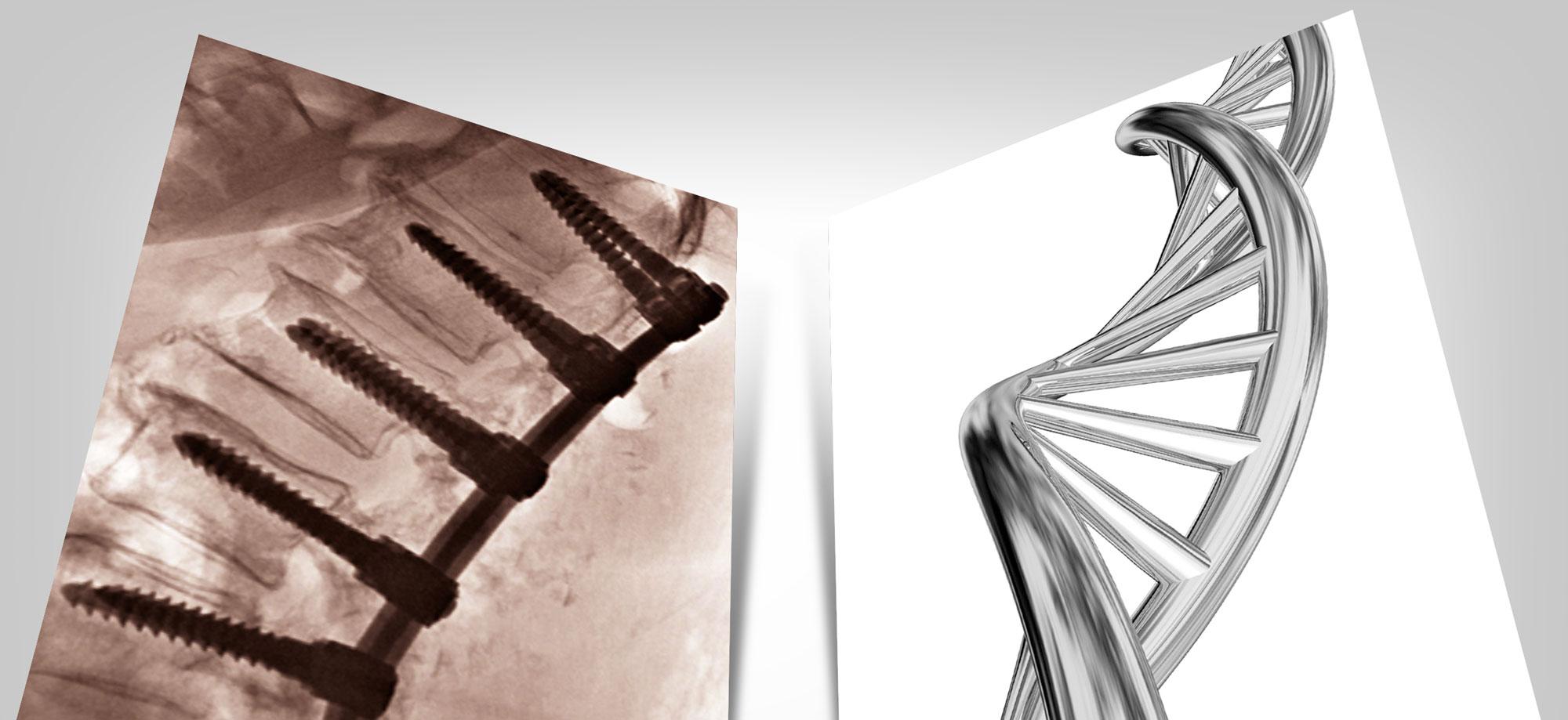 spinal fusion surgery to correct a patient’s severe spinal deformities. During the surgery, Fiere replaced discs that were damaged with spinal cages to separate the vertebrae and align the spine. He then inserted a curved spinal rod to help maintain the new alignment.
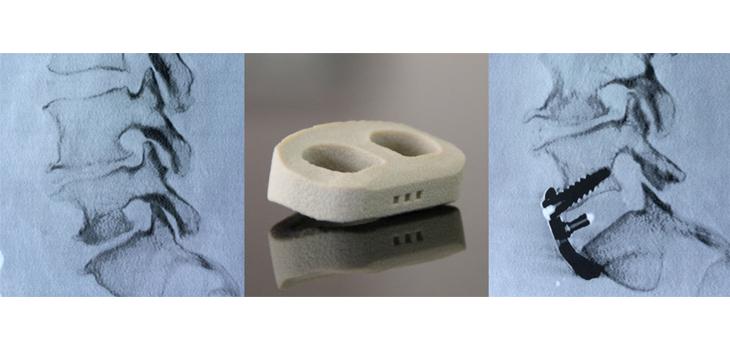
“The intersomatic cage, specifically ‘printed’ for my patient, positioned itself automatically in the natural space between the vertebrae and molded ideally with the spine by joining intimately with the end plates, despite their relative asymmetry and irregularity,” said Dr. Fiere.
The intersomatic cage that Dr. Fiere used was the UNiD ALIF. It was created by Medicrea, a French company that specializes in the design, development, manufacture and  distribution of orthopedic implants dedicated to spinal surgery. UNiD ALIF cages are made of Poly Ether Ketone. They mimic the anatomic details of a patient’s vertebral plates. Medicrea used 3D-images of the patient’s spine to create the customized cage. Dr. Fiere also used Surgimap Spine, another Medicrea tool, to help him perform the operation.
“I could also very precisely perform the restoration of the disc height and simultaneously correct the degree of lumbar lordosis using plans I had made several days before the operation with the help of the Medicrea Surgimap software tool.”
Medicrea’s software and research may eventually lead to additional implantable devices that are capable of reproducing pieces of the spine. These future developments seem promising according to Denys Sournac, Medicrea’s chairman.
“Continuing our trajectory since the launch of our PASS LP UNiD rods which are made to measure for each patient, Medicrea confirms its position as the pioneer of intelligent spinal implants, perfectly adapted to the morphology of each patient’s spinal column and developed in a rational and planned manner to restore the fundamental mechanical equilibrium of the human body,” he said. “By providing pre-planned customization, our goal is to improve patient outcomes and allow our surgeons customers to complete their plans in advance and solely focus on executing their strategy in the operating room.”
This is yet another awesome use of 3D printing, which is helping to make the lives of patients less painful, while providing researchers a stepping stone for future applications within the field of spinal medicine. Let us know what you think about this procedure in the 3D printed spine cage forum thread on 3DPB.com.
Subscribe to Our Email Newsletter
Stay up-to-date on all the latest news from the 3D printing industry and receive information and offers from third party vendors.
Print Services
Upload your 3D Models and get them printed quickly and efficiently.











You May Also Like
3D Printing News Briefs, November 29, 2025: Submarine Industrial Base, Running Shoe, & More
In this weekend’s 3D Printing News Briefs, we’ve got more news from Dyndrite, which has launched the NXG Slice Viewer for Nikon SLM Solutions. Farsoon Europe has news to share...
Clecell Turns Stem Cells into 3D Printed Human Skin in the Lab
South Korean biotech startup Clecell has achieved what many tissue engineers have long sought: a reproducible, full-thickness human skin built entirely from induced pluripotent stem cells (iPSCs), using bioprinting. Clecell’s...
3D Printing News Briefs, October 25, 2025: Strategic Investment, Inner Ear Organoids, & More
In this weekend’s 3D Printing News Briefs, we’ll start off with some business news, as Xact Metal announced continued double digit growth in Q2 and Q3 of 2025, and the...
3D Printing News Briefs, September 6, 2025: SBIR Awards, Regenerative Medicine, & More
In this weekend’s 3D Printing News Briefs, we’ll start with some exciting funding news, as NIST has awarded over nearly $2 million to small businesses working to advance AI, additive...