
LEGO Expert Builds Incredible RC Boat with 3D Printed Propellers

 Before 3D printing, there were Lego blocks! More than likely if you were born after 1947, you probably had and played with Lego blocks at some point in your life. Perhaps it was as a child, or maybe as an adult, but undoubtedly these construction toys have been making people happy and stimulating their creativity for over 65 years now, so much so that close to 600 billion Lego parts have been produced since their inauguration.
When it comes to Lego builders, there are beginners, like your 5-year-old child, novices like myself, experts, and then the professionals who spend a large portion of their lives building and iterating upon their own Lego designs. One Polish man named Paul, who goes by the nickname Sariel, would fall into this last category. In fact, he has been building custom Lego models for eight years, and even has two books on the subject under his belt.
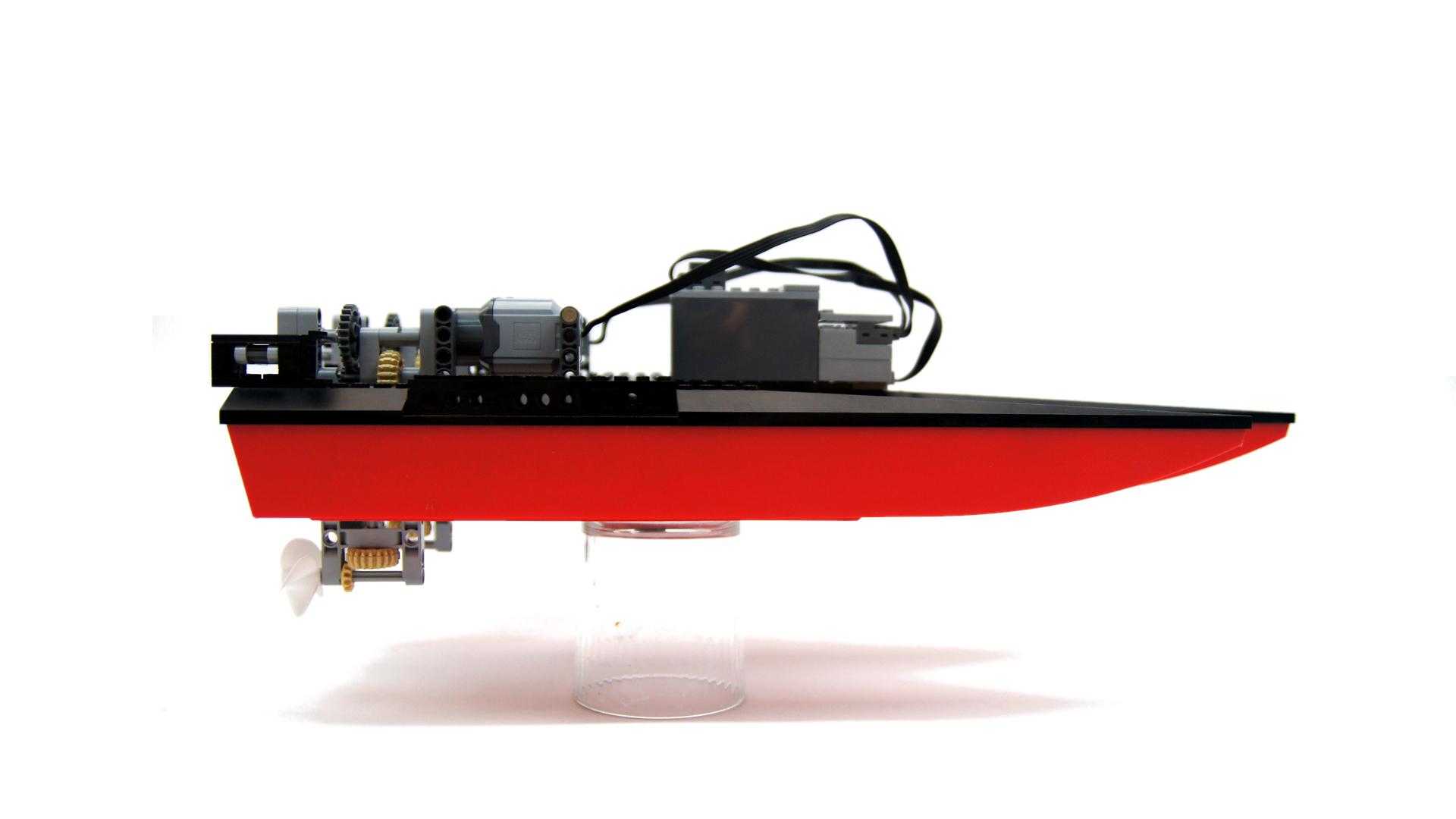
Recently, Sariel’s friend Michael Efferman took it upon himself to design some 3D printed miniature boat propellers and sell them for just $7.27 via his Shapeways page. Sariel simply couldn’t resist the idea of actually putting them to use.
“He (Michael) is a walking gold mine of ideas for LEGO-compatible elements that either outperform their LEGO counterparts, or enable completely new mechanical solutions that are not possible with LEGO pieces,” Sariel tells 3DPrint.com. “I simply wanted a ‘test bed’ for the propellers, and the idea was to see how they perform compared to my earlier boats with LEGO propellers. They perform better, of course, because LEGO propellers were designed as toys and they’re not too effective. In order to get good performance, I designed [a LEGO] boat to be as lightweight and small as possible, using hulls from a LEGO catamaran set (7244) which are best profiled for low drag.”
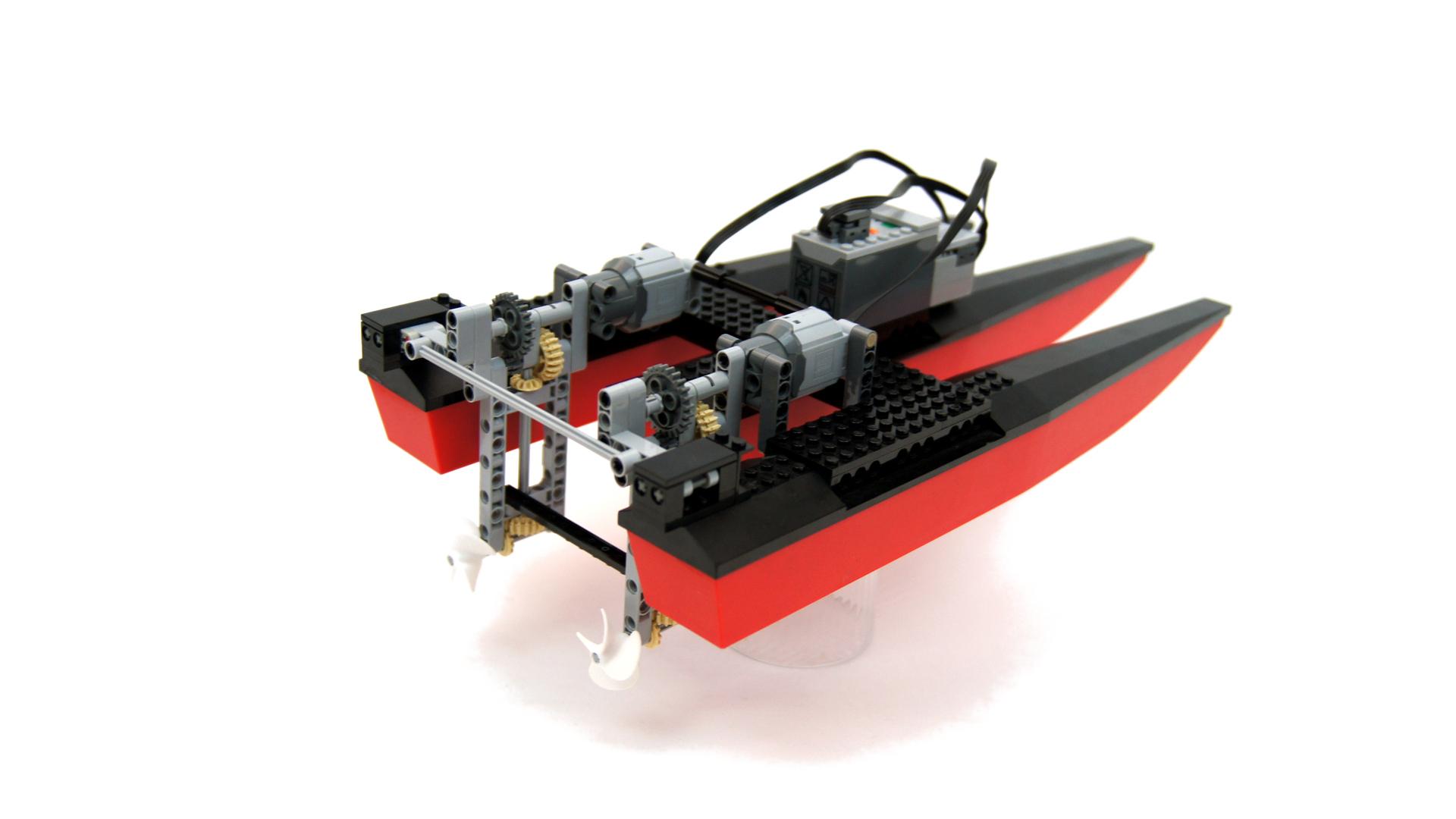
It took Sariel about a day to construct his amazing Lego Technic RC Boat, which features an SBrick for operation, as well as Efferman’s 3D printed propellers. Most of the time was spent ensuring that the boat would float and be stable, rather than actually building the creation. He didn’t want to risk the boat sinking with all of the valuable electronic equipment on board, which included a rechargeable Lego battery, two Lego PF L motors, and at its “heart” a so-called SBrick, which is a third-party Lego-compatible product.
“I was hoping [the 3D printed propellers] would outperform LEGO props, and they did,” Sariel tells us. “You see, LEGO designs all their sets as toys, so elements such as props are made to look nice, not to perform well. There’s a number of LEGO propellers to choose from today but they are either very small (e.g. 24 mm) or they are large but designed for planes and thus poorly suited for water.”
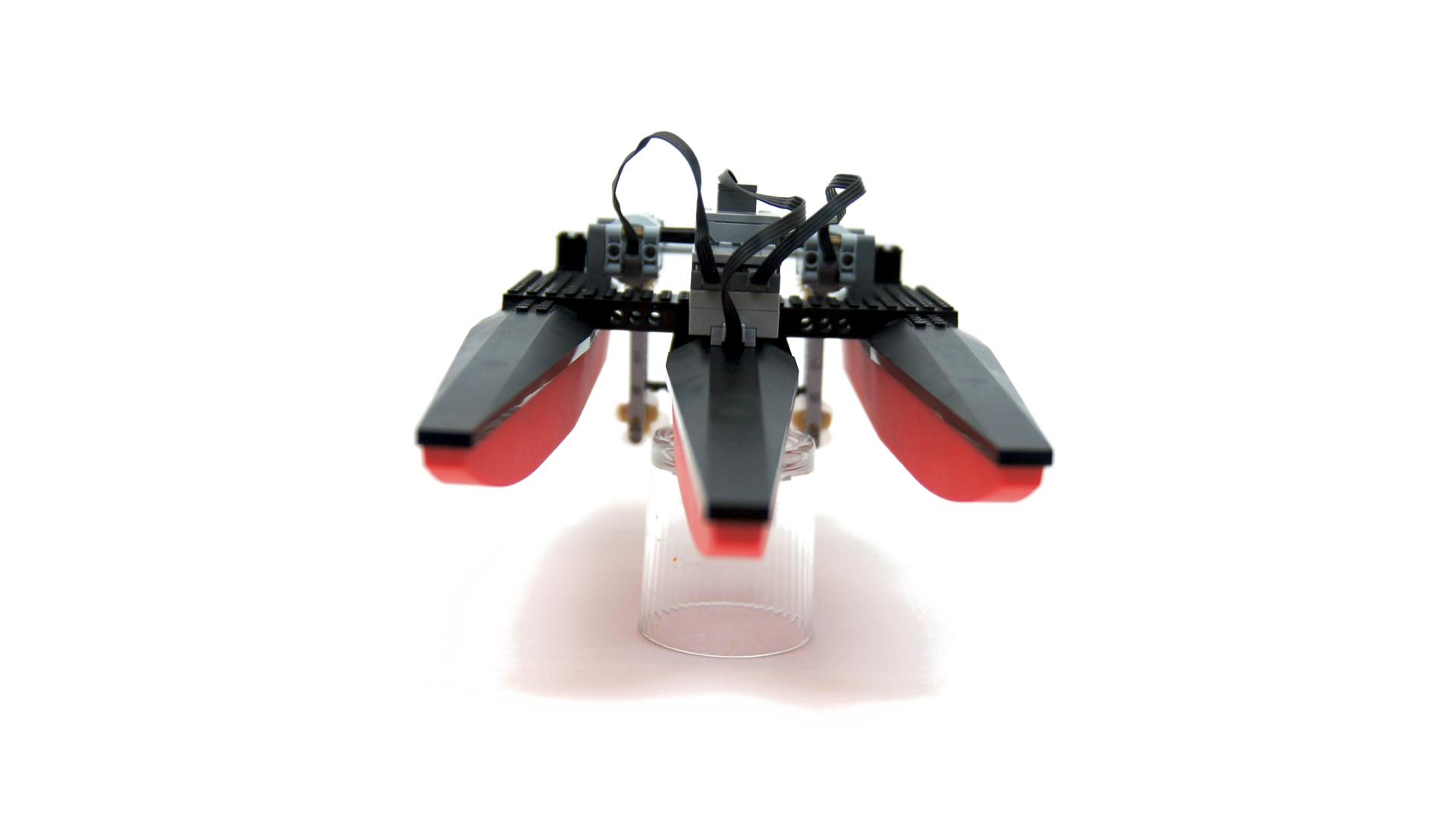
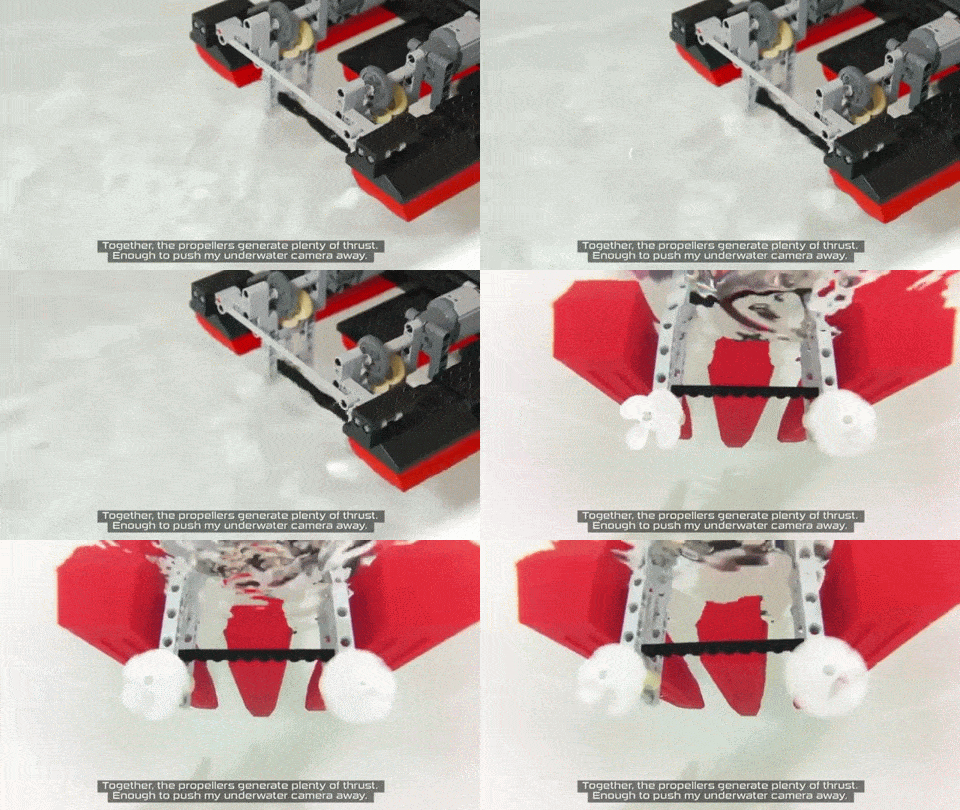
All in all, as you can see in the video below, Sariel’s Lego Technic RC Boat performs very well. It has an effective range of about 15 meters, based on the current ability of the lightweight SBrick. He tells us that he could have used an older “Lego alternative” from discontinued sets, which would have provided his boat with a greater range, but it would have also had made the boat twice as heavy.
This isn’t the first time that Sariel has used 3D printed parts in combination with his Lego construction. Previously he created a Lego Dune Buggy using 3D printed shock absorbers and differentials.
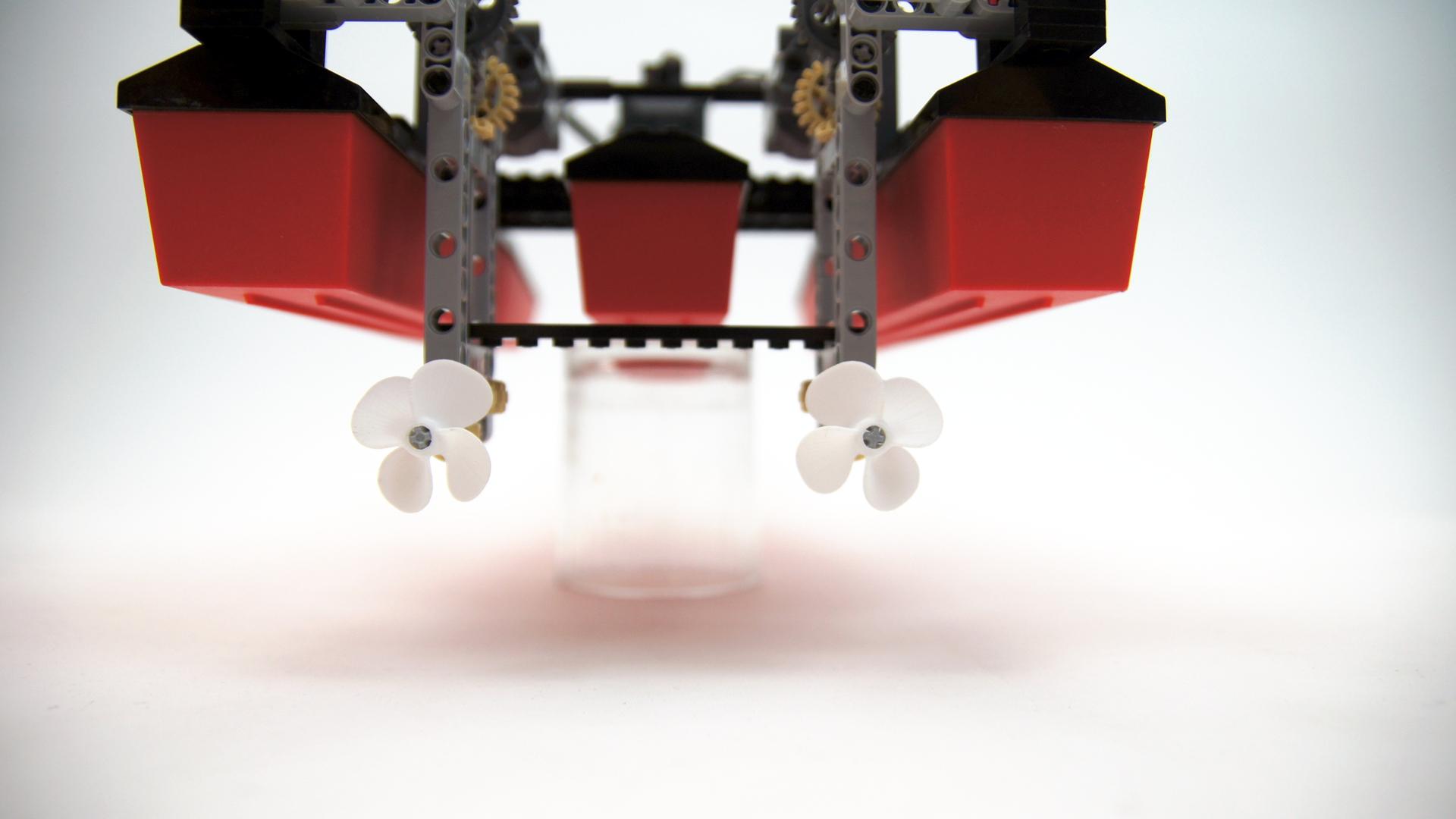
What do you think about this amazing Lego boat, which gets around thanks to 3D printed propellers? Discuss in the Lego Technic RC Boat forum thread on 3DPB.com. Check out the video of the boat below.
Subscribe to Our Email Newsletter
Stay up-to-date on all the latest news from the 3D printing industry and receive information and offers from third party vendors.
Print Services
Upload your 3D Models and get them printed quickly and efficiently.













You May Also Like
Prusa Core One L+: A Worthy Upgrade?
Disclosure: The Core One L+ was provided to me by Prusa3d free of charge for the purpose of this review. I have not received any other compensation. All opinions expressed...
Building Profiles in the Additive Print Services Market – Market Research Beyond AI Scraping
AM Research New market research: AM Research is building its new Additive Manufacturing Services Market 2.0 model. View the report and preorder here → In case you haven’t heard, at...
3D Printing Services Near $2.5B as AM Market Shifts Beyond Hardware
The additive manufacturing market may be growing again, but one of the more interesting numbers behind that recovery has little to do with selling 3D printers. AM services generated nearly...
Bambu Lab and SUSAN FANG 3D Print for London Fashion Week
At London Fashion Week, some of the more unusual pieces on the runway came from 3D printers. Chinese fashion designer SUSAN FANG presented her Spring/Summer 2027 Air-Illusion collection at the...
























































