
University of Verona Hospital Uses 3D Printed Bone Replicas to Aid in Orthopedic & Trauma Surgery

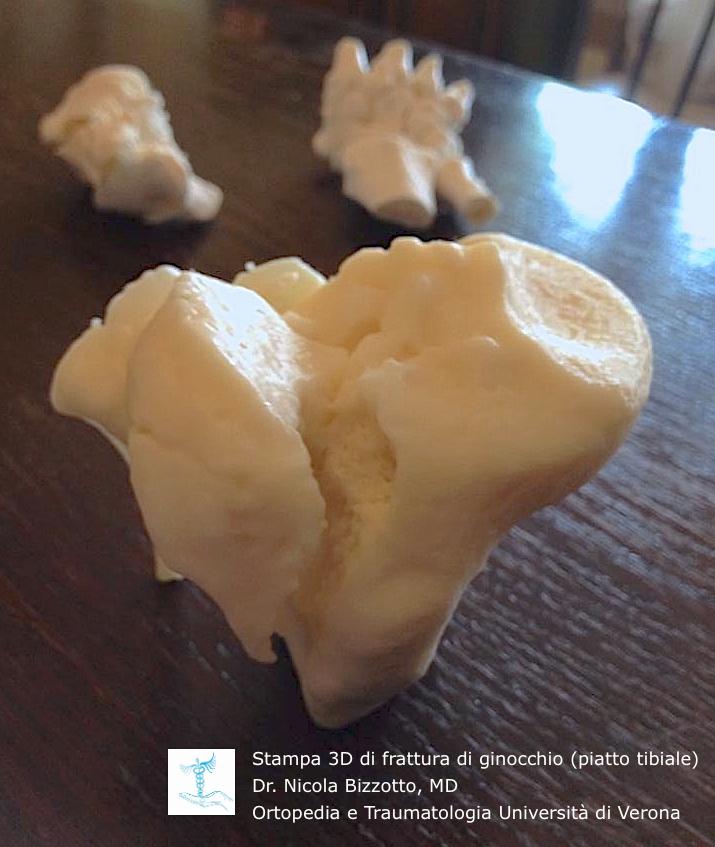
A 3D printed bone replica
If you have ever fractured a bone, you know exactly how painful it can be, but luckily bones heal quite quickly. After wearing a cast for about 6 weeks, a fractured bone should completely mend itself. With this said, however, all broken bones are not created equally. Some breaks require the bones to be set, and in some severe cases, require extensive surgery. In these instances, even with a good surgeon at the helm, things can go wrong. There are many cases where patients undergo surgery to repair a fracture, only to have the bone heal up incorrectly, causing constant pain and discomfort.
Dr. Nicola Bizzotto, an Orthopedic and Trauma Surgeon at the University of Verona Hospital, in Verona, Italy, has come up with a method to make orthopedic surgery more likely to succeed on the first try.
“We 3D print fractures of patients to improve surgical planning and refine patients’ consent,” Bizzotto tells 3DPrint.com. “I started [doing this] 6 months ago because I like to touch a fractured bone before [performing] surgery.”
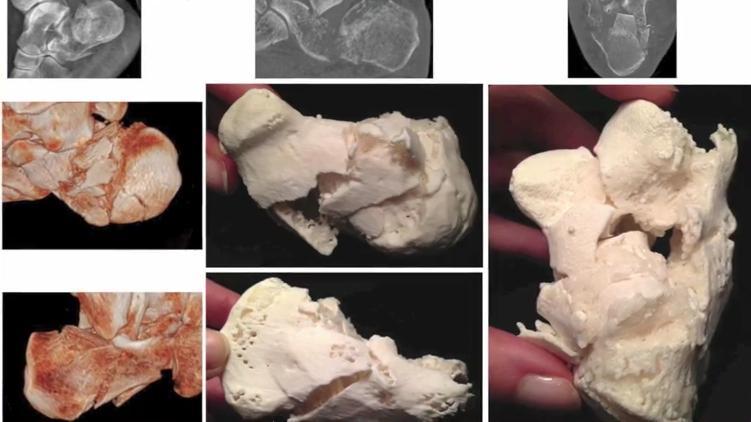
Bizzotto and his team take a 3D image of the broken bone, and then use a Stratasys 3D printer in order to create a tangible 3-dimensional replica of the fracture. This replica is then used to explain the surgery to the patients, in order to help them understand what will be done in the operating room. The surgeons then use the 3D printed bones in order to perform a simulated surgery and/or decide which equipment is needed for the surgery.
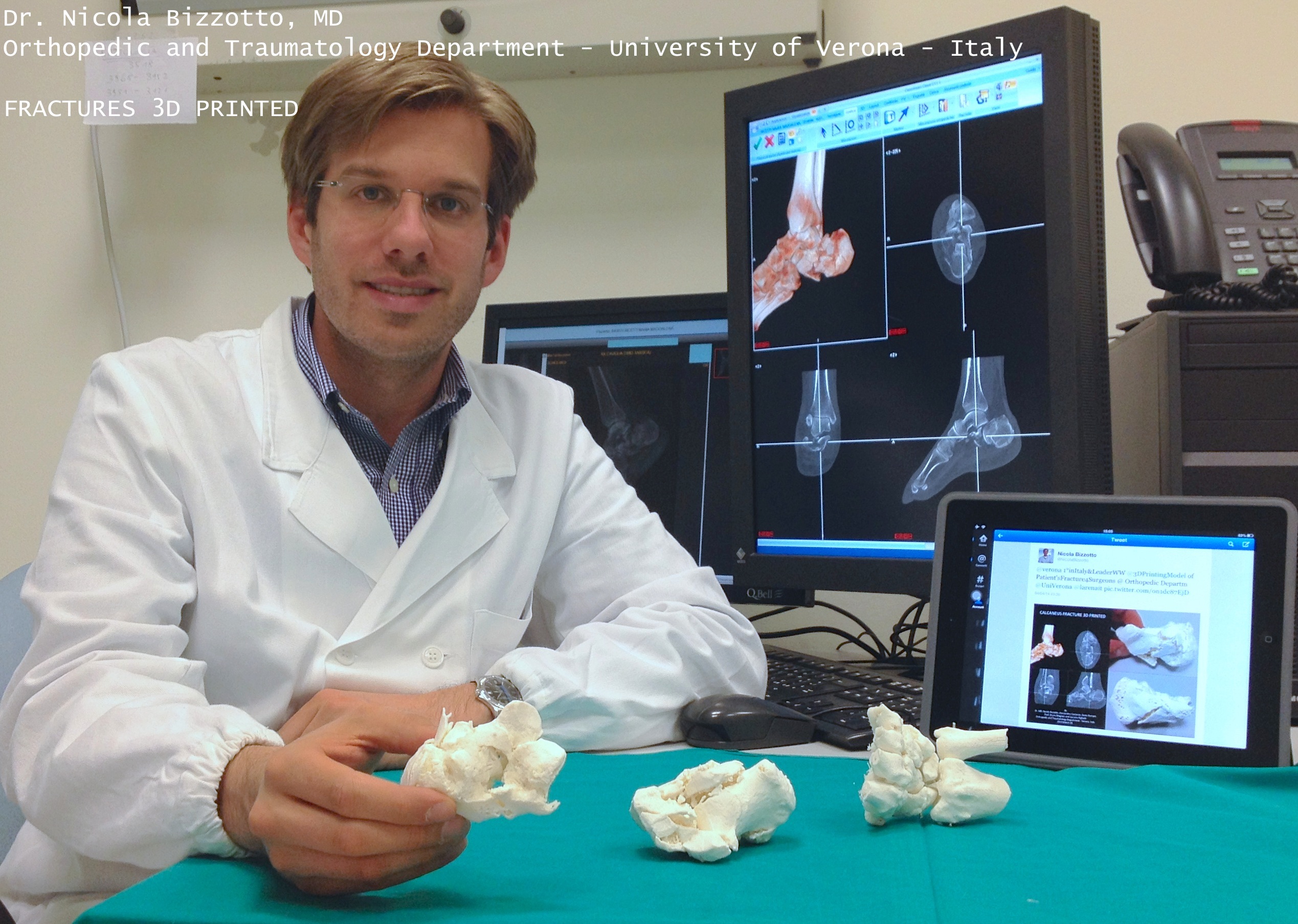
Dr. Bizzotto and his 3D printed bone replicas
“We appreciate the fracture in an ultra realistic way (by using this method),” explained Bizzotto. “We see exactly the situation of the patient before opening a fractured-joint.”
In utilizing 3D printers to print out replicas of these fractured bones, both patients and surgeons go into a surgery feeling a lot more confident in the procedure, as well as the impending results. It won’t be long before more hospitals around the world pick up on this revolutionary technique of utilizing 3D printers to aid in surgery.
Bizzotto also told us that the University is developing methods of using 3D printing to aid in other non-bone related surgeries as well. They have used 3D printers to print out replicas of the human brain, depicting where arteries and aneurysms were, as well as replicas of lungs, and kidneys. “But for the moment we would like to improve [3D] printing in orthopedic and trauma surgeries,” he stated.
What do you think? Would seeing a replica of your exact fracture help provide you with confidence going into a surgery? Do you think more hospitals will begin utilizing technology like this in order to aid in surgeries? Discuss in the 3D printed bone forum thread on 3DPB.com.
Below is a video of Dr. Nicola Bizzotto showing how they use these 3D printed bone replicas to aid in surgery. He begins speaking at the 1:11 mark (note: it’s all in Italian).
Subscribe to Our Email Newsletter
Stay up-to-date on all the latest news from the 3D printing industry and receive information and offers from third party vendors.
Print Services
Upload your 3D Models and get them printed quickly and efficiently.













You May Also Like
10 Years of Multi Jet Fusion: Onsite at HP’s Vancouver, Washington Facility
At this year’s RAPID event in Boston, HP Additive Manufacturing Solutions celebrated ten years in the additive manufacturing (AM) market. The company ushered in the milestone with several innovations, including...
These 3D Printed Lattices Can Sense Damage Before Failure
A new paper, “Full-Field Damage Monitoring in Architected Lattices Using In situ Electrical Impedance Tomography,” points to lattices being able to detect damage. This could really help composites in critical...
3D Printing News Briefs, October 3, 2026: Hypersonics, Hotends, & More
We’re starting off with defense in this weekend’s 3D Printing News Briefs, as Titomic was awarded a $5 million U.S. defense contract, and VulcanForms announced a partnership with Specter Aerospace...
3D Printing News Briefs, October 1, 2026: Defense, Enclosures, & More
In today’s 3D Printing News Briefs, we’re starting with defense news, first from Massivit and then from AML3D. Then we’ll move on to U.S. manufacturing of a new large-format LPBF...

























































