South Korea’s Rokit Announces $3M Grant to Enter 3D Bioprinting Space


We may be in the early stages of a medical revolution, a revolution which changes the way in which medical professionals view and treat numerous ailments. As the fields of robotics, 3D printing, and biological research converge, 3D bioprinting is no longer a technology of the far future, but instead it’s a technology of today. There are already several pharmaceutical companies utilizing Organovo’s ExVive3D bioprinted human liver tissue for drug toxicity testing, and new companies such as BioBots are breaking onto the scene with their own bioprinting approaches. As funding continues to pour into this space, progress will naturally follow.
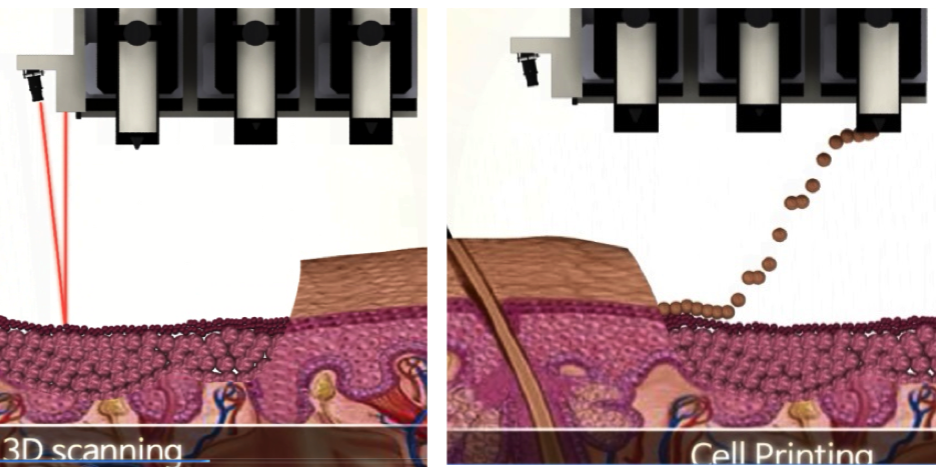
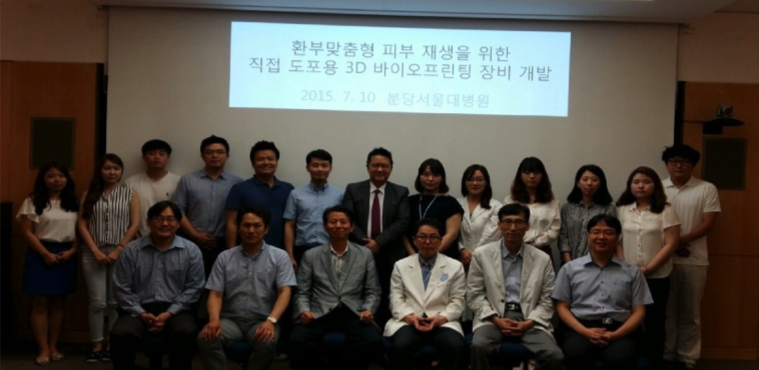
Today we got word from Rokit, a market leader in the 3D printing space within South Korean, that they too are entering the 3D bioprinting space with a bang. The company has today announced a $3 million government grant for the development of bioprinting technology. The project, which will include the Korean Institute of Science and Technology (KIST), Seoul National University Bundang Hospital, Hanyang University, and Korea Institute of Machinery and Materials (KIMM), is scheduled to be completed in three years, resulting in the development of an in-situ 3D bioprinter.
Rokit, known for their line of 3Dison desktop 3D printers, including the H700, Pro, Multi, AEP, S and Chocosketch models, has forged a path to success within the space over the last couple of years, particularly in the continent of Asia, and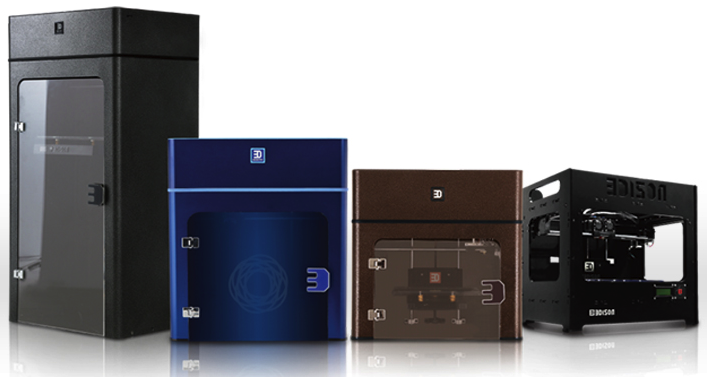 now looks to expand to what may eventually be a multi-billion dollar opportunity.
The company appears to be focusing initially on the bioprinting of human skin tissue, a technology which could change the way patients are treated for a variety of ailments from burns to diseases, to even cosmetic surgery.
“Traditional Autografts and commercially available skin products are limited in supply and it’s common for production to require lengthy preparation time, making them unusable in severe cases which require prompt usage,” explained the company. “In addition to this production issue, transplantation involves a number of biological side-effects which cause patients to take other surgeries to relieve side effects. Bio-printing technology effectively resolves such problems in transplantation and South Korea Government now jumped into the market with the most promising company in 3D printers industry, Rokit.”
 Rokit will join a handful of companies now in the early stages of bioprinting research who have received major funding lately. Organovo raised $40 million last month in a secondary stock offering, while BioBots has raised over $300,000 on crowdfunding platform Fundable for further development on their desktop bioprinters. It’s certainly going to be an exciting space to watch over the next 2-3 years as the technology matures.
Let us know your thoughts on this move by Rokit to enter the 3D bioprinting space, and what it may mean for the industry as a whole. Discuss in the Rokit Bioprinting forum thread on 3DPB.com.
Subscribe to Our Email Newsletter
Stay up-to-date on all the latest news from the 3D printing industry and receive information and offers from third party vendors.
Print Services
Upload your 3D Models and get them printed quickly and efficiently.












You May Also Like
NASA Selects Relativity Space for Mars Science Mission
NASA has selected Relativity Space as its commercial partner for a new Mars science mission scheduled for launch in 2028, giving another boost to one of the most well-known additive...
AM Asia Watch: China’s 3D Printing Boom Is Creating a New Class of Micro-Manufacturers
China’s additive manufacturing (AM) industry has spent years trying to reduce its reliance on foreign technology. In polymer 3D printing, domestic companies have already become major players. In metal AM,...
Excellent Desktop Injection Molding, Made in Italy by Robot Factory
I was captivated when I saw my first Robot Factory 3D printer. The robust, precise machine was built to last. And this was in an era of very flimsy, disposable,...
Divergent Declares that German 3D Printers are Superior, And Plans Massive LPBF Expansion
Divergent has announced a new version of its Laser Powder Bed Fusion (LPBF) printer and a new site. The company aims to do nothing short of “further accelerating its mission...