Maker Shows Us How to Build Our Own E-Waste 3D Printer Using Trashed Technology

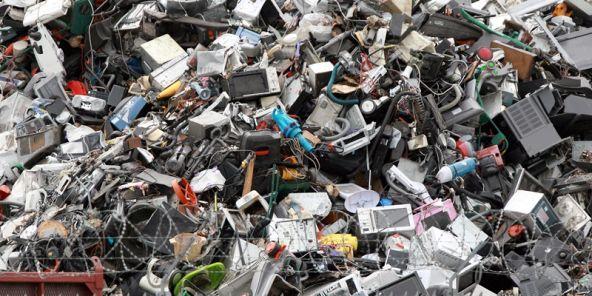
Electronic waste is an ever-growing issue
As many of us pound out blogs, emails, and various communications on the keys of our electronics, many of them laptops or PCs with double and sometimes even triple monitors, often tackling concerns about what’s eco-friendly and what’s not, how to save the planet, and so on–do we consider what’s going to happen to those very pieces of machinery when we tire of them and move on to the next model as soon as it becomes available? And as regular printers, scanners, and more become so inexpensive that they are practically disposable, the thought of how much metal trash will pile up is disturbing enough to make us want to, well, look away.
Recycling looms large as our world becomes even more advanced–with even more stuff to chuck into landfills. Even 3D printing, in all its contemporary magic, presents recycling and environmental issues we may not think about until we are in it, such as what to do with failed prints, all that leftover ABS 3D printing filament, as well as old equipment. And there’s nothing that squelches the creative spirit like feeling guilty about destroying the planet further.
 In a world that leaves us wondering how to be eco-friendly at nearly every turn (and often failing), Hackaday users masterperson and maaphoo enter the conversation with a design idea that uses the parts of the past to build innovations of the future.
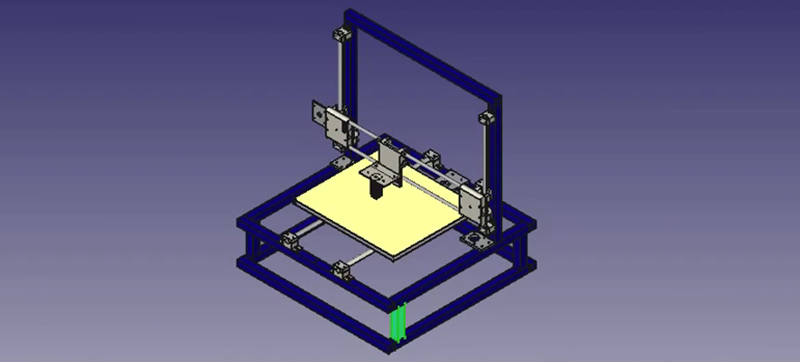
With the spirit of those who do not look away, and who do take action to do their part in fixing things, rather than sitting around bemoaning all that’s going wrong, these makers have created a fantastic framework for the E-Waste 3D Printer that has the potential to put use to all those trashed 2D printers and parts that could be sitting in landfills for eternity.
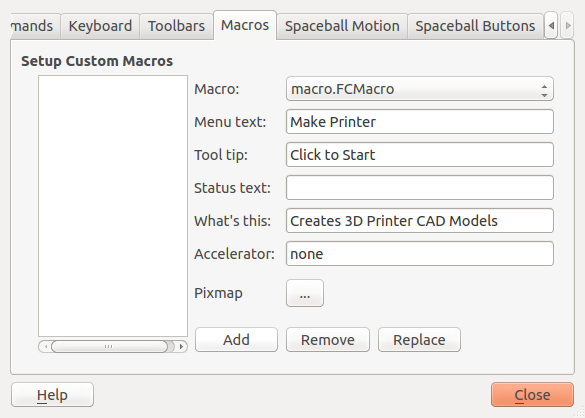
Still a work in progress, masterperson and maaphoo have employed Python and FreeCAD for the digital design of their E-Waste 3D printers, with globalVars.py allowing for junked parts like bearings and motors to be turned into actual 3D models. For software, the E-Waste uses Python’s scripting API, as well as a macro, that generates a cartesian bot and the 3D files for parts that need to be 3D printed.
FreeCad allows for a long list of customizations and then Plater works to arrange all the parts in an organized fashion. Interfacing with Slic3r also makes slicing parts easy, with information and installation instructions here. Files are available on GitHub.
 While the trend is there to usher electronics in and out as the latest and greatest, bright and shiny, new items come into the spotlight, the unique quality about the 3D printer and the community surrounding it is that it can be constantly re-worked, upgraded, and upcycled. In a world where tinkerers and makers don’t like to throw away working parts without a fight, 2D printers may have found their forever homes.
The creators of the E-Waste 3D Printer are still refining their design, but we’ll be following with interest. Are you interested in working with this design? Have you used any recycled parts in building a 3D printer or recent electronics project? Discuss in the E-Waste 3D Printer forum thread over at 3DPB.com.
Subscribe to Our Email Newsletter
Stay up-to-date on all the latest news from the 3D printing industry and receive information and offers from third party vendors.
Print Services
Upload your 3D Models and get them printed quickly and efficiently.













You May Also Like
3DPOD 316: Beehive’s Gordie Follin on 3D Printed Engines and More
Gordie Folin had deep experience in engineering at Pratt & Whitney, GE, and GE Aviation before becoming the Chief Product Officer at Beehive Industries. Among his achievements, he served as the...
3DPOD 315: Dirk Simon, from BASF to Farsoon to FKM, and now Square New Business
Dirk Simon had already spent years in the chemicals industry before joining and pioneering BASF‘s 3D printing effort. We get to hear how that firm looked at 3D printing and...
Printing Money Episode 42: Q2 2026 Public Markets 3D Printing Earnings Analysis with Troy Jensen, Cantor
Welcome to Printing Money Episode 42. Troy Jensen (Managing Director, Cantor) returns, joining Danny Piper (Managing Partner, NewCap) to review Q2 2026 publicly traded 3DP/AM company earnings reports. Troy’s quarterly...
3DPOD 314: Debinding, Sintering, and Metal Binder Jetting with Stefan Joens, Elnik Systems and DSH Technologies
Stefan Joens of Elnik Systems sells ovens. Their debind and sintering equipment powers a lot of high-volume binder jet and MIM production. We learn about Elnik and its origins. But...