Report Highlights the Disruptive Potential of 3D Printing Sports Equipment for Athletes With Disabilities

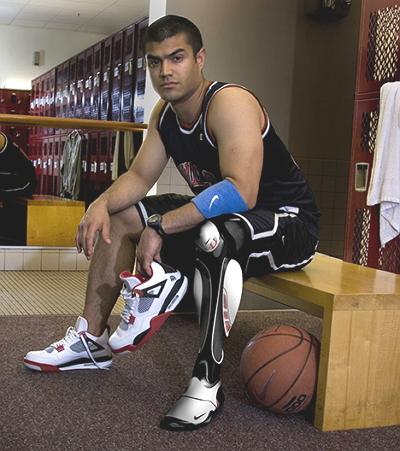 Howard K. Brodwin says he and his firm have just completed a project at the UCLA Anderson School of Management which was focused on how 3D printing technology can be used to reduce costs – and help introduce more people with disabilities to the benefits of sports.
He says many people who might like to play various sports often find that the equipment they need, like sports wheelchairs or running prosthetics, is far too expensive to purchase. So Sports and Social Change began to examine opportunities involving 3D printing.
The group took on a detailed industry analysis and made recommendations aimed at reducing the cost of adaptive sports equipment, and this collaboration with the Anderson Strategy Group and the UCLA Anderson School of Management resulted in a 14-week-long research project that explored business solutions to address the high cost of adaptive sports equipment. The resulting report focused on the potential impact of 3D printing on the development, design and manufacturing process.
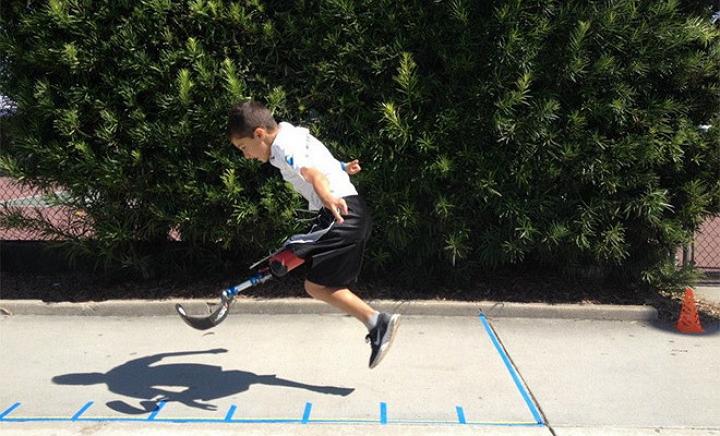
According to that report, the cost of obtaining sports equipment was the challenge for people with disabilities, and for amputees, improvements in the flexibility and strength of polymer materials were a key to the creation of 3D printed, customized sports prosthetics.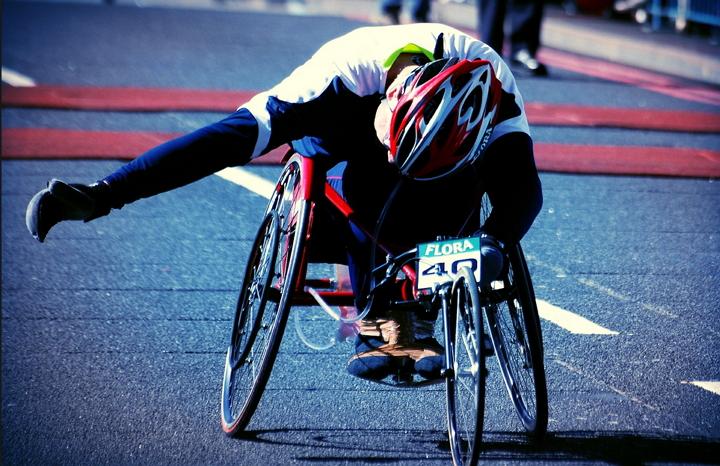
Brodwin says most adaptive sports programs operate as nonprofits, and that means they have limited financial resources which make it difficult for them to purchase and maintain equipment.
The study was principally focused on adaptive sports equipment such as wheelchairs for basketball, tennis, and racing; skis; hand-cycles; and a range of prostheses. Cost and consumer analysis were considered along with 3D printing companies.
Authored by the Anderson Strategy Group, the study was put together by a team of six UCLA Anderson School of Management students: project lead Jane Chynoweth, Apurv Awasthi, George Buckley, Arthur Hu, Danielle Koo, and Nicholas Salameh. The group conducted more than 1,000 hours of research and interviewed more than 85 individuals from a total of 21 countries.
 The Anderson Strategy Group also benefited from contributions to the study from the International Paralympic Committee and Agitos Foundation, the Rio 2016 Paralympic Integration Committee, the US Paralympics, Mpower Sports and Recreation, UCLA Adaptive Recreation, the Angel City Games, Team Ezra, the Challenged Athletes Foundation, the Triumph Foundation, the DisAbility Sports Festival, Motivation UK, the National Ability Center, Hanger Prosthetics, Ossur, Hands On Concepts, Eezitec, Not Impossible Labs, and Mountain Orthotic and Prosthetic Services.
The group says the findings and recommendations of the finished study will be presented at the Angel City Games, a competition for people with physical disabilities. The games are being held at Drake Stadium on the UCLA campus, and they’re the first competitive track and field event for youth and adults with physical disabilities to be held at UCLA. The games will feature sprint, distance, and field events. Attendance is free and open to the public.
What do you think about the findings from this report by the Anderson Strategy Group and Sports and Social Change? Do you know of any other projects which are helping athletes with disabilities function at a higher level via 3D printing? Let us know in the 3D Printing Sports Equipment for Athletes With Disabilities forum thread on 3DPB.com.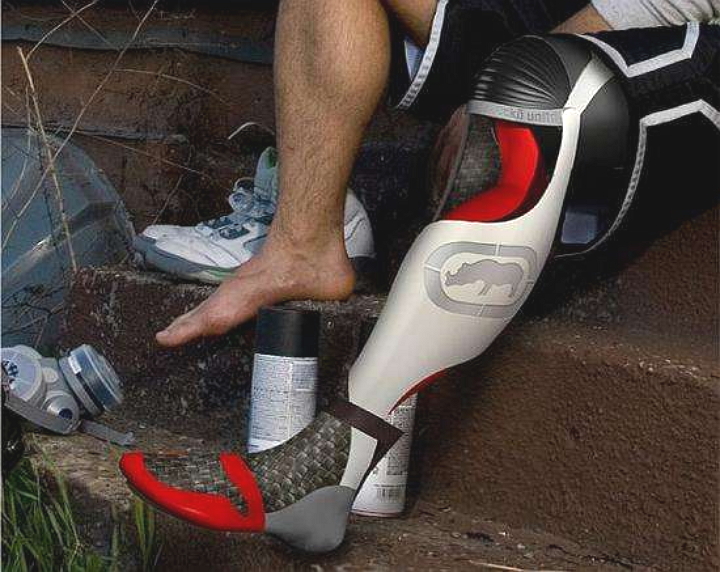
Subscribe to Our Email Newsletter
Stay up-to-date on all the latest news from the 3D printing industry and receive information and offers from third party vendors.
Print Services
Upload your 3D Models and get them printed quickly and efficiently.











You May Also Like
Sintokogio Buys Bosch’s Ceramics Unit, Plans Global AM Expansion
Japan’s Sintokogio Group is buying Bosch Advanced Ceramics to expand its work in 3D printed technical ceramics. The agreement was signed on November 18 and formally announced at the Formnext...
Boston’s Additive Edge at Autodesk: Rooftop Wind Gets a 3D Printed Spin
Walking through Autodesk’s Technology Center in Boston, I’ve come to expect surprises. One second, it’s MIT engineers pushing concrete printers to their limits, the next it’s Harvard architects stitching stone...
XJet Continues Its Push to Lower Barrier-to-Entry with Carmel Pro 3D Printer
Over the summer, Israeli metal and ceramic additive manufacturing (AM) original equipment manufacturer (OEM) XJet announced the sale of a Carmel 1400M metal 3D printer to Youngstown Business Incubator (YBI),...
Incus Releases Hammer Pro25, Proving Innovation Doesn’t Need to Be Flashy
Viennese firm Incus is showcasing the new Hammer Pro25. That system is meant to be a scalable Slurry SLA unit created for continuous manufacturing (Incus uses DLP but we refer...