MatterHackers’ “Punch Out!” Solves 3D Print Removal Problems Once and For All!

This a story on a 3D printed device that all will appreciate as good harmless fun, and some will appreciate it enough to go make one of their own. Go back to the last time you 3D printed something. Painful? Enjoyable? Probably a little of both. You completed your painstaking 3D design work, and it took many more hours than you expected. Then you finally get to print your 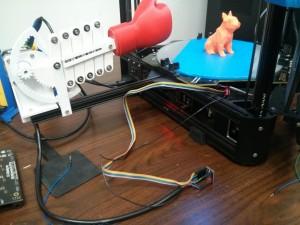 design out, but that too takes more time. But it’s finally done printing and guess what? Now it’s time to remove your print from its print bed! Well, why not end the whole process with a bang instead of a whimper?
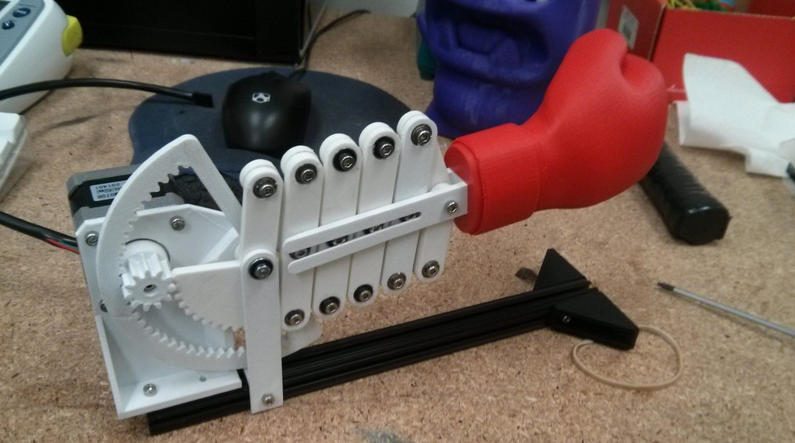
Were you going to grab for your glove and spatula, a time tested method to remove prints after the object has cooled? Well, there’s another kind of glove you can use instead: a boxing glove. Why worry our pretty little heads about print removal problems anymore? The good people at MatterHackers have gone ahead and solved the problem once and for all. They’ve made a device that reflects how many people may feel after a long print job. Punch Out! is an Automatic Print Ejector for All 3D Printers. This ejector couldn’t be more fun — just watch the below video if you have any doubts. It’s made from a 3D printed series of scissor mechanisms, a 3D printed boxing glove, and it is driven by a single stepper motor. When the print is ready to come off the bed, you can apply your Punch Out! device to remove it in a way that is sure to leave a smile on your face, leave you feeling in control, and help you blow off some steam in the process as well.
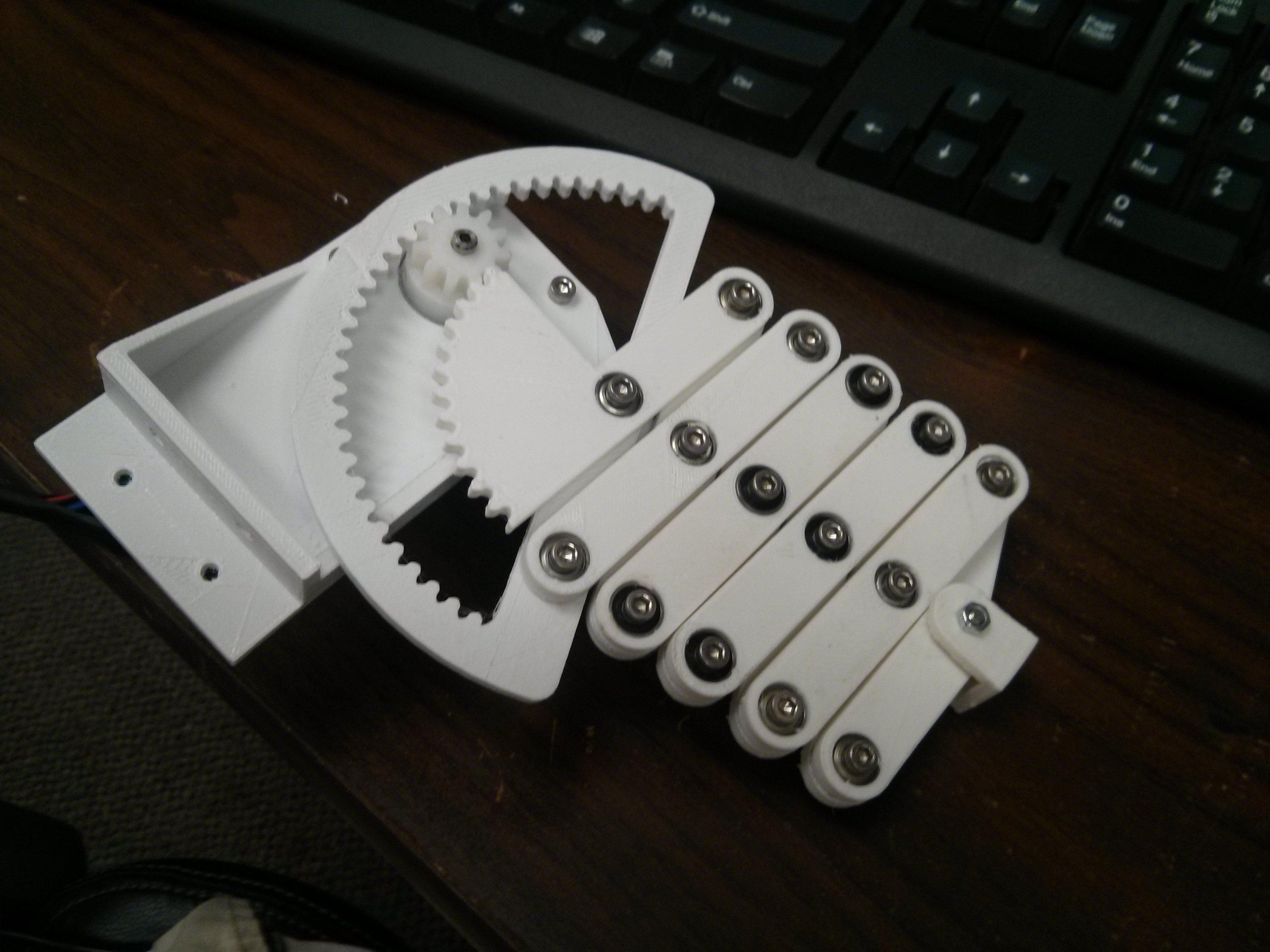 What could be easier? MatterHacker supplies all of the design files and information needed for you to make your very own Punch Out! Tyler Anderson takes us through all of his design, print, and assembling steps. He used Solidworks to design some linkages, and all of the linkage holes posted online are made to fit 9.5mm outer diameter bearings. They also include an extra 0.3mm to account for printing variations.
Anderson reports that this print project was fun and went quickly with “most
components taking less than 30 minutes to print.” Everything was fabricated using PLA, as there shouldn’t be a worry about the parts heating up during use, and he recommends the following print settings: 0.2 mm layer heights and 30% infill. A gear was added to the linkage end to actuate the scissor mechanism. He also used an old stepper motor to drive it. (A hobby servo would work too.) The total list of components, electronics, code and the rest of the process — including printing the glove itself — is here.
Who would’ve guessed that punching could make printing so enjoyable?
Let us know if you have taken on this creative and useful little project. Discuss in the 3D Printing Punch Out Forum thread on 3DPB.com.
Subscribe to Our Email Newsletter
Stay up-to-date on all the latest news from the 3D printing industry and receive information and offers from third party vendors.
Print Services
Upload your 3D Models and get them printed quickly and efficiently.











You May Also Like
Velo3D Becomes First Qualified AM Vendor for US Army’s Ground Vehicles Program
One indicator that I’ve used to help me track the additive manufacturing (AM) industry’s progress in terms of its technical maturity is the relative progress that each U.S. military branch...
Lululemon SoHo Store Installs Large-Format 3D Printed Benches
Shoppers visiting the new Lululemon flagship store in SoHo might notice something new and original when they sit down. Several of the seating elements inside the space were not carved...
3D Printing News Briefs, February 5, 2026: Advisory Board, Virtual Twins, & More
We’re starting with business in today’s 3D Printing News Briefs, including a new website launched by Metamorphic AM. Massivit appointed two senior leaders to its advisory board, and Dassault Systèmes...
Printerior Launches Circdal to Build a Sustainable Architectural Ecosystem with 3D Printing
Robotic arm systems gradually gained traction for years in the large-format additive manufacturing (AM) space, before experiencing a legitimate breakout year in 2025. Pellet extrusion has been the clear winner...