23-Year-Old Girl is Recipient of Large 3D Printed Titanium Skull Implant

 Each and every day, we seem to come across yet another story in which 3D printing aids in helping people around the world live better lives. The medical uses of 3D printing are now only beginning to break the surface, as doctors near and far begin to realize the benefits that the technology can provide. It’s not just the United States, Europe, and China that have been witness to these medical breakthroughs, but it’s literally countries from all around the globe.
 This latest case comes from Brazil, where a 23-year-old woman named Jessica Cussioli had suffered from a horrific bicycle accident which left her without a giant portion of her skull.
“Dizziness, headache, malaise,” Jessica explained prior to her surgery. “The discomfort I feel. Imagine you have severe headaches every day, all the time.”
Jessica and her mother were fed up with the pain, as well as the agony of her having to live her life with a large 12cm portion of her skull missing. Soon after the accident occurred, Jessica’s mother began searching around for a solution for her daughter, but unfortunately found that prostheses and reconstructive surgery to repair her head would cost around 130,000 Brazilian Real (approximately $41,378) — a figure that was financially not possible for the family. So she began contacting doctors, websites, and manufacturers of prostheses to see if there was another more feasible option available. This is when she discovered Instituto Biofabris, who had developed a technique of 3D printing in titanium.
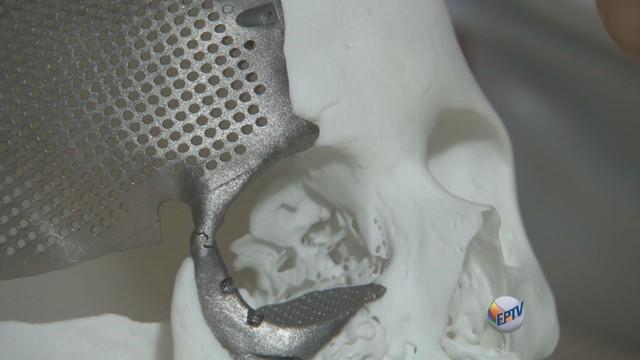
After getting approval from the Ética da Unicamp, the technicians used CT scan data to create a 3D model of Jessica’s head and then 3D printed a titanium plate which could be used to cover the large hole in her skull.
“This procedure exists in other countries,” Paulo Khamandayan, Professor of Plastic Surgery explained. “The novelty is that this procedure is done with national knowledge. For us it is a breakthrough, because it facilitates the reconstruction, allows an aesthetic result very close to what it was before and adds value to scientific skills and manufacturing in Brazil.”
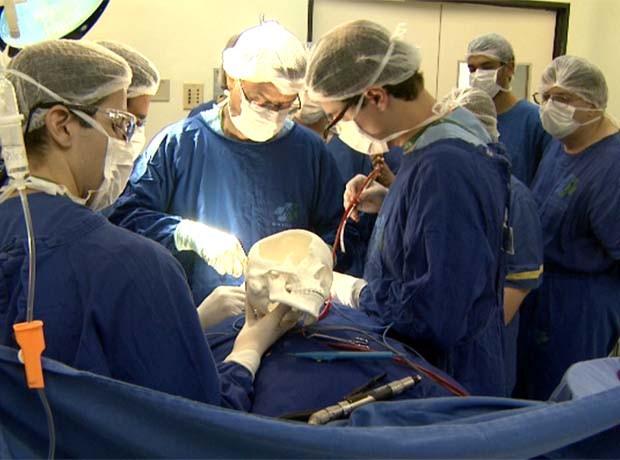 The great thing about using titanium, which was printed on a direct metal sintering 3D printer, is that the body rarely ever rejects it. Titanium is viewed by the body similar to native tissue, unlike other implants which oftentimes need to be removed due to rejection by the body’s immune system. These alternative materials include polymethylmethacrylate and even real bone transplants.
“The polymethylmethacrylate often leads to a rejection process,” Khamandayan explained. “This rejection may cause small or large wounds in a person, the scalp or face. Titanium, however, is also a biocompatible material, but a much larger scale.”
The surgery, which was performed by Sistema Único de Saúde (SUS), was a success for Jessica, as she now looks and feels much better.

“I want to go on shopping at the mall,” exclaimed Jessica after the surgery was complete. “I want to finish getting my college education.”
While this was a one-off surgery for doctors at this hospital, they hope to be able to begin offering it to more patients in the near future as well. What do you think about this incredible technology? Discuss in the 3D Printed Titanium Skull Implant forum thread on 3DPB.com.
Subscribe to Our Email Newsletter
Stay up-to-date on all the latest news from the 3D printing industry and receive information and offers from third party vendors.
Print Services
Upload your 3D Models and get them printed quickly and efficiently.













You May Also Like
The Manufacturing Race Behind the Drone Revolution
We are in the middle of a major manufacturing shift focused on the production speed and payload capacity of uncrewed aerial systems (UAS), or drones. A recent Manufacturing Dive article...
ADDMAN to Buy Up to $10.8M in Nickel 718 Powder from 6K Additive Over 30 Months
After years of buildup, we’re finally starting to see what the US metal additive manufacturing (AM) market could look like at scale. To be sure, it’s still not quite there,...
Metal AM in a Multipolar World, Part 2: How PBF and DED Could Change by 2035
The first decades of PBF development were heavily shaped by machine capability: more power, more lasers, larger build volumes, better recoating, and improved process monitoring. These developments will continue, but...
Advanced Manufacturing at IMTS 2026: 3D Printing and AI and Drones, Oh My!
Last week’s International Manufacturing Technology Snow (IMTS) in Chicago welcomed over 90,000 attendees to the jungle that is McCormick Place. With over 1.17 million square feet of exhibit space, and...