You Can Now Build Your Own 3D Printed Raspberry Pi Spy Tank

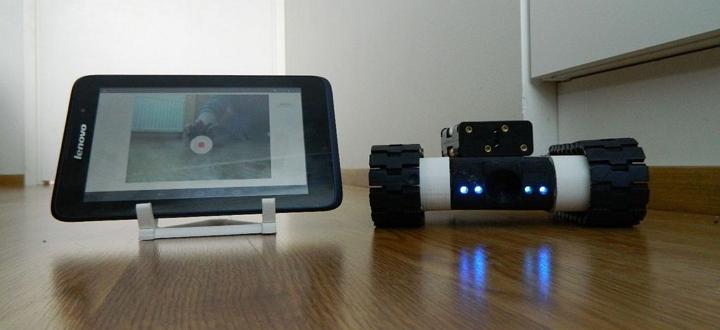 Miska Karvonen is a 24-year-old engineering student from Oulu, Finland. He’s a married man with a 4-year-old son, but he still makes time to build some pretty cool 3D printed projects, and this is yet another of those projects.
Karvonen took a GoPiGo kit as the starting point for his Rasperry Pi Spy Tank, but he didn’t like the fact that the basic model of the case for the robotic kit was a bit large to achieve the result he wanted and to allow it to move around his house with the proper efficiency.
The GoPiGo is a complete Raspberry Pi Robot Car kit which comes with nearly everything you need to get a Raspberry Pi board rolling. It includes the robot body, tires, the motors, controls, and a battery pack. It’s also compatible with a variety of programming languages and USB accessories.
As the basic kit just wasn’t enough for Karvonen, he also needed a Raspberry camera, a WiFi Dongle, and an SD card with a GoPiGo image.
To get things rolling, he used an excellent tank remix project, the Drogerdy – Raspberry Pi Controlled Tank Bot from Australian designer Tim Clark.
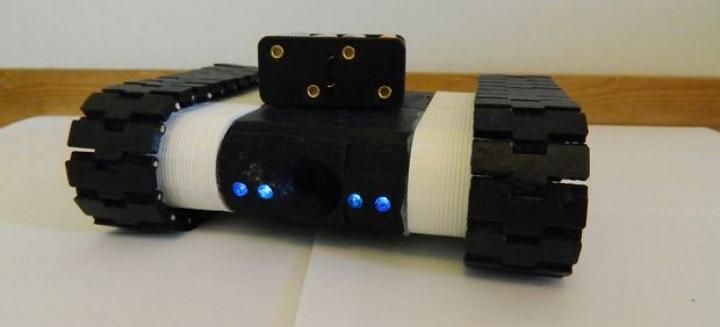
To jazz it up a bit, he included LEDs for lighting.
Karvonen printed out all the parts with his Printrbot makers kit. He used PLA at print speeds which varied from 20mm/s to 50mm/s building layer heights at 0.2mm.
According to Karvonen, the total cost for all the printed parts was about $25, but he used a more expensive PLA (around $50 per kilogram) and says that with a less costly filament the cost could easily be cut in half.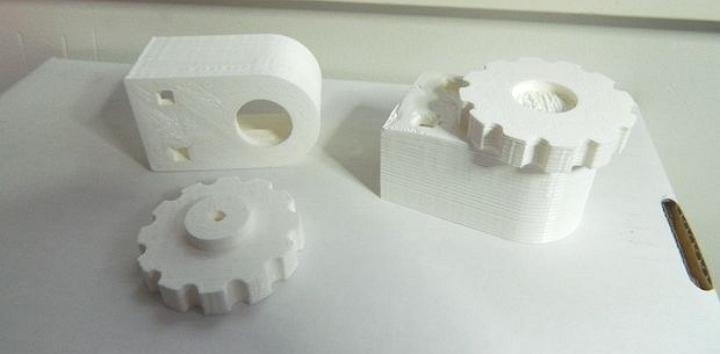
He also includes a few time-saving tips on the project, which he made into an Instructable.
Among those tips, Karvonen says you should attach the LEDs early on in the assembly, test to make certain that the wheels turn easily, and use a little sandpaper to clean up the parts if you find they’re a bit tight once printed.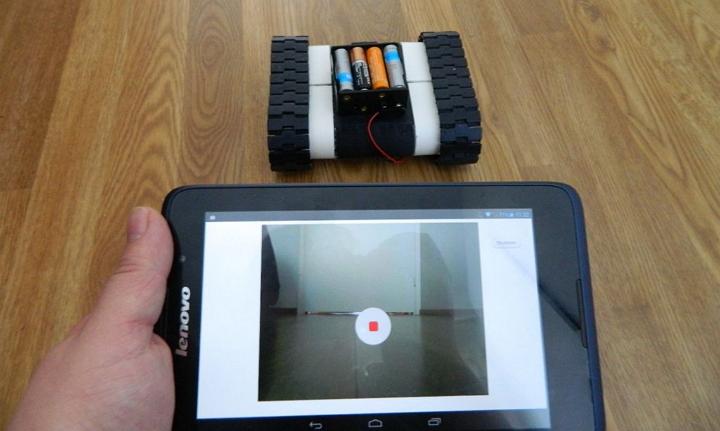 He also connected the track sections together using another inexpensive and inventive trick.
“Toothpicks are cheap and work really well on the tracks,” Karvonen says. “Note that the track’s outer holes are smaller than the middle one. This is to keep the middle ‘hinge’ loose when the toothpick is pushed through the smaller outer holes.”
After some assembly and glue here and there, Karvonen uploaded the code to the board, and the result is that the controls can be accessed–and live video displayed–through any device that has an internet and common network connection.
So what can you do with your new Raspberry Pi Spy Robot Tank?
“Play with it and see where it can go,” Karvonen says. “Use the live video and bright led’s to see under your bed and discover horrible mess from there.”
Will you build Miska Karvonen’s version of Tim Clark’s Drogerdy Raspberry Pi Controlled Tank Bot? Let us know in the Raspberry Pi Spy Tank forum thread on 3DPB.com.
Subscribe to Our Email Newsletter
Stay up-to-date on all the latest news from the 3D printing industry and receive information and offers from third party vendors.
Print Services
Upload your 3D Models and get them printed quickly and efficiently.











You May Also Like
From Material Maturity to Fleet Execution: What Comes Next for Additive Manufacturing in the U.S. Navy
Additive manufacturing is steadily moving from experimental use toward routine application in U.S. Navy shipbuilding, sustainment, and much more. In recent years, the Navy, working through its Maritime Industrial Base...
Industrial Additive Manufacturing Reaches Its Most Important Inflection Point
Additive manufacturing is entering the most consequential period in its evolution. After years of experimentation and uneven adoption, the industry is showing renewed momentum, shaped by supply-chain pressures, and a...
Scaling Beyond 10 Printers: When Support Becomes a Bottleneck
The leap to industrial-scale 3D printing is a support problem, not a hardware problem. A 3D print farm is a centralized facility that uses a large number of 3D printers...
Reshoring Requires Rules of Engagement
Reshoring manufacturing in the U.S. is a stated national priority. Policymakers, industry leaders, and defense planners agree that domestic production capacity is essential for economic resilience, national security, and long-term...