e-NABLE Volunteer Combines Two Previous Designs for New & Improved 3D Printed Prosthetic Hand


e-NABLE is made up of a team that encompasses pure goodness. We’ve reported on this giving, globe-trotting group countless times as they’ve helped those challenged with missing limbs to improve their quality of life with customized, affordable 3D printed hand prosthetics that can actually be fun and even cool. They’ve produced a long list of 3D printed prosthetics with highlights such as superhero designs, sleek designer styles, and even a prosthetic for the whole arm.
We’ve covered e-NABLE’s positive activities and contributions as they’ve traveled to places like Haiti setting up programs that not only help youngsters in need of prosthetics, but also just 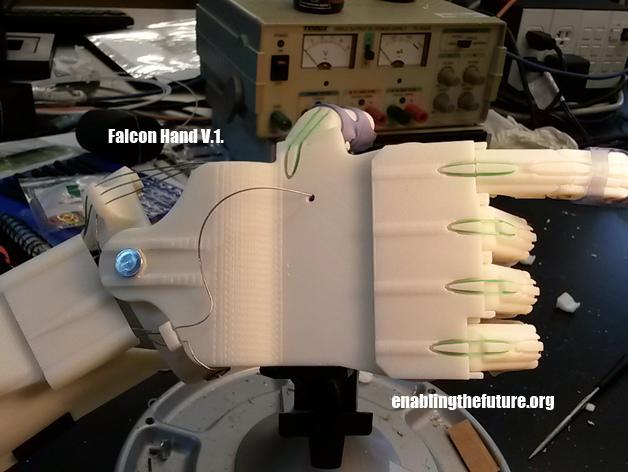 as importantly, set up the medical professionals with self-sustaining programs in developing countries so that they know how to design the customized prosthetics and 3D print them as well–once the e-NABLE team has left. The products that e-NABLE’s volunteers work with are continually undergoing evolution, as they keep the energy and innovation flowing, inspired by the reward of helping youngsters.
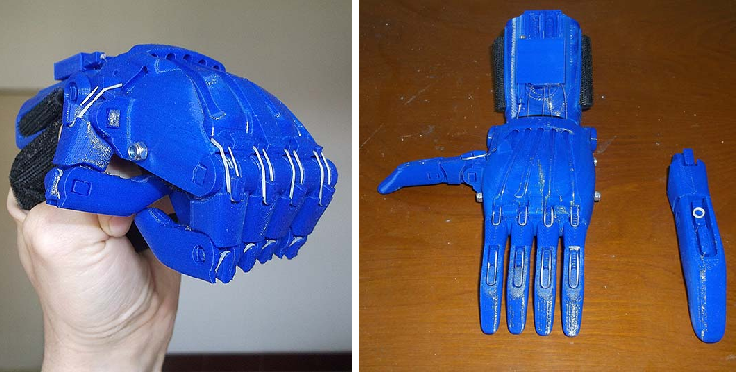
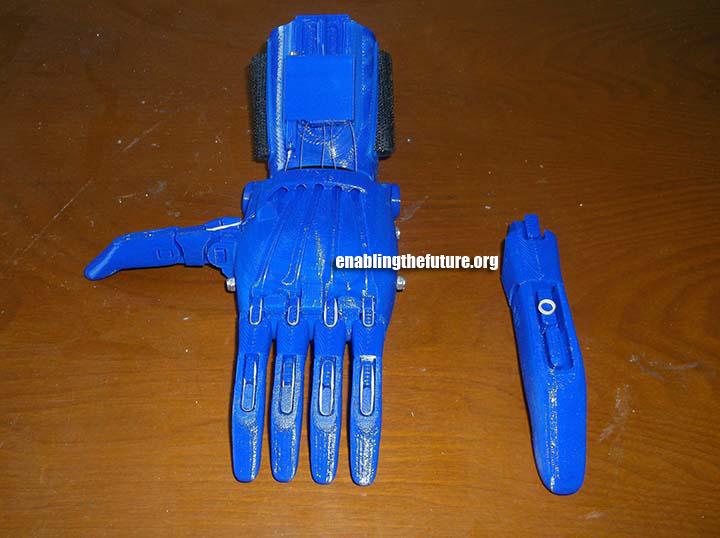
Not surprisingly, e-NABLE has something new to add to their amazing portfolio of designs in the R&D department, with a new angle on a couple of other innovations that designer Jason Bryant studied and used as inspiration for his Orthotic Rubber Band Hand.
Bryant, one of e-NABLE’s volunteering heroes who happens to be a researcher and teacher at Shandong University in China, put his designer thinking cap on and took a serious look at both the Raptor Reloaded hand and the Falcon V1.
Inspecting the unique dynamics of the orthodontic rubber band used as an innovation for the Falcon V1 versus the elastic band traditionally used, Bryant discovered that the rubber bands were exponentially more versatile in that they have so much more stretching substance; in fact, they have more stretch than is even necessary, whereas the rubber bands often lack altogether in power, which can pose problems.
“I did a little testing and found that rubber bands can stretch to about 500% of their original length, while the nice elastic cord only stretches to 150%. So obviously the elastic cord is hitting its limit,” says Bryant. “This is more of a problem on the smaller hands, which have less elastic to stretch. That might also help explain why I had an elastic cord break before any of the rubber bands broke. The rubber bands still have stretch to spare even when the fingers are fully closed, so they’re not feeling the strain.”
As is the nature of science and progress, while everyone has certainly been happy to receive the gift and innovations offered by the previous two hands, Bryant was able to improve on both designs after researching them and making some discoveries regarding why some issues were cropping up, such as smaller hands not having enough mobility or flexibility due to the limitations enforced by the elastic cords.
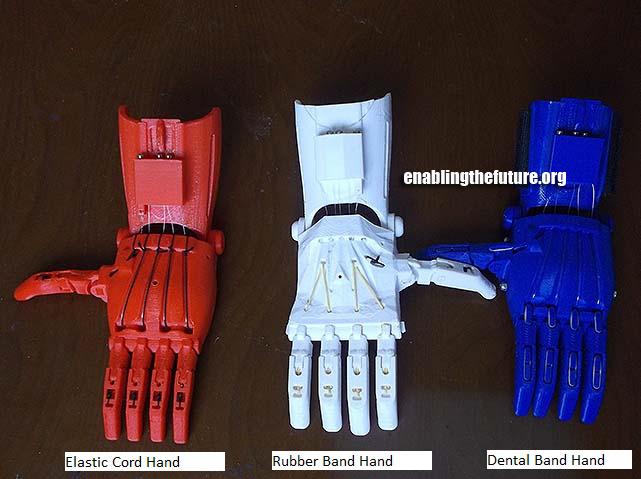 Bryant made a brilliant switch-up, redesigning the Raptor Reloaded using rubber bands. Genius!
“At this point, I do have a few thoughts on the design,” said Bryant. “It seems to work pretty well. The dental elastic hand does not close as easily as the rubber band hand, but it does close easier than the elastic cord hand…”
“One interesting thing is that the force is distributed differently. At the very beginning of the motion, the dental elastic hands require a little more force. However, that force doesn’t seem to increase much as I continue pushing the fingers closed. On the hand with elastic cord, it starts off very easy and linearly ramps up as you get closer to closing the fingers. This might be improved by experimenting with different lengths of elastic bands. The ones I got were 3/16, which I believe means they have a diameter of 3/16 of an inch. There are many other sizes, and I’m trying to get 1/4 now. If they are longer, then they won’t be stretched so much at their starting positions. That should make it easier to open the fingers for the full range of motion.”
While Bryant did make improvements on both previous versions, he found his new prosthetic still required refining and he wasn’t quite happy with it at first. He was able to fix the awkward grip though by tightening the bands and adding two bars to the palm of the hands.
“Perhaps I’m getting overly excited because I’m so impressed with the thing I made, but this feels like a significant improvement,” Bryant said. “I think this gives a small improvement both to picking up large objects and picking up small objects. Obviously that will require testing, starting with maker testing. This is still a test, not a new hand. If things go as well as I’m hoping, we’ll need to build a new hand from the ground up, not just hack off parts of the Raptor Reloaded and stick on new parts.”
This new 3D printed prosthetic has all the good qualities of its two predecessors combined with Bryant’s own brilliant improvements, thanks to the time he took to research and brainstorm.
Have you been following e-NABLE’s progress, or have you participated as a volunteer in one of their programs? Is that something that interests you? Tell us about it in the New & Improved 3D Printed e-NABLE Prosthetic Hand forum thread over at 3DPB.com. Check out what Bryant had to say about his design in the video below.
Subscribe to Our Email Newsletter
Stay up-to-date on all the latest news from the 3D printing industry and receive information and offers from third party vendors.
Print Services
Upload your 3D Models and get them printed quickly and efficiently.













You May Also Like
The Two Paths to AM Print Services Market Growth
AM Research New market research: AM Research is building its new Additive Manufacturing Services Market 2.0 model. Learn more about the report and preorder here → Things continue to heat...
Additive Manufacturing Has a Major Growth Opportunity; Trust Will Decide Who Captures It
After years of overpromising, the next phase of AM growth will be won by companies that consistently deliver what they say. When I entered additive manufacturing in 2014, after 15...
10 Years of Multi Jet Fusion: Onsite at HP’s Vancouver, Washington Facility
At this year’s RAPID event in Boston, HP Additive Manufacturing Solutions celebrated ten years in the additive manufacturing (AM) market. The company ushered in the milestone with several innovations, including...
ADDMAN to Buy Up to $10.8M in Nickel 718 Powder from 6K Additive Over 30 Months
After years of buildup, we’re finally starting to see what the US metal additive manufacturing (AM) market could look like at scale. To be sure, it’s still not quite there,...