3D Printed GPS Tracker Improves Quality of Life for People with Alzheimer’s


Anyone who has experienced the heartbreaking mental decline of a loved one afflicted with Alzheimer’s Disease understands the urgency and importance of taking precautions to ensure the person’s safety. As the disease progresses, people with Alzheimer’s experience progressive loss of memory and other intellectual abilities. Many patients have a tendency to wander from places of safety, which, once familiar, can suddenly seem alien to them.
Instructables contributor Logan Prasser created a GPS device along with Sean Halloran, Engineer at TTX company, and Gvozden Suvajlo a student at Northern Illinois University. The device can track a person’s movements, sending an alert when they leave a pre-specified range. The small device can be placed in the pocket of the patient by a caretaker, who can monitor his or her movements without being forced to remain in constant close contact. It probably goes without saying that such a relatively simple device can improve the quality of life of both those people suffering from Alzheimer’s and their caretakers.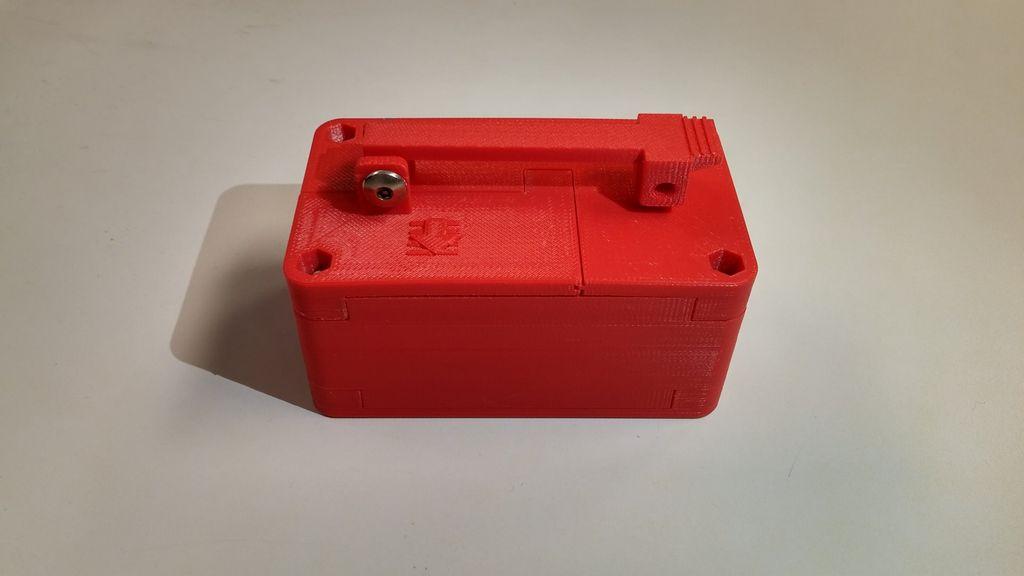
Prasser, who lives in Wisconsin and works at Hydrite Chemical Company, explained that, while there are already similar devices on the market, most are quite complicated. His is not only easier to use, but fairly simple to produce. His GPS tracking device uses a microcontroller, GPS and cell modules, and batteries, all of which are housed in a 3D printed case. He programmed the microcontroller to communicate with both the cell and the GPS modules. When the GPS module is not within a specific boundary, the device sends a text message alert.
In order to produce the GPS tracker, you will need the following components: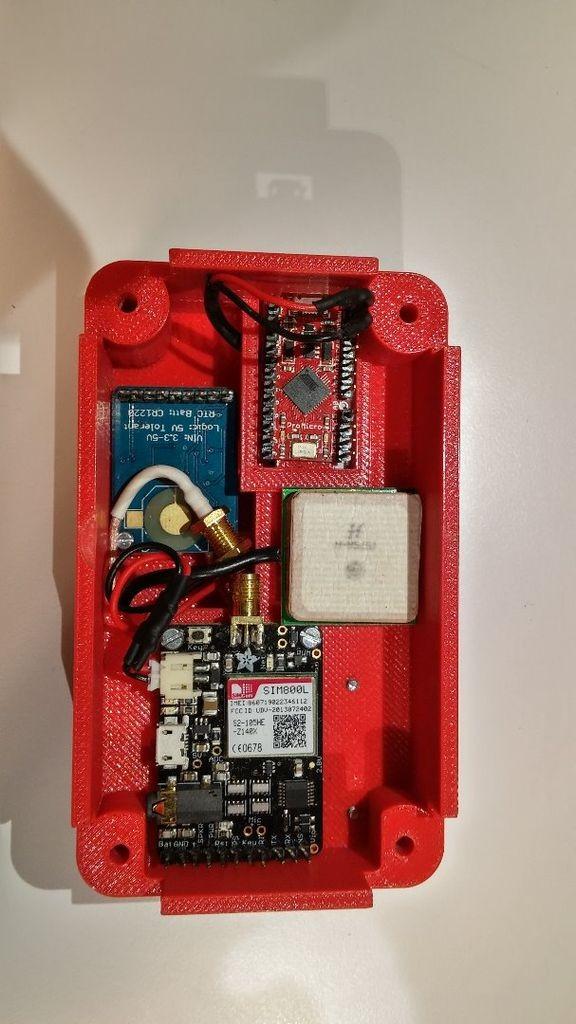
- Arduino Micro
- GPS breakout board
- Adafruit FONA board
- GPS antenna
- 9v battery (and 3.7v battery 500mah or greater)
- Pin headers
- Female to female jumper wires
- 4 of #6-32 screws 2” length, plus 4 nuts, 6 2.5mm by 9mm machine screws, 6 2.5mm nuts and 2 2mm screws and 2 2mm nuts
- 1 tamper-proof pin ¼” barrel diameter
You will, of course, need to 3D print the case for the device. Prasser designed the five pieces in SolidWorks and has made the files available, also encouraging users to modify the designs as needed for their use. Prasser suggests adding a solar board for charging the 3.7v battery and using solar panels but that’s an optional step.
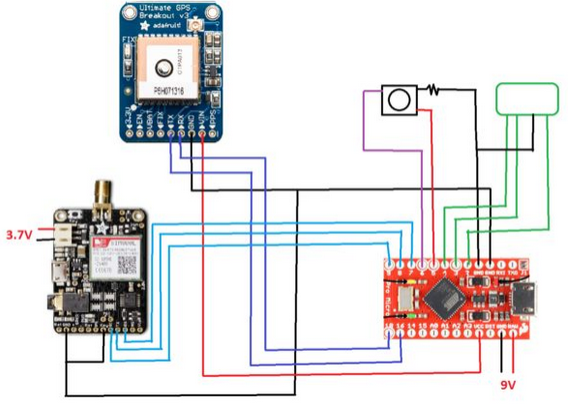 On the Instructables page for his GPS tracking device, Prasser provided help with the Arduino coding and the wiring. He included a button and LED on his device, but that step isn’t necessary–“they are nice features,” though, he added. The final step in the process is to share any changes you make to the device so that other makers and Prasser himself can benefit as can their loved ones who are battling Alzheimer’s and dementia.
“PLEASE SHARE, PLEASE CHANGE AS YOU’D LIKE!!” Prasser concludes, “We would like everyone to have this for their loved ones or any purpose they can think of!!”
Clearly a compassionate as well as thorough maker, Prasser tested his 3D printed, GPS tracker for durability. His hope is to design a similar device that uses smaller components to reduce its size, making it even more portable.
Do you know of someone who could benefit from this device? Let us know if you might make your own GPS tracker to help in the 3D Printed GPS Tracker for Alzheimer’s Patients forum thread at 3DPB.com.
Subscribe to Our Email Newsletter
Stay up-to-date on all the latest news from the 3D printing industry and receive information and offers from third party vendors.
Print Services
Upload your 3D Models and get them printed quickly and efficiently.













You May Also Like
The Two Paths to AM Print Services Market Growth
AM Research New market research: AM Research is building its new Additive Manufacturing Services Market 2.0 model. Learn more about the report and preorder here → Things continue to heat...
Additive Manufacturing Has a Major Growth Opportunity; Trust Will Decide Who Captures It
After years of overpromising, the next phase of AM growth will be won by companies that consistently deliver what they say. When I entered additive manufacturing in 2014, after 15...
10 Years of Multi Jet Fusion: Onsite at HP’s Vancouver, Washington Facility
At this year’s RAPID event in Boston, HP Additive Manufacturing Solutions celebrated ten years in the additive manufacturing (AM) market. The company ushered in the milestone with several innovations, including...
ADDMAN to Buy Up to $10.8M in Nickel 718 Powder from 6K Additive Over 30 Months
After years of buildup, we’re finally starting to see what the US metal additive manufacturing (AM) market could look like at scale. To be sure, it’s still not quite there,...