Flexible Hybrid Slicing Aimed at Optimizing 3D Printing Methods

They call it Flexible Hybrid Slicing, and The Export Office and Ctrl Design say it’s an innovative principle to speed up common 3D printers by using an alternative method of processing and separating the layers of 3D design files.
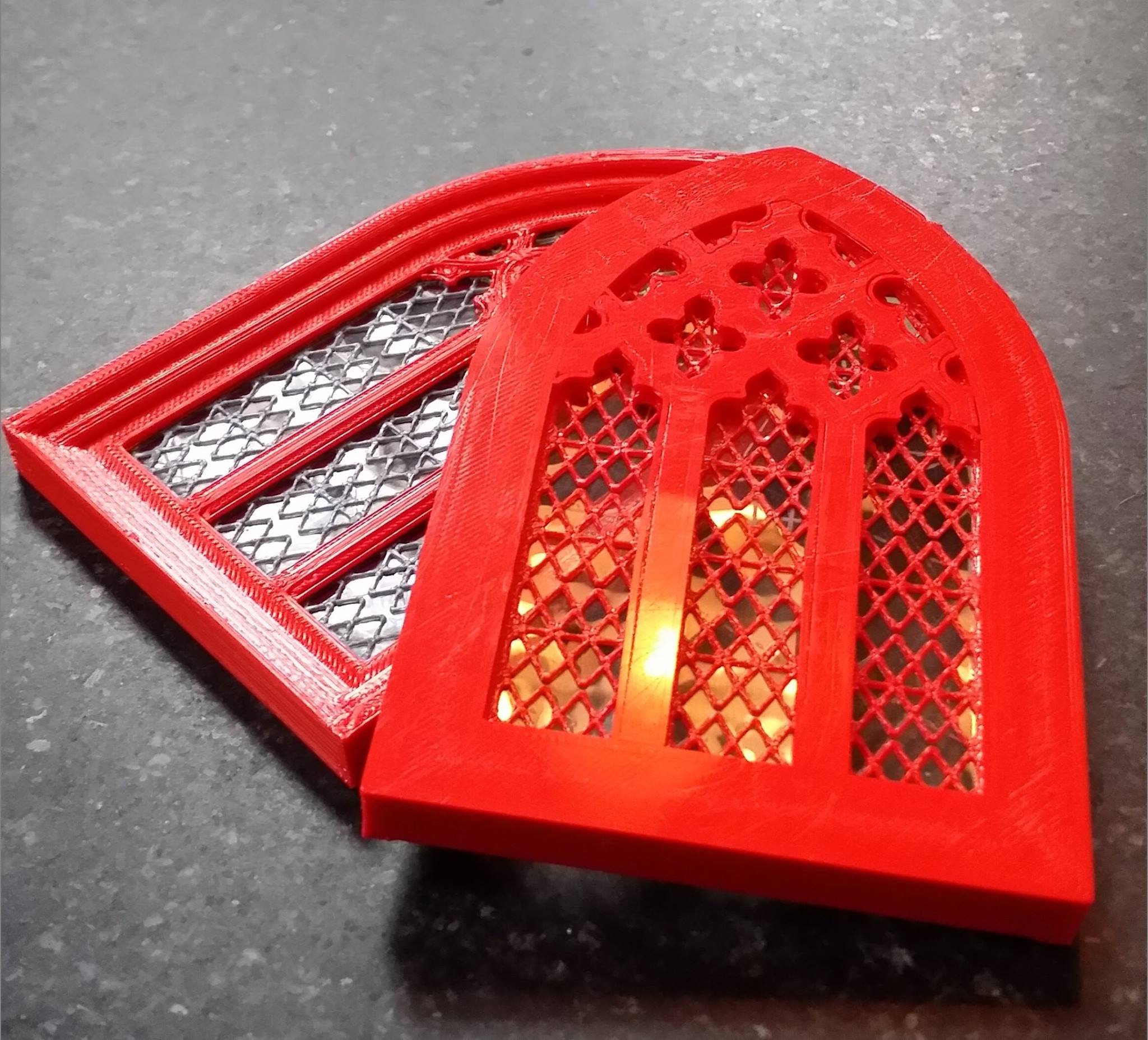 Gerben Eykenaar and Maarten Kurver say they’ve spent the last year and a half optimizing the process and implementing the necessary technologies working in conjunction with industrial specialists and universities.

Gerben Eykenaar
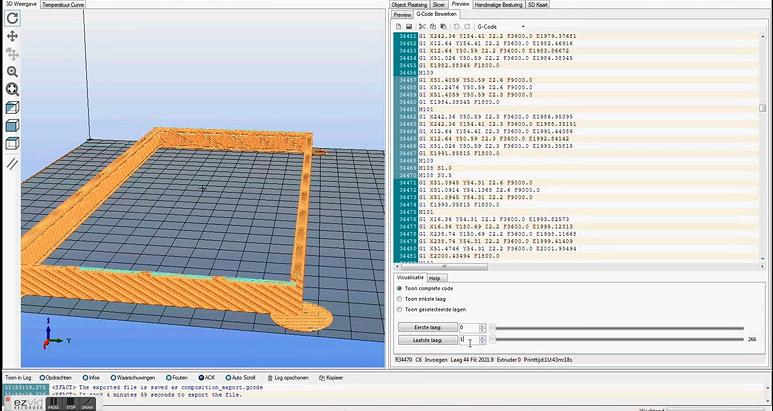
“By successfully eliminating unnecessary volume and support printing through so-called Triple D3 layer material, the total printing time can be improved considerably in almost all cases,” says Eykenaar, the owner of The Export Office. “The trick of this developed sheet material is that it will provide for a perfect level of adhesion for both very commonly used PLA and PS filament, albeit that the sheet material may be released from the printed PLA layers afterwards. Moreover, we have developed plug-and-play beta software — FHS-App — to support the design, slicing and printing process.”
The pair plan to roll out a Kickstarter campaign at the end of the month to scale up the production of their supportive sheet material.
They say this sheet material is used to enable a custom FDM 3D printer to cut printing time by as much as 80% and to provide better and smoother print results and more freedom of design. They used their concept to create a game testing it out.
“We have designed a nice ball game called ‘MyGrow Golf,’ reflecting all basic features of the implemented process technology,” said Kurver, the owner of Ctrl Design. “The ‘Flexible Hybrid Slicing’ principle basically fits plain sheet layer material into the filament layers. By doing so, not only the printing time has been significantly reduced, but also new design possibilities appear. It is far more than just inserting a material piece into the 3D print, as designing a fully operational sliding lid within a 3D print is now possible and easily reproducible, thanks to the unique stick-and-release properties of the…sheet material.”
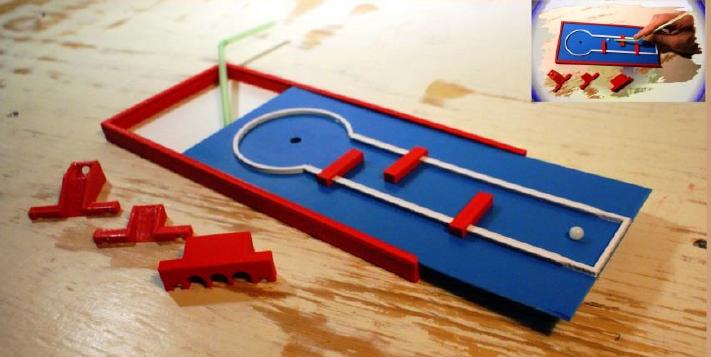 The pair say the game will also be used as an example of the possibilities of the Internet of Things, and they’re calling on the 3D printing and design communities to create additions to the game as part of an open source design.
Eykenaar and Kurver say they plan to launch the Kickstarter in the next two weeks to provide funds to develop their Flexible Hybrid Slicing principle.
What do you think about the Flexible Hybrid Slicing technique? Do you plan to support this Kickstarter? Let us know in the Flexible Hybrid Slicing forum thread on 3DPB.com.
Subscribe to Our Email Newsletter
Stay up-to-date on all the latest news from the 3D printing industry and receive information and offers from third party vendors.
You May Also Like
Profiling a Construction 3D Printing Pioneer: US Army Corps of Engineers’ Megan Kreiger
The world of construction 3D printing is still so new that the true experts can probably be counted on two hands. Among them is Megan Kreiger, Portfolio Manager of Additive...
US Army Corps of Engineers Taps Lincoln Electric & Eaton for Largest 3D Printed US Civil Works Part
The Soo Locks sit on the US-Canadian border, enabling maritime travel between Lake Superior and Lake Huron, from which ships can reach the rest of the Great Lakes. Crafts carrying...
Construction 3D Printing CEO Reflects on Being Female in Construction
Natalie Wadley, CEO of ChangeMaker3D, could hear the words of her daughter sitting next to her resounding in her head. “Mum, MUM, you’ve won!” Wadley had just won the prestigious...
1Print to Commercialize 3D Printed Coastal Resilience Solutions
1Print, a company that specializes in deploying additive construction (AC) for infrastructure projects, has entered an agreement with the University of Miami (UM) to accelerate commercialization of the SEAHIVE shoreline...