Philippines Researchers Sign Agreement to 3D Print Wind Pipes For Transplant


 As we’ve mentioned only yesterday, the medical applications for 3D printing continue to expand rapidly. In fact, in the next 5 years alone, the number of printers will double and the amount of material used for printing within the healthcare space will grow 7-fold. All the while, 3D bioprinting should be just about to hit its stride around 2020 according to SmarTech.
Also according to SmarTech, one of the key geographic areas leading to this growth will be the Asian Pacific region. Here, promising new companies are spouting up and heavy investments are being made in both research and development, while a general urge to keep up with western nations, drives forward innovation.
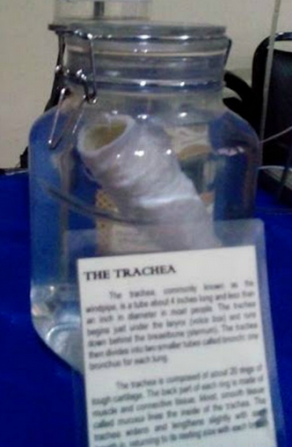
One such example of all of this, is an agreement signed yesterday by the Lung Center of the Philippines (LCP), engineers from the Technological Institute of the Philippines (TIP), representatives from the Genomic Institute of Asia (GINA) and Pharma Canada Ltd. As part of this research agreement, the teams will work to develop the technology necessary to 3D print artificial tracheae (windpipes).
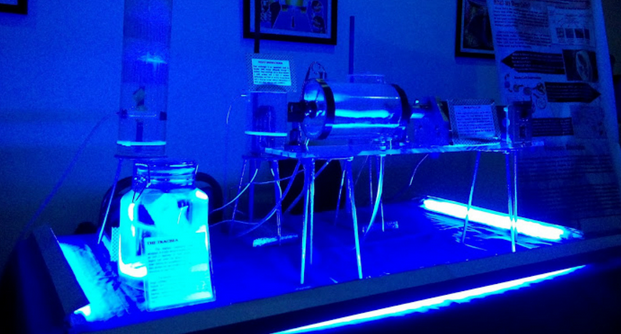
We’ve already seen several instances of 3D printed windpipes being produced. In fact, just last month doctors at the Feinstein Institute for Medical Research used a sub-$3000 MakerBot Replicator 3D printer to do just this.
The printer, which researchers in the Philippines are utilizing, will use a bio-ink to print out the scaffolding of the windpipe. Then researchers will implant the scaffold along with a patient’s own stem cells, allowing the scaffold to transform eventually into a biologically compatible transplantable human body part. Because a patient’s own stem cells are being used, the risk for rejection is significantly cut, and expensive drugs are not required for the transplant 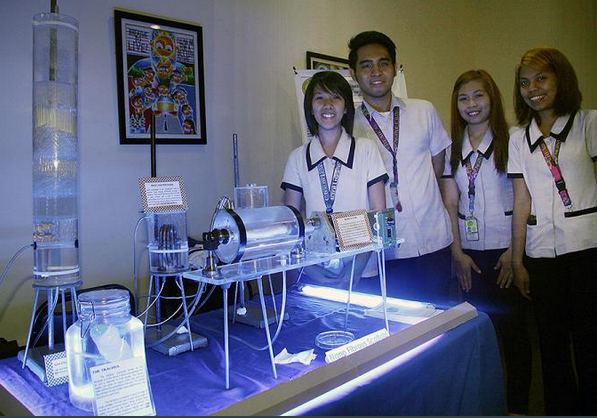 patient.
“Our technology is cutting-edge,” said Dr. Jose Luis Danguilan, Executive Director of the LCP. “If we are successful in its clinical applications, we may be at par with the advanced nations in this new field.”
The researchers have started with the trachea because of its simplicity and tubular shape, which makes printing it much easier than other biological features. They do, however, hope to increase the scope of this research to include other body parts and organs in the future. Currently the teams hopes to have the 3D printed tracheae ready for use within patients in about 3-4 years, perhaps saving lives and dramatically reducing the cost and wait times for transplants.
Let’s hear your thoughts on this research being done in the Philippines. Discuss in the 3D Printed Trachea forum thread on 3DPB.com.
Subscribe to Our Email Newsletter
Stay up-to-date on all the latest news from the 3D printing industry and receive information and offers from third party vendors.
Print Services
Upload your 3D Models and get them printed quickly and efficiently.













You May Also Like
Why Qualification Is Becoming the Next Frontier for AM in Energy
The energy industry doesn’t have much room for failure. Components used in power generation often operate under extreme temperatures and pressures, sometimes for decades at a time. That’s one reason...
Fathom CEO Rush LaSelle on Why Additive Manufacturing Is Growing Up
For years, the additive manufacturing (AM) industry promised to reinvent production. But as the technology matured, the real challenge turned out to be proving that 3D printed parts could be...
Rheinmetall Uses Ducting Made with Minifactory for Challenger 3 Tanks
Rheinmetall UK is using Minifactory Material Extusion as the primary production method for tank ducting on the Challenger 3 Main Battle Tank program. The Challenger 3 is the UK’s formidable...
Q5D and Molrix To Supply US Army With Harness Robots
Q5D Technologies and Molrix will offer their advanced harness production manufacturing units to the US Army. One production cell will be used for the SkyFoundry project, while two further systems...