A Novel AM Process: DIAL 3D Printing


A new 3D printing technology, direct ink additive lithography, or DIAL, spreads paste-like inks in layers and then selectively hardens them using light. The inks can also act as a support. Northwestern University researchers published the work in Science Advances. The paper, “Rapid, voxel-based 3D printing with yield-stress fluid inks,” was written by Pranav Kaarthik, Michael Bayer, EunBi Oh, Alexander Kane, and Ryan Truby.
Assistant professor of materials science and engineering, and the June and Donald Brewer Junior Professor at Northwestern’s McCormick School of Engineering, and leader of the Robotic Matter Lab. Ryan Truby stated,
“DIAL can produce parts that have been challenging if not impossible to make with other 3D printing methods. From aerospace to robotics to medicine, the technologies of the future will require materials with structures we’ve never achieved before. Getting there means fundamentally rethinking how we turn functional materials into useful forms. This new printing method opens up an entirely new design space, giving us the freedom to create materials and architectures that were previously out of reach.”
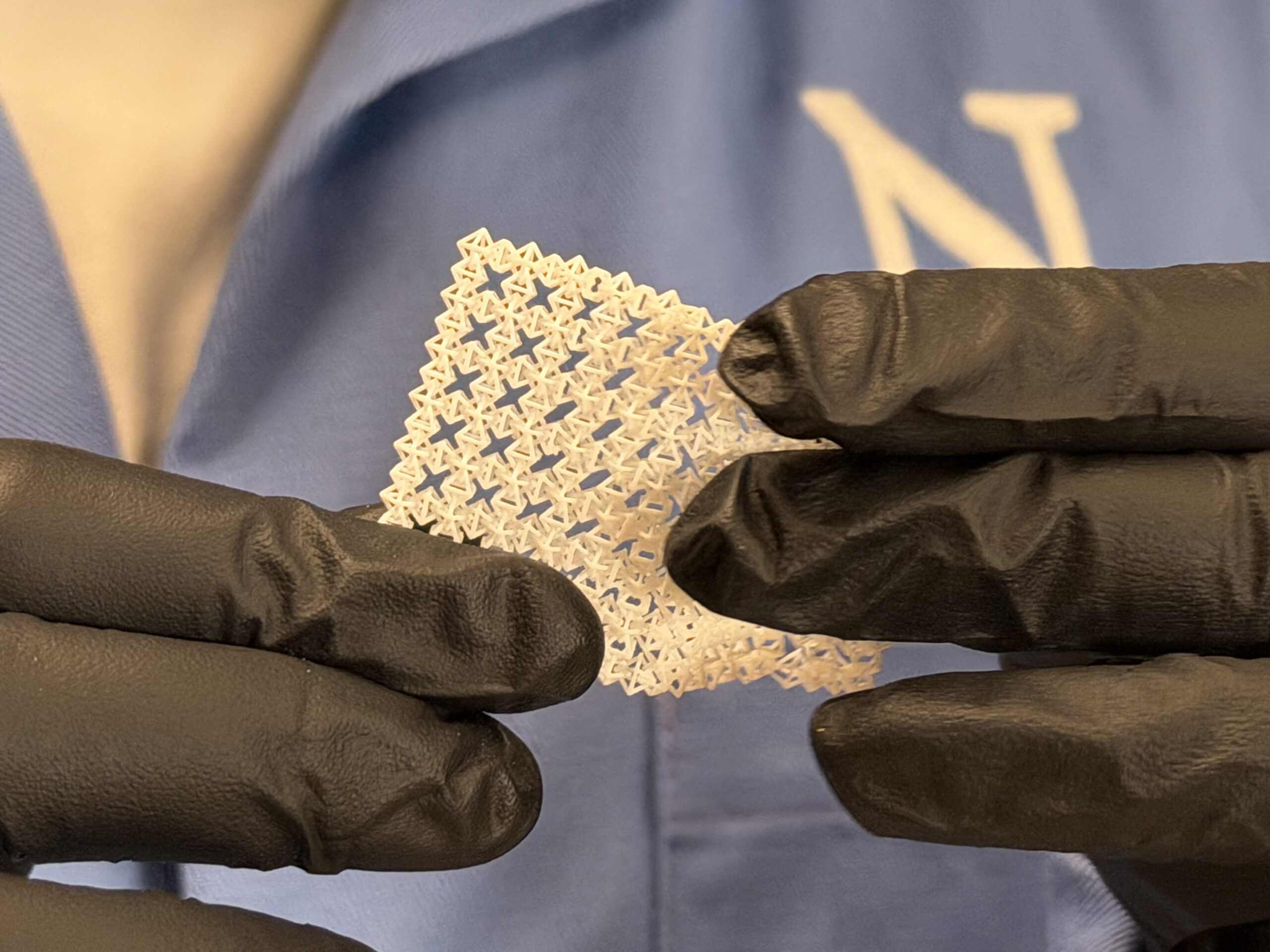
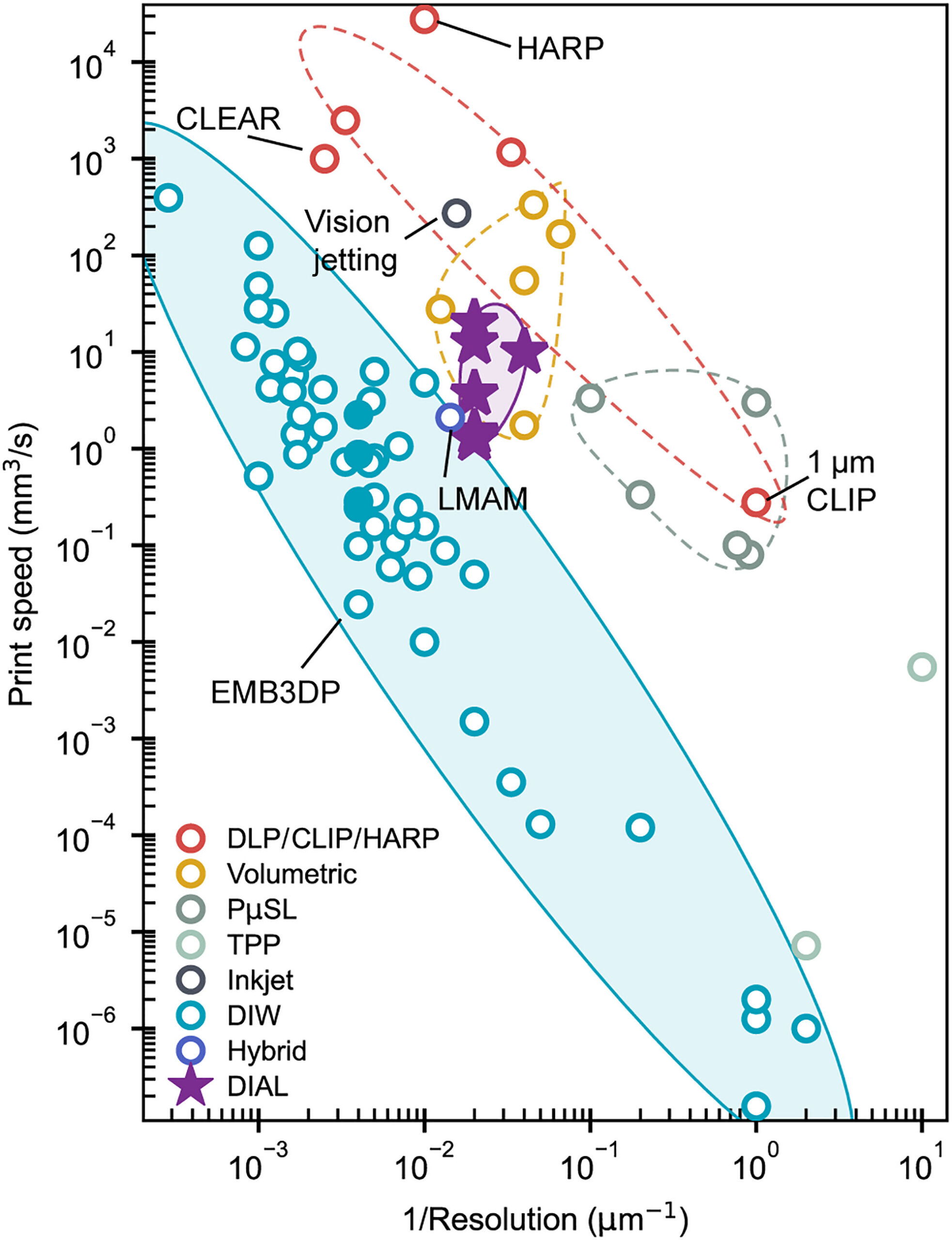
In some cases, DIAL could be faster than material extrusion and Direct Ink Write while also having more detail, like vat polymerization. They can also use very different materials, including “structural electrolytes being developed for batteries and hydrogels inspired by laboratory devices for growing cells and engineering tissues.” They think that it may be used in “structural applications, robotics, energy storage, tissue engineering, custom medical devices, and more.” DIAL is therefore a wide material base, an ideal combo of direct ink writing and vat polymerization.
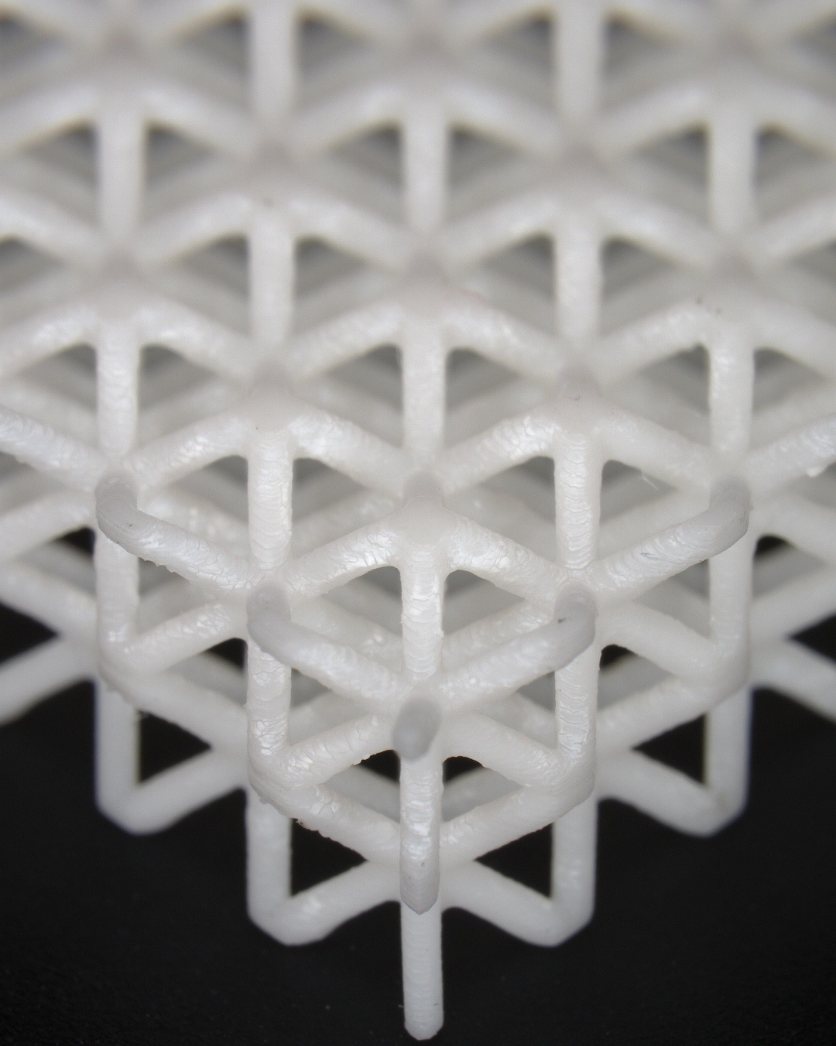
The pastes are extruded through a slot-die nozzle onto a print bed, then a recoater smooths them into 50-micron layers, and a light source selectively hardens the material. Materials include photo-curable resins (polyurethane-based) doped with silica nanoparticles, which let the layer retain its shape after recoating and eliminate the need for supports. Unhardened ink can be washed away afterward. The light source is a Wintech PRO 4500 DLP head.
Kaarthik added, “When you 3D print a complex part, you also have to co-print a support to hold it together. If you don’t print the scaffold, your printed object will literally fail. But then we need to figure out a way to remove the scaffold. Sometimes, removing those supports can destroy the delicate features you’re trying to make.”
Initial testing showcases some fast prints and the ability to make 150-micron wall-thickness lattices. The process can also make parts larger than the build volume by moving the projection head. The process can also use different inks per layer to change properties. Being able to print outside the box means you could theoretically make very large parts with this process or use it for things like coating.
They also used a structural electrolyte to make porous lattice structures, which may mean they can make batteries or other electronic components. They also made a hydrogel into a cell culture-like structure.
Truby went on to say that, “To print these types of materials, we don’t just need new software capabilities, new hardware or new inks. We need all three, working in concert. Pranav and our team have been able to achieve that with DIAL. We’re now working to DIAL print materials and structures that can be used to withstand extreme environments for space travel, as flexible body parts for robots, as medical devices and even as tissue culture environments for biomanufacturing. We’re going to be able to 3D print materials that have not been 3D printed before.”
I find this technology to be truly exciting. For making things like membranes, functionalized surfaces, batteries, and new materials, this technology is very exciting. It looks like it may be deployable at scale, at least in low-Z height with a lot of different properties. Imagine a phone where the housing is the battery, or a new kind of Teflon but without the bad stuff coating for jackets and pans. I really like how they married a bunch of different technologies and created something that could really push the boundaries of what can be made. Now we have to wait and see just how viable this is day to day and if it works in production. But if this holds up, it could be a very interesting new process for us to use.
Subscribe to Our Email Newsletter
Stay up-to-date on all the latest news from the 3D printing industry and receive information and offers from third party vendors.
Print Services
Upload your 3D Models and get them printed quickly and efficiently.











You May Also Like
3D Printing News Briefs, November 5, 2026: Tungsten, Color Mixing, Prosthetic Socket, & More
We’re starting with business from Xact Metal, 3D Systems, and Freemelt, and moving on to materials from Snapmaker and hybrid manufacturing with Eplus3D. We’ll end with a custom prosthetic socket,...
GKN Will be Pivotal to A NATO-Wide AM Buildup
Last week I wrote about how a return to less strained relations between the US and the rest of the North Atlantic Treaty Organization (NATO), and a related resumption of...
AMCRC’s Additive Manufacturing Forum: Australia’s Moment in the Sun?
The Additive Manufacturing CRC (Additive Manufacturing Cooperative Research Centre, or AMCRC) is a cooperative research and implementation organization dedicated to making additive happen in Australia. Headed by Simon Marriott, it...
With 45% Revenue Growth & a New 3D Printer, BigRep Returns to Private Ownership
BigRep GmbH has been on a bit of a roller coaster recently, but with this latest news, I’m hoping that means the ride has stopped. Reporting approximately 45% revenue growth...