3D Printed Prosthetics Have Come a Long Way. HP and DyeMansion Look at What’s Next


3D printing has made it easier to produce prosthetics and orthotics tailored to individual patients. But making that work on a larger scale comes with its own challenges. For companies looking to expand production, it’s not enough to make a good custom device. They also need to be able to produce hundreds of them without sacrificing quality or driving up costs.
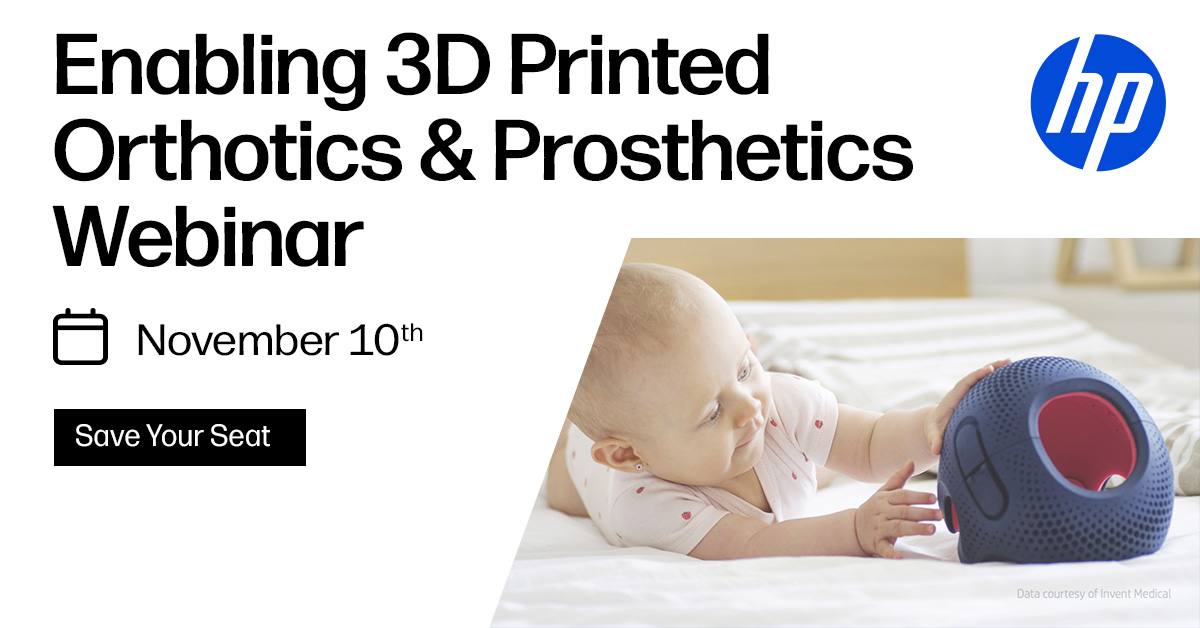
It’s also a question that HP and DyeMansion will explore in their upcoming free webinar, Enabling 3D Printed Orthotics & Prosthetics.
3D printing has already shown what it can do in this field. Companies are using it to produce custom prosthetic sockets, orthotic insoles, braces, and other devices designed around individual patients. And with digital scanning and design software, some of the work that once had to be done by hand can now be handled digitally.
In fact, 3D printing has been used to make prosthetics for more than 35 years. Back in 1990, researchers at Northwestern University worked with Baxter Healthcare to produce a prosthetic socket using stereolithography (SLA). That was an early experiment, but it shows just how long the industry has been exploring this technology. Today, the question is less about whether 3D printing can make these devices and more about how to produce them efficiently on a much larger scale.
But getting a good result from one printer is only part of the challenge. For manufacturers and healthcare providers, the bigger question is how to make the entire process reliable enough to use every day.
From Custom Devices to Consistent Production
Unlike conventional manufacturing, where a company might produce thousands of identical parts, orthotics and prosthetics need a different design for every patient. Two people might need the same type of brace, for example, but that doesn’t mean the same design will work for both.
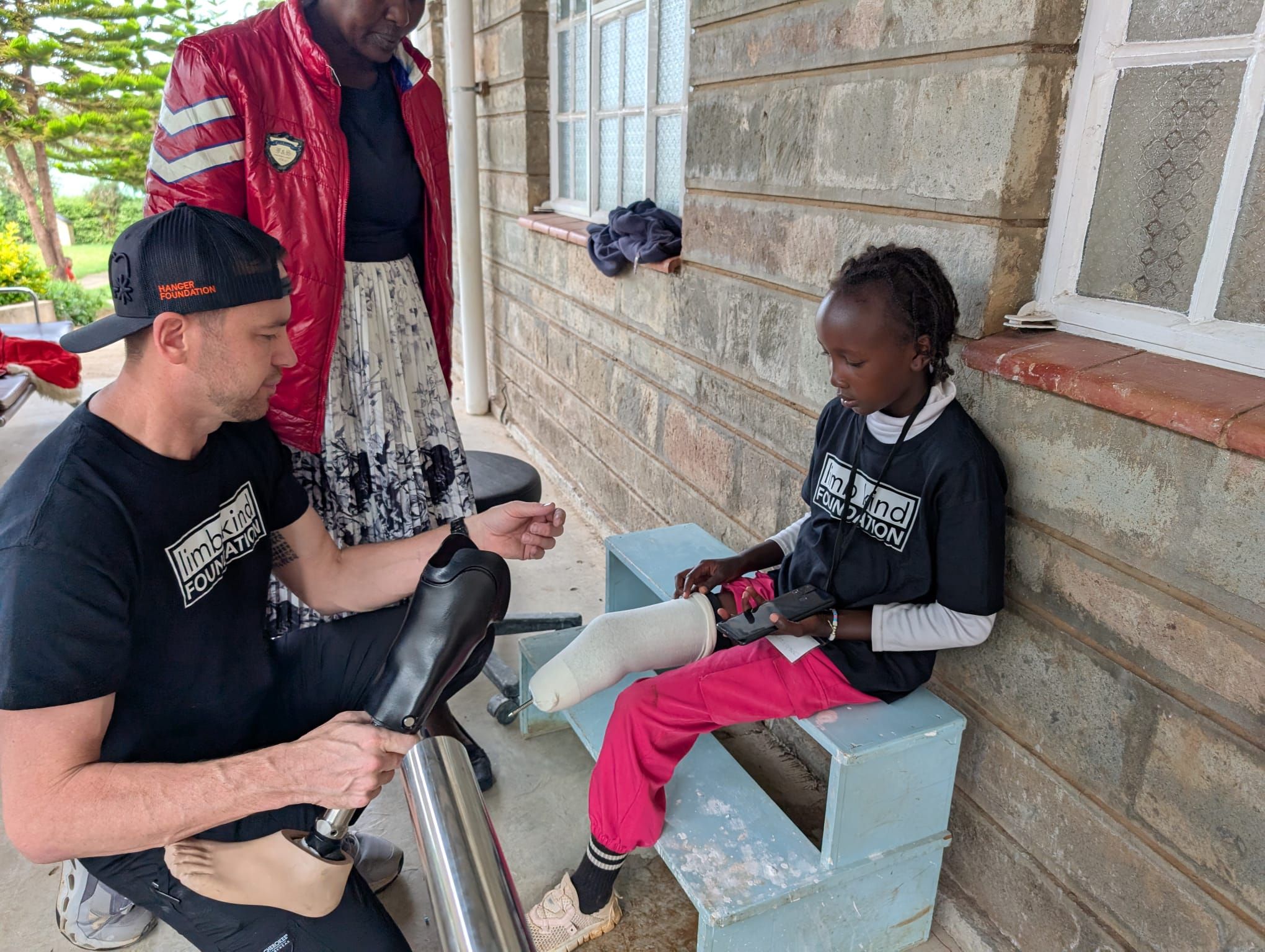
Delivering prostheses to children in Kenya. Image courtesy of HP.
This is one reason 3D printing makes sense for the industry. It allows manufacturers to produce different designs without needing a separate mold or tool for each one. But that flexibility also brings challenges. Every device still needs to be checked to make sure it meets the patient’s needs. And the more custom orders a company handles, the harder it becomes to keep everything organized.
And while 3D printing can reduce some manufacturing steps, it doesn’t eliminate the work that comes before and after printing. There’s still plenty to do before a device is ready for a patient, and much of that work happens outside the printer. So for companies trying to expand production, those steps can become just as important as the hardware itself.
Making the Entire Process Work
That’s where HP and DyeMansion come in. HP’s Multi Jet Fusion (MJF) technology is already being used to manufacture patient-specific orthotic and prosthetic components. The technology can produce multiple different parts in a single build, making it especially important for applications where customization is key. DyeMansion, meanwhile, handles the work that comes after printing, helping manufacturers clean and finish those parts.
For a device that someone may wear for hours every day, these steps are especially important. It needs to work properly, but it also needs to be comfortable, durable, and well-finished. However, the challenge is bringing all these steps together into a process that manufacturers can repeat reliably, even as the number of custom orders grows.
So it’s not just about how fast a printer works or how many parts it can produce. Companies also need to think about materials, labor, quality checks, tracking individual parts, and how much each finished device costs. The challenge now is making 3D printing practical and affordable for everyday production, not just individual projects.
What HP and DyeMansion Will Discuss
The upcoming webinar will bring together David Johnson, Application Engineer at HP, and Emilie Simpson, Senior Application Engineer at DyeMansion, to examine how digital manufacturing can support the production of personalized orthotic and prosthetic devices.
Johnson works with healthcare applications of HP’s Multi Jet Fusion technology, helping companies adopt and expand their use of additive manufacturing. Simpson specializes in post-processing and has experience with applications including prosthetic sockets and cranial helmets.
Together, they’ll discuss what it takes to move from a digital design to a finished device, and how manufacturers can make that process more efficient as demand grows. They’ll also share examples of how the technology is being used in practice.
For manufacturers already using 3D printing, the discussion offers a chance to examine how different parts of their workflow could work better together. For clinics and companies still considering the technology, it provides a look at what adopting digital manufacturing actually involves.
Subscribe to Our Email Newsletter
Stay up-to-date on all the latest news from the 3D printing industry and receive information and offers from third party vendors.
Print Services
Upload your 3D Models and get them printed quickly and efficiently.











You May Also Like
3D Printing Financials: 3D Systems Still Posting Losses, But Sees 2027 Tailwinds
3D Systems announced in August that Dr. Jeff Graves, the company’s CEO since early 2020, is planning to retire, and Joris Peels wrote an excellent post at the time of...
Beyond the Prototype: How TPM3D Is Putting Industrial SLS to Work on the Factory Floor
A structural component for an autonomous police patrol vehicle in Dubai went from weighing 27 kilograms to just four. Delivery time dropped from seven days to two. The component was...
3D Printing Financials: Yet Again, Xometry Sets a New Revenue Record
Earlier this year, on the day that Xometry (Nasdaq: XMTR) reported its Q1 earnings, the company’s share price rose dramatically — a trading session that still accounts for a huge...
Two Days Until AM Investment Strategies 2026: What Will Industry Leaders Have to Say?
AM Investment Strategies 2026 Nov. 5 · 12 p.m. ET · Free online event RESERVE YOUR SPOT ↗ With Formnext 2026 just around the corner, the 3D printing industry has...