UK Sight Loss Charity 3D Printing Ultrasounds for Visually Impaired Parents-to-Be


The Guide Dogs for the Blind Association, more commonly known as Guide Dogs, is the UK’s top sight loss charity, working to help people with vision loss “live the life they choose.” The nonprofit organization recently launched a pilot program called First Hello, which gives visually impaired expectant parents the chance to experience something that sighted people likely take for granted.
Guide Dogs surveyed 2,000 adults in the UK with visual impairment, and reported that 54% of respondents believe standard pregnancy scans should be more inclusive. Eight in ten respondents said all parents should be able to experience important pregnancy milestones, like seeing a baby’s first sonogram, and nearly 64% said that family members with vision loss would feel more included in this particular milestone if they could physically feel a sonogram. Enter 3D printing.
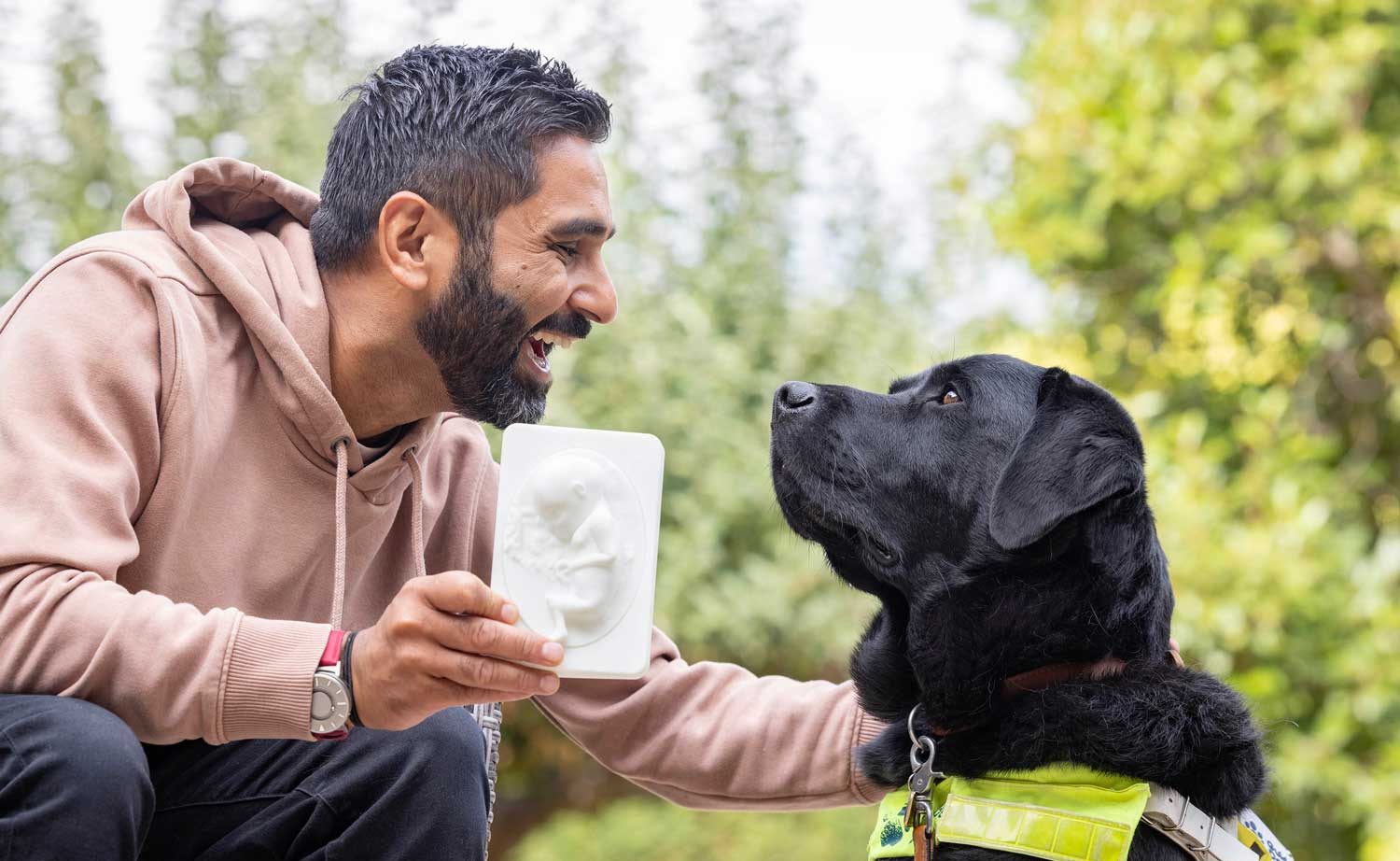
The First Hello initiative will give visually impaired or blind parents in the UK tactile sonograms: 3D printed models of the 20-week pregnancy ultrasound. This will allow the expectant parents to physically feel the contours of their unborn baby, since they can’t see a 2D sonogram. Additionally, parents-to-be who are sighted, but have family members with impaired vision, can also order a 3D printed ultrasound model.
“Every parent, grandparent and loved one deserves to experience the joy of early parenting milestones,” stated Kerry Bevan, the head of support services at Guide Dogs.
“Too often, people with sight loss are excluded from significant life moments that others take for granted.”
Using 3D printing to make experiences like these more accessible for visually impaired people is a topic that’s very near and dear to my heart. My grandfather was blind from a very young age, and my mother began losing her vision when she was about 35.
Feeling things with their fingers is pretty much the only way those with vision loss can “see” objects. That’s why 3D printing is so useful in this very specific arena. The technology can make so many things more accessible to visually impaired people, from sporting events and museums to learning about words, biology, geometry, and even sex education in school. Someday, 3D printing might even make it easier for blind patients to take medication, and allow blind women to learn the results of their pregnancy tests without relying on a sighted person…another important milestone related to having children.
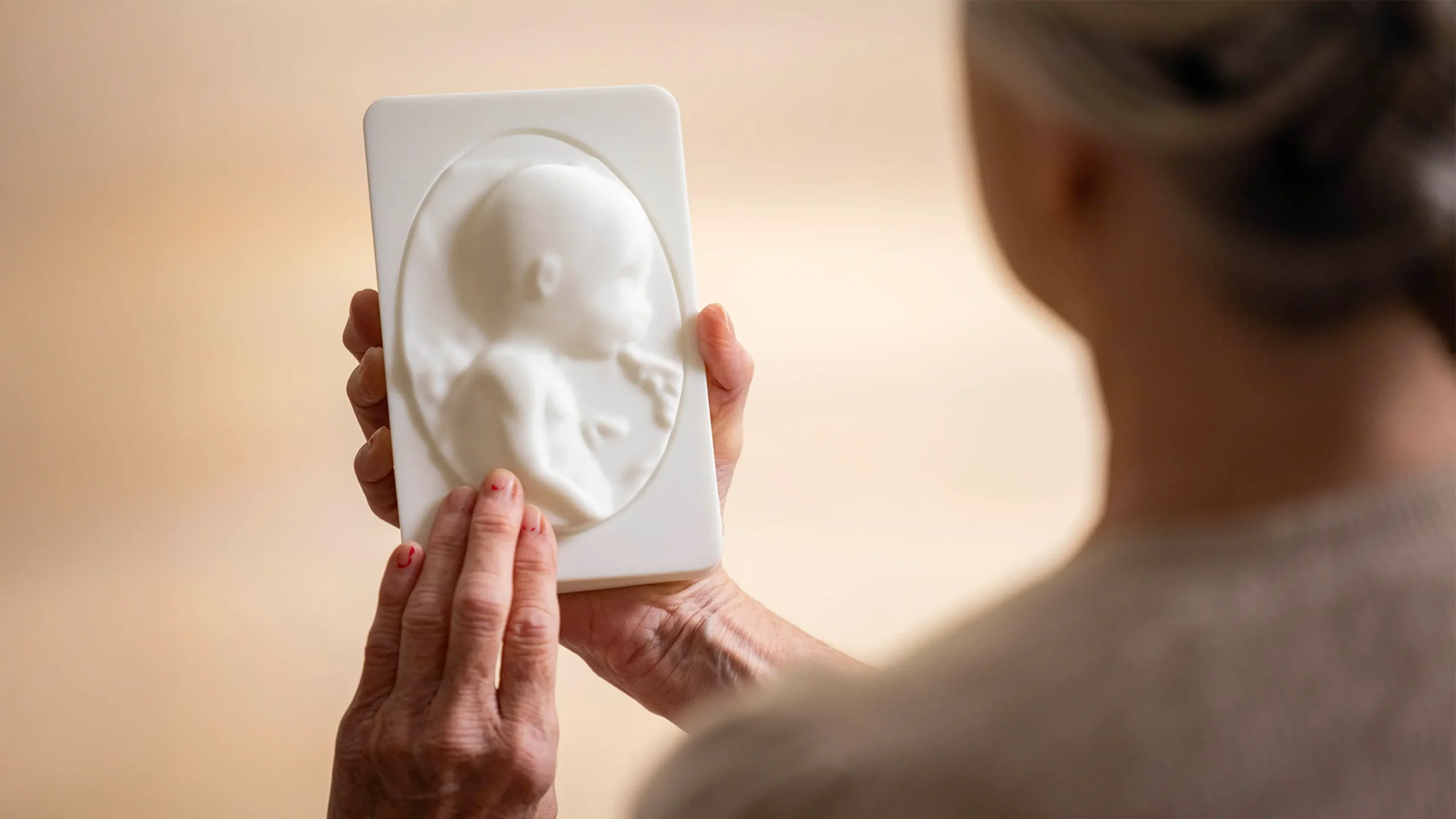
This exciting initiative by Guide Dogs gives visually impaired expectant parents and their families in the UK the chance to experience something that millions of people without vision loss take for granted.
“Holding the tactile scan for the very first time was an incredible experience,” said Reece Finnegan-Knight, an expectant father who received a 3D printed tactile sonogram from Guide Dogs.
“I didn’t feel like I got much from our first scan appointments, and I found it really hard thinking that friends and family knew more about my baby than I did.
“First Hello gave that moment back to me. It’s so important because it’s giving parents like me that special moment.”
The First Hello service is actually operated by Hope and Glory, and any personal information shared, including the shipping address and the actual ultrasound scan, is collected and processed by Hope and Glory, not the Guide Dogs charity. You’ll need to upload a JPG or PNG of your standard 20-week 2D ultrasound scan, file size 10MB or less.
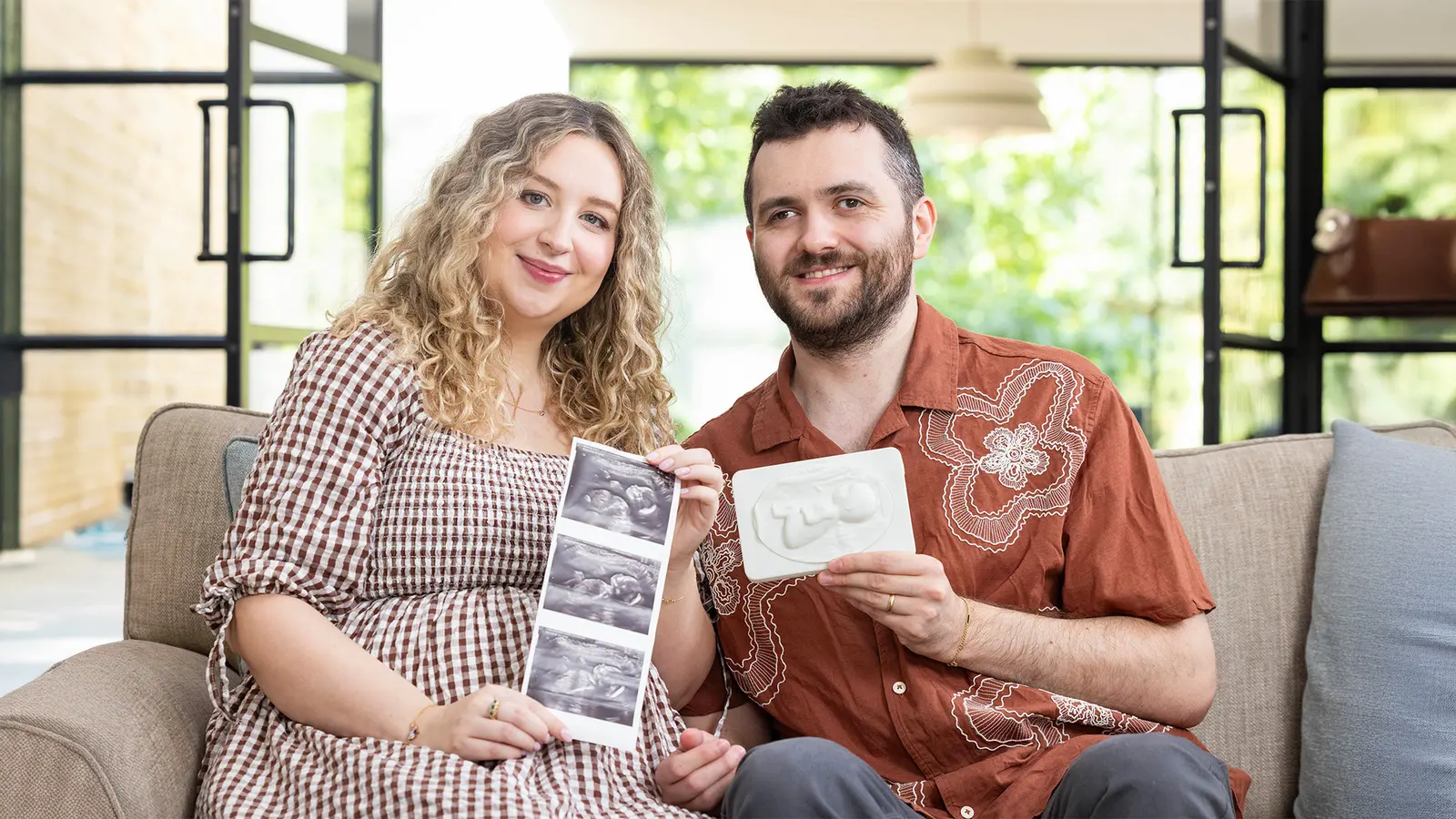
Sophy and Reece Finnegan-Knight, who has a visual impairment.
The ultrasound scan is then transformed into a render, 3D printed, and shipped to the expectant parents. The service is totally free, and parents should receive their 3D printed tactile sonograms within one week. The initial pilot scheme for the First Hello service is only making 50 prints available to the public, but I’m hoping that if it goes well, further schemes will be introduced in the future.
Bevan said, “While this tactile sonogram project is an exciting pilot, it represents just one of the many ways Guide Dogs supports people who need it – breaking down barriers, celebrating life’s important firsts, and empowering individuals to live life unleashed.”
Images courtesy of The Guide Dogs for the Blind Association
Subscribe to Our Email Newsletter
Stay up-to-date on all the latest news from the 3D printing industry and receive information and offers from third party vendors.
Print Services
Upload your 3D Models and get them printed quickly and efficiently.













You May Also Like
The Two Paths to AM Print Services Market Growth
AM Research New market research: AM Research is building its new Additive Manufacturing Services Market 2.0 model. Learn more about the report and preorder here → Things continue to heat...
Additive Manufacturing Has a Major Growth Opportunity; Trust Will Decide Who Captures It
After years of overpromising, the next phase of AM growth will be won by companies that consistently deliver what they say. When I entered additive manufacturing in 2014, after 15...
10 Years of Multi Jet Fusion: Onsite at HP’s Vancouver, Washington Facility
At this year’s RAPID event in Boston, HP Additive Manufacturing Solutions celebrated ten years in the additive manufacturing (AM) market. The company ushered in the milestone with several innovations, including...
ADDMAN to Buy Up to $10.8M in Nickel 718 Powder from 6K Additive Over 30 Months
After years of buildup, we’re finally starting to see what the US metal additive manufacturing (AM) market could look like at scale. To be sure, it’s still not quite there,...