HeyGears G1 Passes $14M on Kickstarter with Full-Color 3D Printing

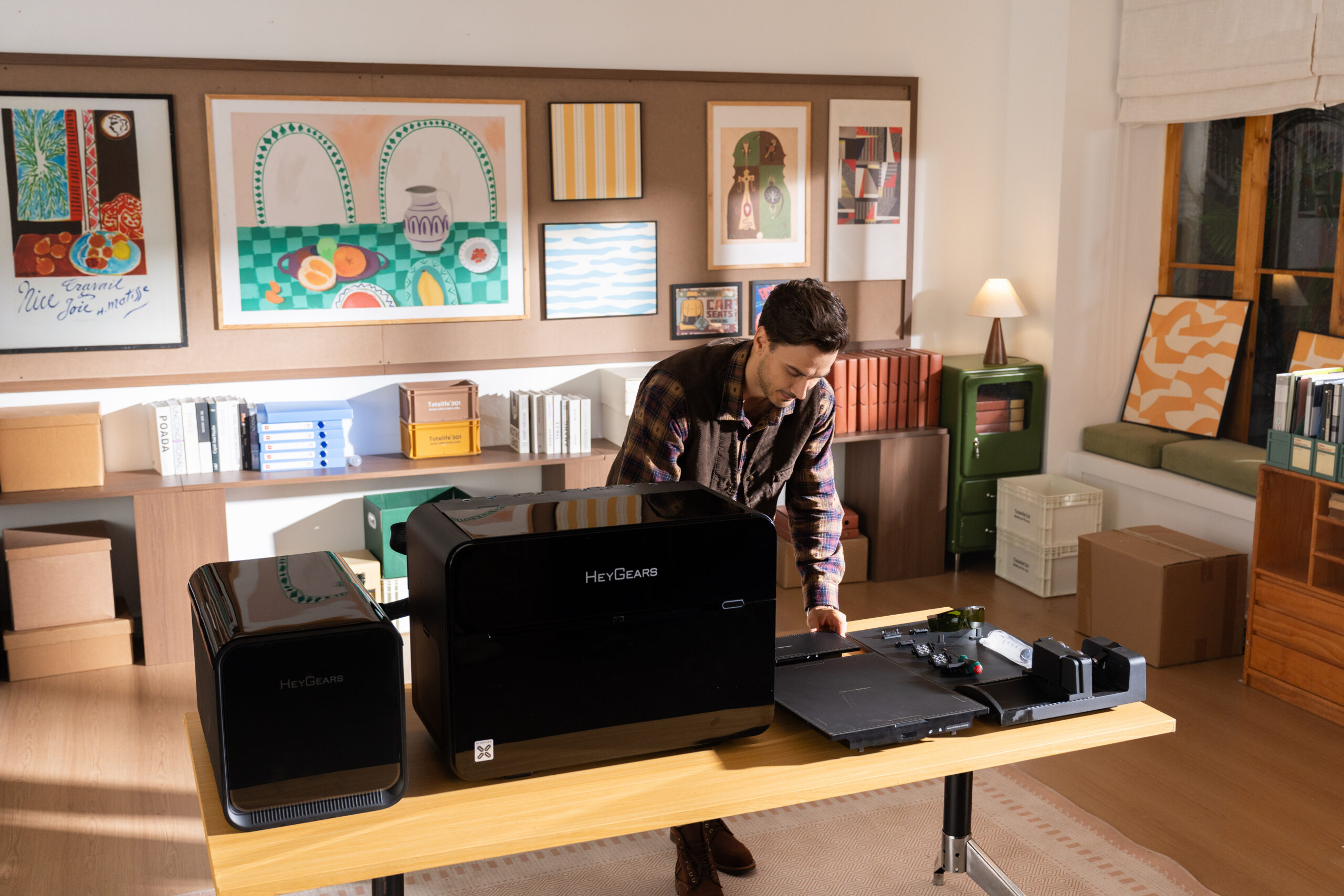
HeyGears was started in 2015 and has been making value-driven Vat Polymerization systems for dental and home use. The company is marketing savvy and very driven. Now the firm has put its G1 printer on Kickstarter. As we discussed in our Desktop UV printers and 3D printing collide article, the intersection of two very different devices could shake up 3D printing. In June, we said that of all the Desktop UV/desktop 3D printing mash-ups, we were most excited by HeyGears. So far, over 3,400 people have agreed and contributed a total of $14,649,658 on Kickstarter with 15 days to go. This will make it one of the highest-grossing Kickstarters of all time.
Now, of course, with a Kickstarter, you don’t know if it will work or be completed at all. The most-funded Kickstarter project of all time is the Eufymake 3D texture printer. So there is real movement in UV printers and CNC routers, with Nestworks and Makera among the most-funded projects, along with 3D printers such as the Snapmaker 3-in-1. It seems that the Desktop Everything Else Evolution we predicted in December 2025 is happening. More companies will be sure to rush in with CNCs, mills, 3D printers, UV texture machines, and combinations of all of these.
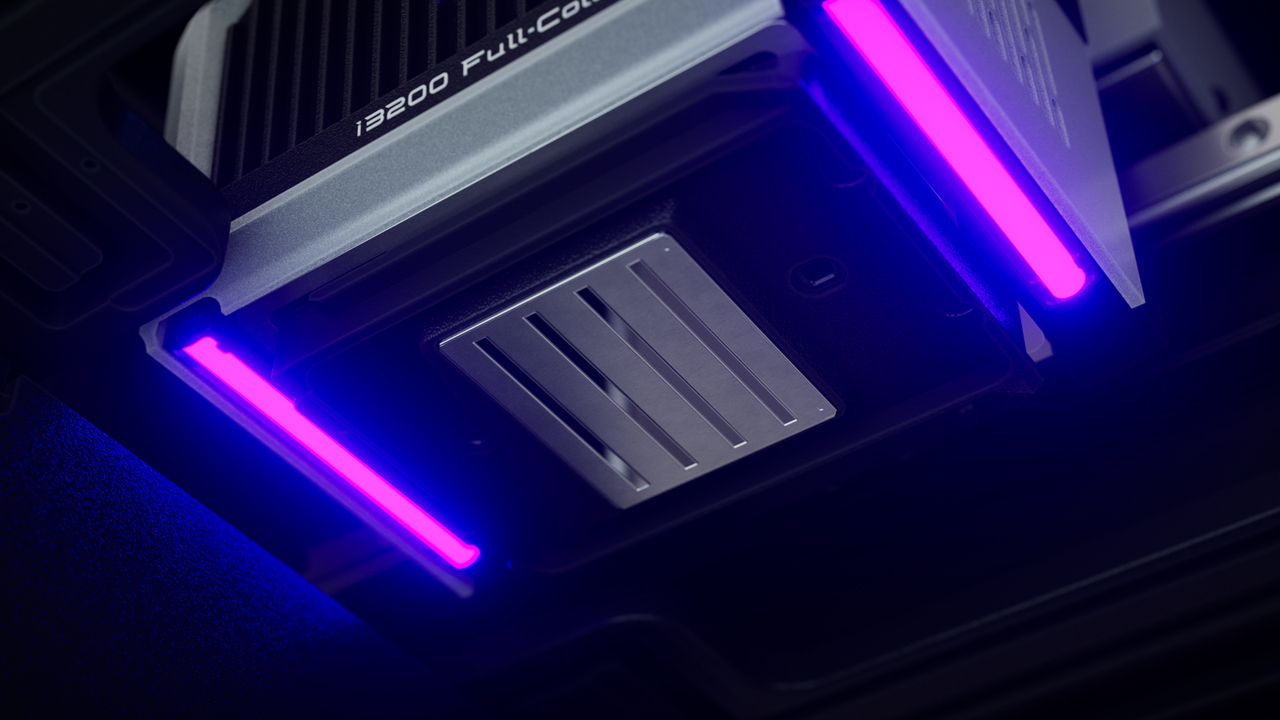
The G1 is also one of these hybrids and can print on textiles and paper, as well as 2D and 3D. The G1 is around $3,000 depending on the bundle. The company says the printer can make 10 million colors at a maximum resolution of 1440 × 2400 DPI. It uses an Epson I3200-U1HD print head with 3,200 nozzles in eight rows. The print head can deliver 300 DPI per row; depending on the model, the viscosity can be 5–7 mPa·s (cP). It has an eight-channel ink system and has a build volume of 420 × 330 × 130 mm.
It can print reliefs up to 5mm and textures up to 150mm. HeyGears says it wants to keep the price of the consumables low. The firm also wants to have Greenguard and other certifications to prove that its inks are safe. This is smart since someone else could introduce a color 3D printer using a monomer or carcinogenic materials. The safety play, therefore, is very smart and is like the low-cost, long-term approach. You can use UV ink for 2D prints and 3D texture prints, Aqueous inks for direct-to-garment printing, or UV resins and water-soluble support for 3D printing.
You can print on t-shirts or on films that stick to walls, t-shirts, and more. The company says that it has included a “quad-layer anti-clogging system, consisting of a white-ink stirring system to prevent pigment sedimentation, a printhead heating system that maintains optimal ink viscosity for smooth, consistent ejection, automated cleaning cycles when the machine is idle beyond a set period, and a sealed moisturizing state for the printhead during extended inactivity to prevent drying.” I have no idea what this all means, but it’s encouraging all the same.
There is also auto-calibration aided by a line-scan camera and different cleaning modes. A line-scan camera moves over the print bed, capturing 1-pixel-wide images at a set speed measured by an encoder; this syncs the entire process. Usually these cameras are used in things like mail sorting, and if you’ve seen one in use, it will be in photofinishes. Omega’s technology for the Olympics uses line-scan cameras that photograph a one-pixel edge of the finish line 30,000 times a second; the resulting images are then lined up in chronological order.
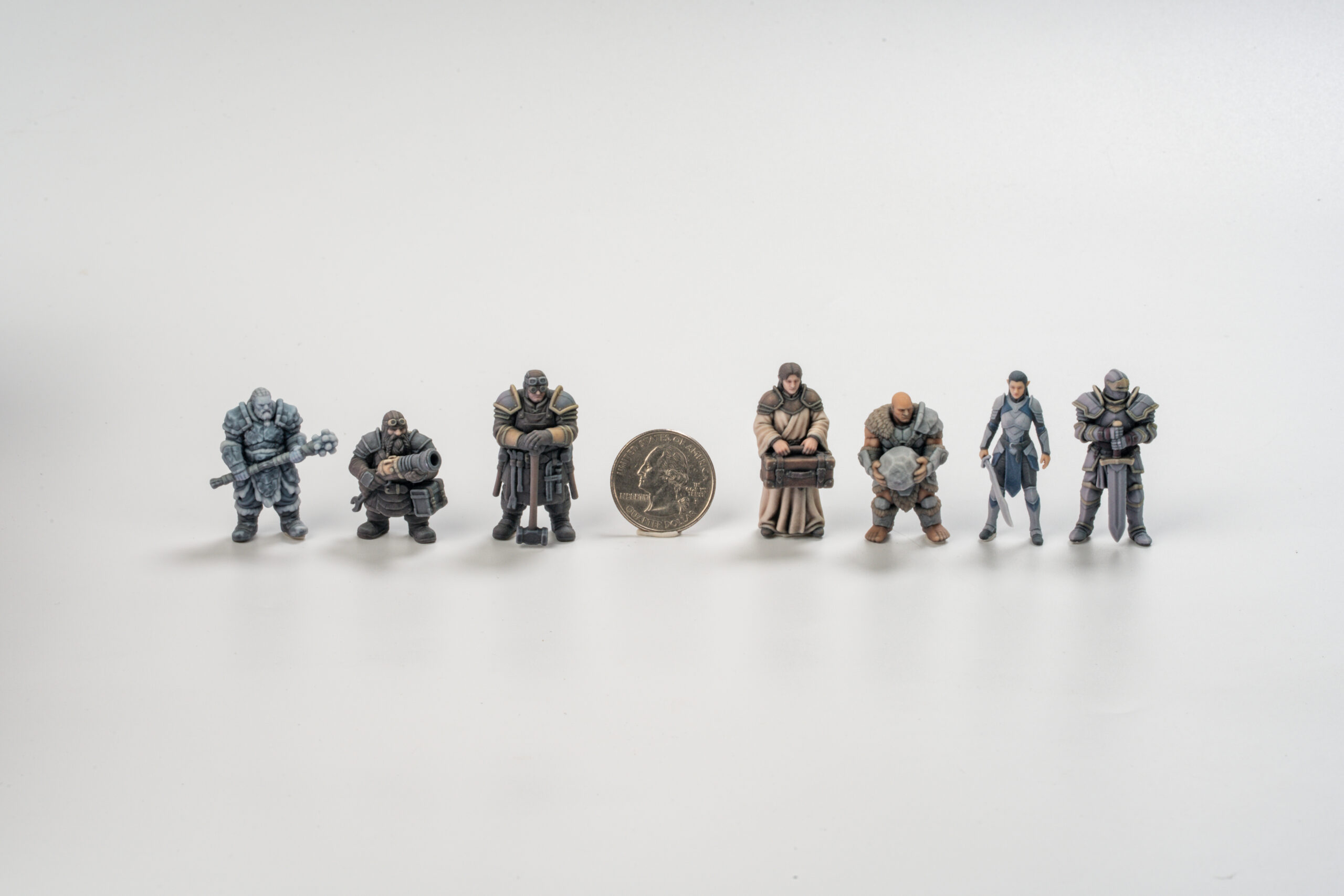
The company also has a HeyVerse AI + Blueprint Studio tool to help image and file conversion. We don’t know yet how well this resin system will work. Color mapping and color fidelity were very difficult elements of getting the early Objet, Mcor, and Z Corp to work properly. There was a wide gulf between the expected color and what was actually delivered in many cases. Syncing up different processes and solidifying different materials coherently has always been difficult. The Z Crop stuff looked cool but was not safe to touch and represented risks when the resins were in their liquid state. And colors were often muted, while if you dropped an object, it would disintegrate. Another infiltration step was needed, therefore. Similarly, there may be a gulf between what people imagine they can do with the G1 and what is possible. We also don’t know how the G1 really works, but I’m guessing it’s a lot like Mcor and it will print color on the edges of objects.
But it’s clear that all desktop 3D printer companies should look at integrating UV flatbed technologies into their workflows or systems. This could be a much better way to deliver vibrant colors much more quickly than using just Material Extrusion, for example. It may also mean that many more companies could enter the 3D Printing market through 3-in-1 or other hybrid systems that may, for some, deliver better results than we are accustomed to.
Images courtesy of HeyGears
Subscribe to Our Email Newsletter
Stay up-to-date on all the latest news from the 3D printing industry and receive information and offers from third party vendors.
Print Services
Upload your 3D Models and get them printed quickly and efficiently.













You May Also Like
The Manufacturing Race Behind the Drone Revolution
We are in the middle of a major manufacturing shift focused on the production speed and payload capacity of uncrewed aerial systems (UAS), or drones. A recent Manufacturing Dive article...
ADDMAN to Buy Up to $10.8M in Nickel 718 Powder from 6K Additive Over 30 Months
After years of buildup, we’re finally starting to see what the US metal additive manufacturing (AM) market could look like at scale. To be sure, it’s still not quite there,...
Metal AM in a Multipolar World, Part 2: How PBF and DED Could Change by 2035
The first decades of PBF development were heavily shaped by machine capability: more power, more lasers, larger build volumes, better recoating, and improved process monitoring. These developments will continue, but...
Advanced Manufacturing at IMTS 2026: 3D Printing and AI and Drones, Oh My!
Last week’s International Manufacturing Technology Snow (IMTS) in Chicago welcomed over 90,000 attendees to the jungle that is McCormick Place. With over 1.17 million square feet of exhibit space, and...