GKN Aerospace’s UAV Demonstrator with 3D Printed Engine Avoids ITAR Regulations

The US CIA director recently made an unannounced visit to Moscow that has naturally raised much speculation, while the EU and NATO have now officially accused Russia of being behind a drone incursion into Germany that took place at the beginning of August. The other day I wrote about signs, which have crept into the AM industry, that the US is in the process of mobilizing for a sustained period of war, and the heightened attention to Russian activity does nothing to dispel that idea.
Even if it’s solely for deterrence purposes, any such mobilization would have to ultimately fold the EU and NATO into the US defense posture, which is perhaps the most urgent catalyst that explains why the concept of AM-enabled distributed manufacturing is gaining traction. Relevantly, at the Armed Forces Air Venture exhibition recently held in Sweden, GKN Aerospace presented a UAV demonstrator — ‘Project Otto’ — that the Swedish Defence Materiel Administration (FMV) contracted GKN to make in November 2025.
When GKN Aerospace took on the EUR 13.6 million (~$15.8 million) contract, it expected the project to take 18 months. Given that the FMV’s Director of Air and Space Systems now says that the demonstrator will fly for the first time “no later than the beginning of [2027],” Project Otto appears to be proceeding well ahead of schedule. One reason that the demonstrator, powered by a 3D printed engine, may be moving along so smoothly is that GKN has extensive experience with 3D printing metal propulsion systems, experience that includes development of its own DED printer.
Looking forward, the potential for distributed production that the project represents may be its most important aspect: GKN states that the demonstrator includes no parts that are subject to American International Traffic in Arms Regulations (ITAR) controls. Initially, you might be inclined to view this is an affront to US defense contractors, but that possibility quickly loses its validity when you consider that the US Big Five defense primes are among GKN’s biggest customers.
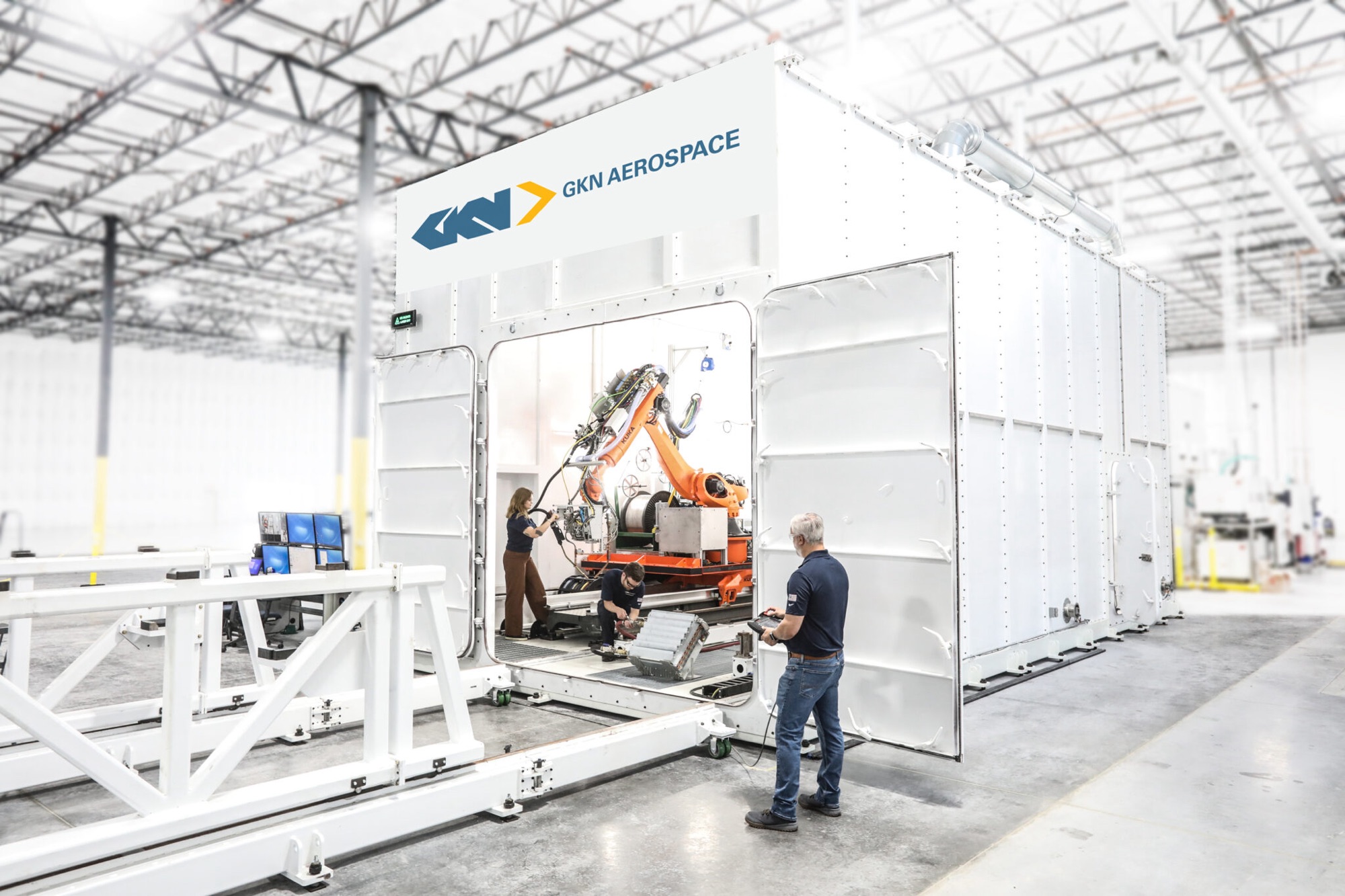
Instead, in light of the fact that so much of what GKN has done in the metal AM space has been in service of the Big Five, Project Otto should be read as an indicator of the emerging model for revamped US-EU-NATO cooperation. If Northrop Grumman or RTX or whichever other giant wants products containing its IP to be made on European soil (or wherever else), but doesn’t want ITAR standing in the way of the process, it has now been demonstrated that there are potential ITAR-free options that the primes can leverage in collaboration with legitimate subcontractors like GKN.
Indeed, less than a week after Project Otto was publicly revealed, Sweden (the newest member of NATO, by the way) announced $28 million in new aid to Ukraine, bringing its total contributions to over $550 million since Russia’s invasion started. $14 million from that latest funding pledge is designated to be spent on American weapons systems.
Earlier in the summer, software firm 3YOURMIND demonstrated at the EDA’s AM Village that interoperability between NATO and EU militaries for distributed AM networks is already a viable option, at least from a technical perspective. GKN has now shown that it may very well be viable from a regulatory perspective, too.
Again, maybe all this is just deterrence, but given how Russia feels about the West arming Ukraine, it seems certain Russia will interpret this overall stance as provocation. Russia has of course wholly earned such a response from the West, but it remains to be seen how successful a deterrence-via-production strategy will be in actually “deterring” anyone.
Images courtesy of GKN Aerospace
Subscribe to Our Email Newsletter
Stay up-to-date on all the latest news from the 3D printing industry and receive information and offers from third party vendors.
Print Services
Upload your 3D Models and get them printed quickly and efficiently.













You May Also Like
Creality K3 Opens for Pre-Order at $849, Advancing Multi-Color 3D Printing
Creality has officially opened pre-orders for the Creality K3, its latest flagship K Series 3D printer, starting at $849 in the United States. Recognized as an IFA Innovation Awards 2026...
Beyond the Printer: HP and DyeMansion Tackle the Future of Prosthetics
Making a custom orthotic or prosthetic device involves much more than producing the final part. Patients need to be measured, devices must be designed to fit their bodies, and finished...
3D Printing News Briefs, October 14, 2026: Bolus, Aerospace Tooling, Water Filter, & More
In today’s 3D Printing News Briefs, we’re starting with medical news, as Myrava has received FDA 510(k) clearance for its 3D printed bolus. Moving on to aerospace and metals, AML3D...
Can India’s AM Push Help Make it a Viable Supplement to China?
Diversifying manufacturing supply chains to locales outside of China has nothing to do with actually cultivating “substitutes” to the Chinese economy. The real stakes are these: China is an irreplaceable...