Low-Cost 3D Printed Balloon Banjo Explores the Physics of Resonance with Unique Sound Box


I’ve seen 3D printed guitars before; my favorite is Olaf Diegel’s Xenomorph guitar. I’ve even seen a 3D printed ukulele and some 3D printed violins. This is the first time I’ve seen a 3D printed banjo, though apparently others do exist. But this string instrument goes beyond just mere 3D printing—it also uses an inflated balloon as a sound box. This was done to explore just how air can change the tone of the instrument, dubbed the Balloon Banjo by Co:Creation Lab, the Singapore design firm behind the project.
There are several differences between a guitar and a banjo, such as the number of strings. Typical banjos, like the ones you hear in bluegrass music, have five strings, and the fifth is strung from the middle of the instrument’s neck. Just like a six-string guitar, the first four strings are wound by the pegs on the headstock, but the banjo’s fifth string is wound by a peg that’s attached to the fifth fret (raised metal strip) on the neck. Without going into too much detail, the fifth string helps give the banjo its very specific timbre.
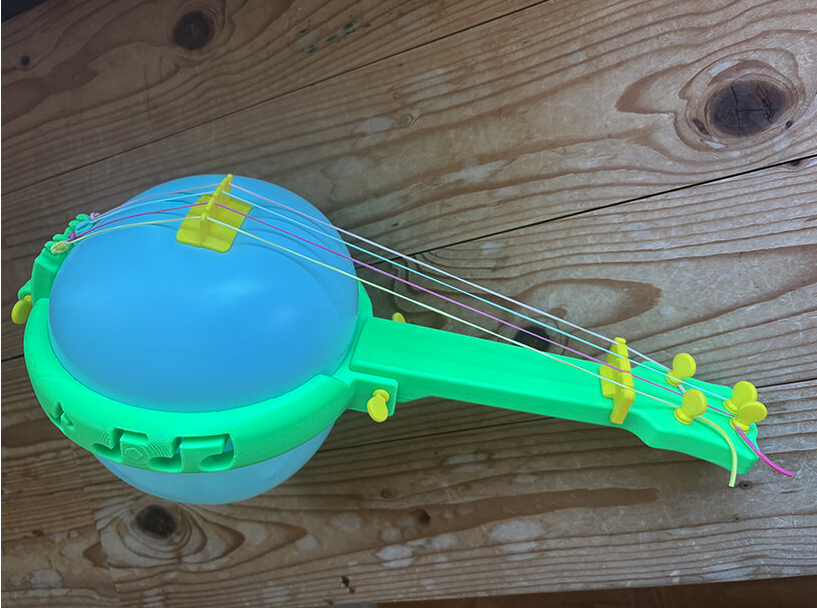
The playable instrument combines a printed body with colorful nylon strings and hand-turned plastic pegs
The top of a banjo is also covered in leather, kind of like a drum, which is another big difference. But the Balloon Banjo has no leather in sight. This DIY instrument features 3D printed PLA components, an inflated balloon, and either nylon or fishing line as the strings. And it wasn’t created to take part in a “Dueling Banjos” performance, but rather to be used as an experiment in acoustics and “the physics of resonance.”
“Pluck a string and the note rings inside the balloon,” reads the Gumroad online marketplace site for the Balloon Banjo. “Two things change the sound: how much you inflate the balloon, and how tight you pull the strings. Change the volume of air, change the resonance — and you can feel it happen in your hands.”
The Balloon Banjo is made up of 19 total pieces, seven of which are 3D printed. It has a neck, left and right flanges, two bridge components, seven pegs, and seven peg sockets.
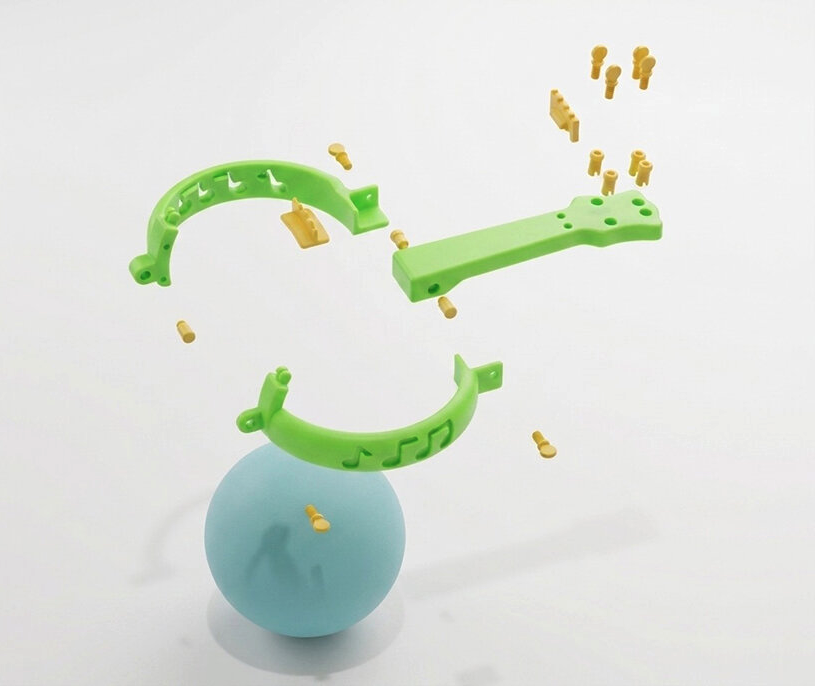
Its individual printed components are reassembled without glue or metal hardware
The plastic pieces are all snap-fit, so no glue or screwdrivers are needed, and the banjo doesn’t have any metal hardware either. Once the sockets are fitted into the body of the instrument, it’s assembled with plastic screws that can easily be turned by hand. Because it’s essentially a science experiment, the banjo is meant to be put together, taken apart, modified, and put back together again.
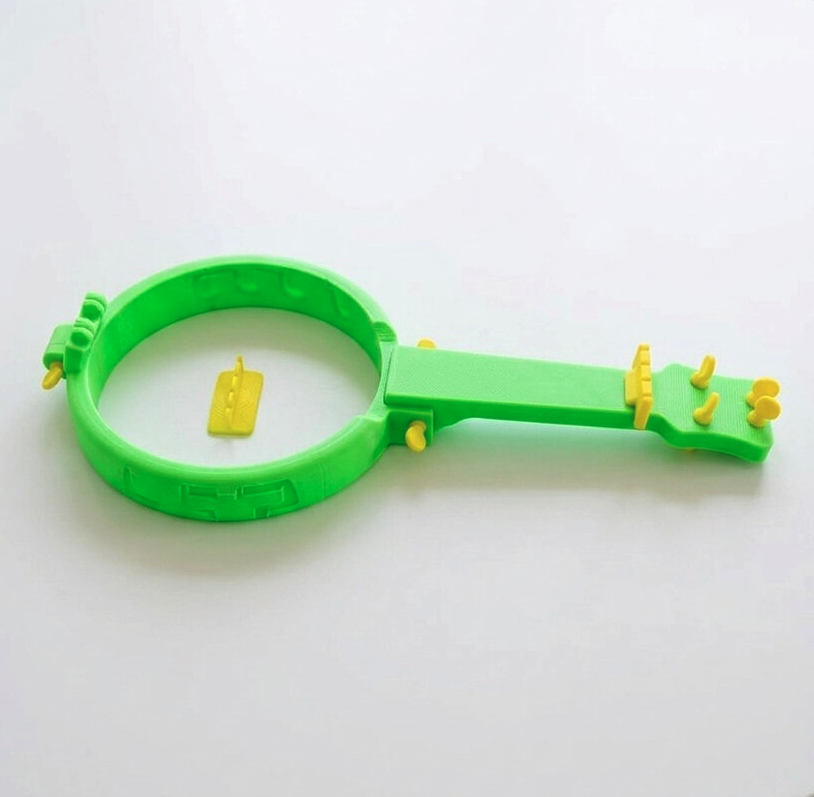
With the balloon removed, the printed frame reveals the structure of the instrument’s sound box
If you purchase the design, it includes a technical instruction manual in both English and Japanese. It should take about 11 hours to print all of the PLA pieces, with a 0.4 mm nozzle, 0.2 mm layer height, and 15% infill. However, the pegs and their sockets require a 0.16 mm layer height.
“The pegs and peg sockets print at a finer layer height because those two parts carry the fit tolerance. At 0.2 mm they can end up too tight to assemble, or too loose to hold.”
The neck should be printed flat, because its strength is affected by the direction of the layers; once the strings have tension, the banjo could snap along a layer line if the neck is printed upright.
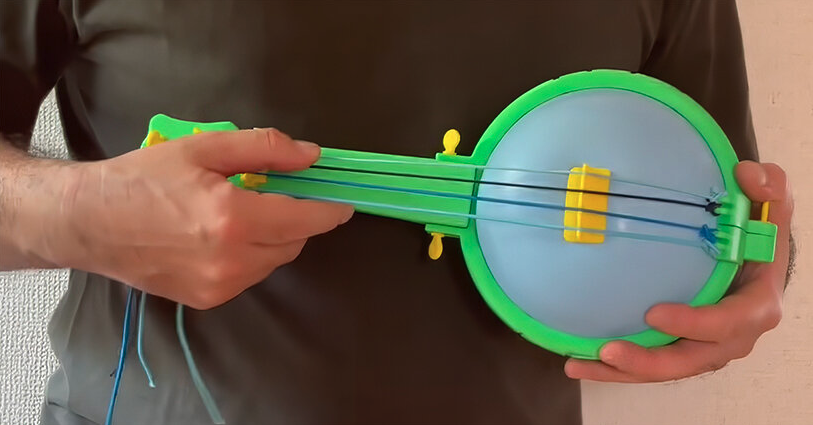
The balloon sits inside the printed frame, where changes in inflation alter the instrument’s tone
Once the 3D printed Balloon Banjo is assembled, it’s time to experiment! When you pluck the strings of a banjo, they vibrate, and in this case, that sound goes into the balloon. The resonance that results from the vibration is affected by the volume of air, so if you want to change the sound, you can either inflate or deflate the balloon. In the same you, you can change the tension or thickness of the strings, and the sound will again shift. Each time you change something, be it the balloon or the strings, you have a new sound.
“Change the air, change the sound — a 3D-printable science toy you can actually play.”
The Balloon Banjo is recommended for children ages six and older. It only costs $7, which includes the STL files, instruction manual, and recommended print settings.
All images courtesy of Co:Creation Lab
Subscribe to Our Email Newsletter
Stay up-to-date on all the latest news from the 3D printing industry and receive information and offers from third party vendors.
Print Services
Upload your 3D Models and get them printed quickly and efficiently.













You May Also Like
Rosatom Aligns the Spread of Its AM Capabilities with Its Nuclear Deals
Back in 2016, Vietnam abandoned plans to build its first nuclear power plant, with the government viewing the market conditions surrounding electricity demand as being no longer conducive to the...
SPEE3D Appoints New Global CEO to Support Expanded US Focus
A couple of years ago, in the title of an interview I did with the CEO of SPEE3D, Byron Kennedy, I referred to SPEE3D as “the most American 3D printing...
AM Pulse Asia: Consumer Metal AM, Nuclear Parts and Rockets Push New Ground
The second half of August produced financing milestones, facility openings, and qualification results across Asia-Pacific additive manufacturing. Rongsu Technology closed a CNY 100 million Series A+ and launched a consumer...
3D Printing Financials: 6K Additive Sales Rise as Aerospace and Defense Demand Grows
6K Additive (ASX: 6KA) grew rapidly in the first half of 2026 as demand for its metal powders increased, particularly from aerospace and defense customers. The newly public company also...