Spectrum Filaments Gets Investment: How They Could Win in Filament


Spectrum Filaments is a long-time high-quality filament supplier based in Poland. With good tolerances, roundness, and consistency coupled with affordable pricing, the firm has been a mainstay for makers, industrial users, 3D printing stores, and OEMs since 2015. I personally tested and evaluated them a few times over the last decade, and each time, the company’s offering performed well.
The company provides individual reports per spool for filament diameter and average diameter, measured across the entire filament (not just at one point or on one axis), to tolerances of ±0.8μm. They are also known for their Stone Age stone-look filaments and have a basic filament line called The Filament. Spectrum has high-flow filaments, foaming PLAs, electrically conductive materials, glitter, glow-in-the-dark, flame-retardant, and more. They have very high-performance materials such as PEBA, a polycarbonate-PTFE blend for durable, smooth parts; food-safe materials; PPS; and medical ABS. I’m a fan.
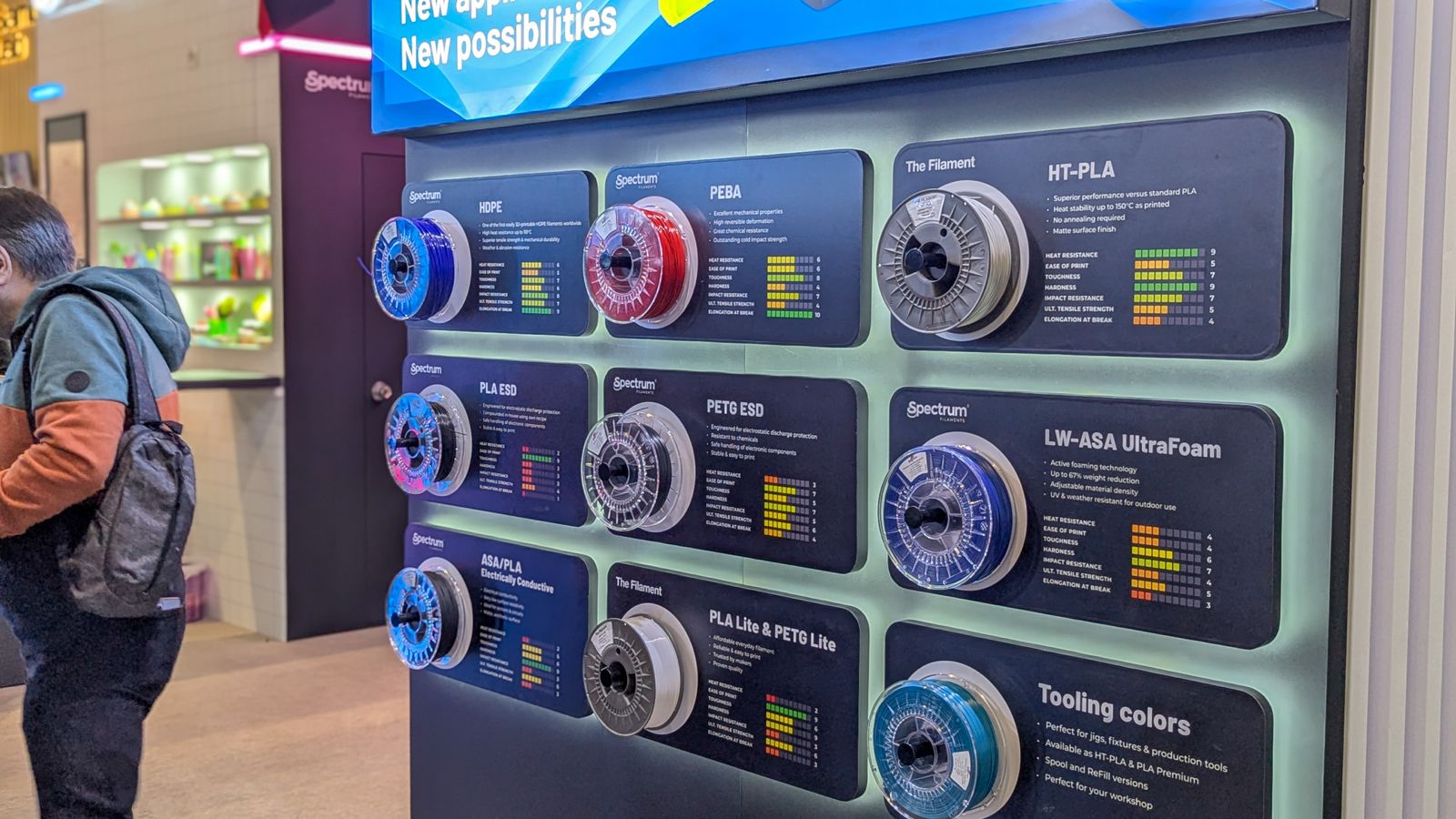
Filaments. Image courtesy of Spectrum Filaments.
Spectrum has now received an investment from Blue Gravity Capital. Blue Gravity calls itself a hands-on investor that seeks to work with founders to create value. They are now the majority owner of Spectrum. Terms were not disclosed, but they said the investment was “several tens of millions of PLN,” which could mean they invested about $5 to $10 million.
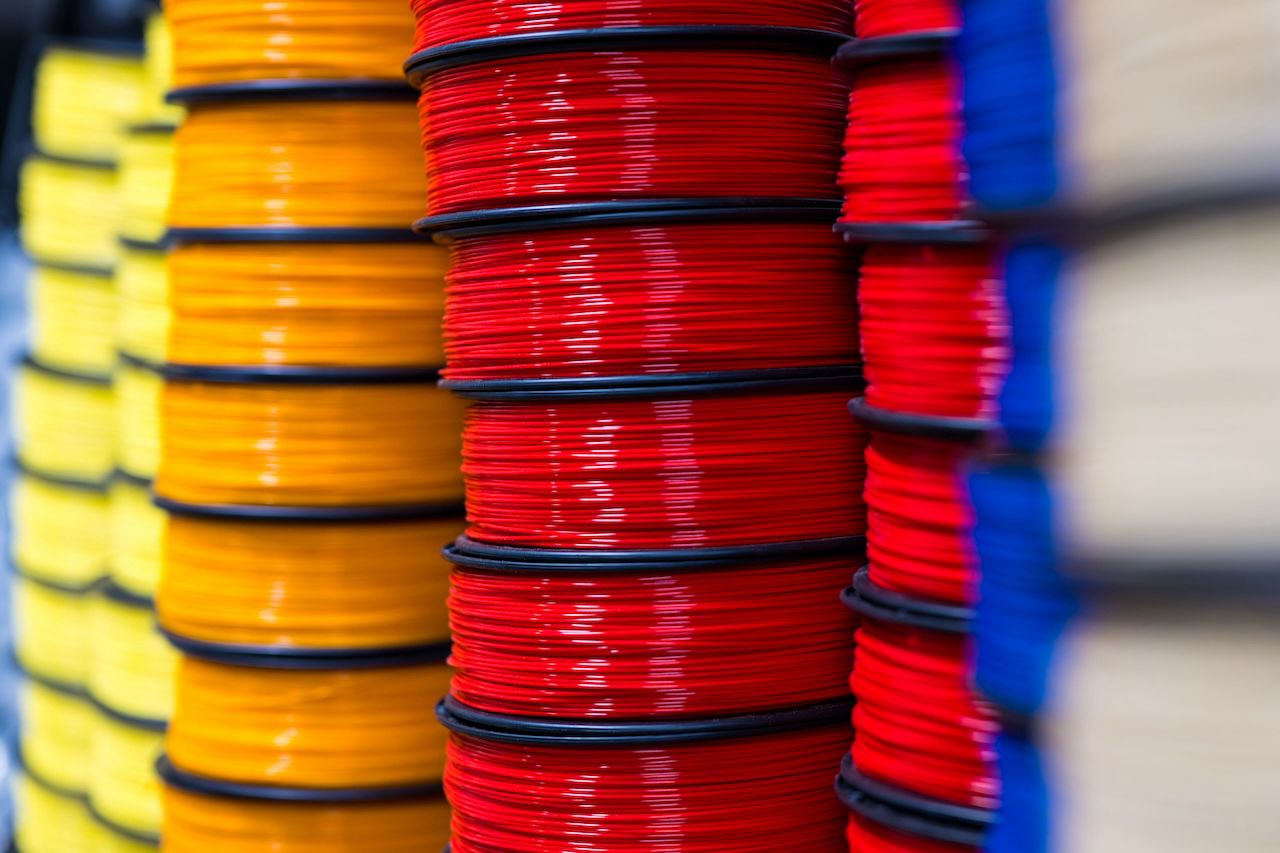
Filaments. Image courtesy of Spectrum Filaments.
The company says that it grew organically and is “one of Europe’s largest manufacturers of 3D printing filaments.” They also say that, “between 2018 and 2025, Spectrum achieved an average annual production volume growth rate of approximately 50%.” This is commendable, since it was also the time when Sunlu went from terrible to mwah, Amazon’s rise through Hatchbox and beyond, Prusa Research’s Prusament market entry, Polymaker’s rise, and general upheaval in the filament market. Showing growth at this time, and such consistent, high growth, is commendable. Many people went out of business during that period as well. Now, the company will use the investment to further scale and automate production, drive international growth, and invest in R&D. The firm hopes to double its capacity. Management will remain in place, and the company will do what it does already, only more of it.
Spectrum’s CEO Michal Zoladek said,
“Over the past years, we have focused primarily on product development, quality and building our distribution network. Today, we see the market evolving faster than ever before. In practice, for nearly five years we have operated under continuous backorder conditions, with demand regularly exceeding our available production capacity. Through our partnership with Blue Gravity Capital, we will be able to significantly accelerate investments in production capacity expansion, new material development and further development of our organization. For our customers, this means improved product availability, shorter lead times and even faster introduction of new products to the market.”
While Wojciech Fedorowicz, Managing Partner at Blue Gravity Capital, stated,
“Spectrum Filaments is exactly the type of company we look for as investors: profitable, fast-growing, built around a strong product, significant export potential and a founder who has created a solid business through consistent execution and deep industry expertise. The 3D printing materials market is currently at a very exciting stage. Better, easier-to-use and more affordable printers are continuously expanding the range of applications for this technology, directly driving demand for filaments. Together with Michal Zoladek and the Spectrum team, we aim to build one of the key players in this segment.”
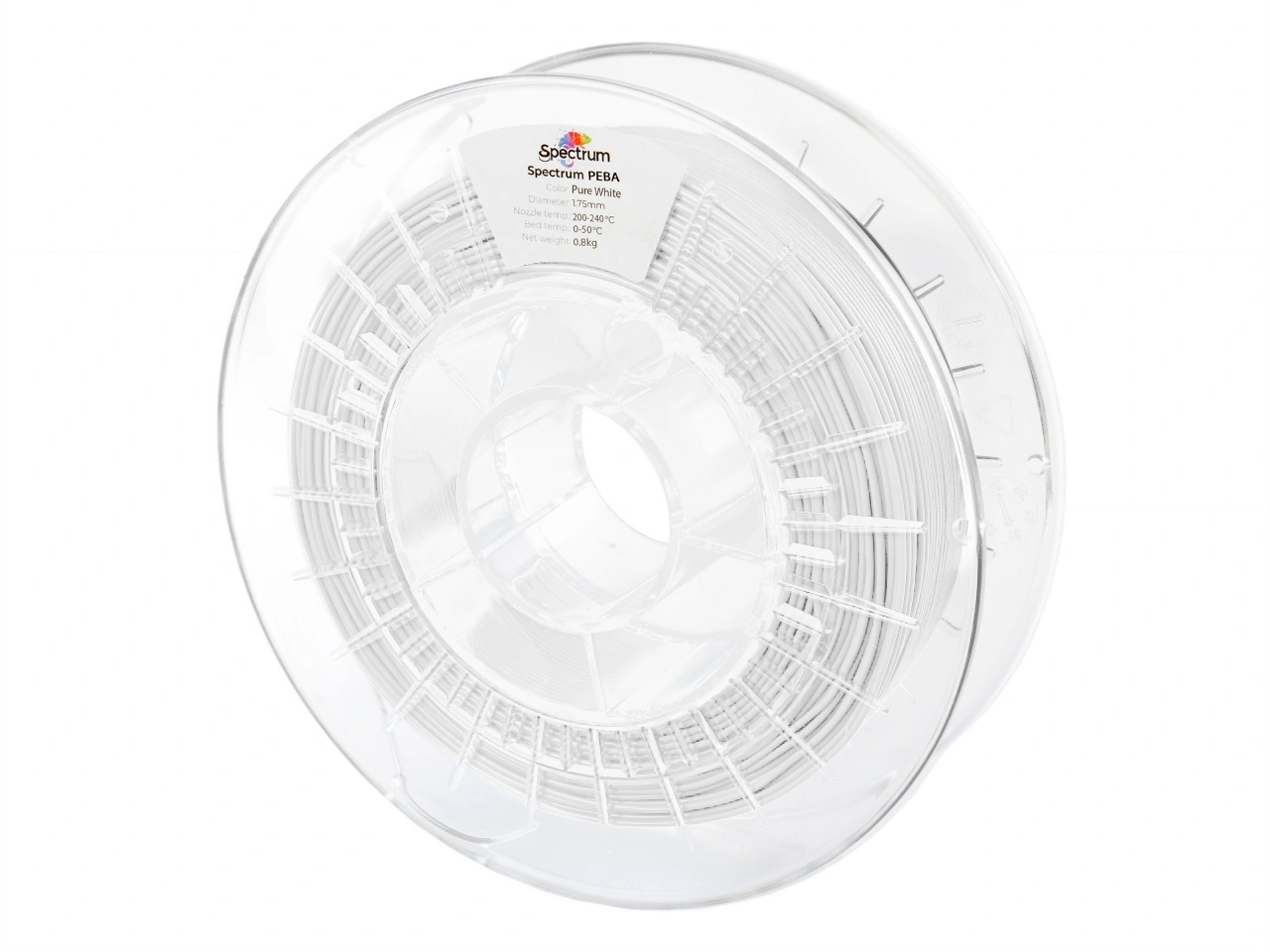
Spectrum PEBA. Image courtesy of Spectrum Filaments.
This is great news for Spectrum. The company is providing customers with high-quality products at fair prices while continuing to innovate. I like it when that kind of good behavior gets rewarded. It’s also good for the European 3D printing business. At one point, nearly all of the filament was produced in Europe, but the intervening years have been tough for European producers. Now, only a few big players are standing strong. Spectrum’s investment is a shot in the arm for the firm and the broader European industry. With a long-term backer and investment, the company can now innovate and compete more effectively.
With labor costs being much lower than those of Dutch and German competitors, Spectrum has a decided advantage. It will still need to keep pace with the likes of ColorFabb and 3D4Makers while offering price-competitive products to competitors like Polymaker. And companies like Polymaker will be more likely to increase production and distribution in Europe amid tariff uncertainty. At the same time, it needs to break into the US market, which has been thoroughly wrecked by Amazon. Toner Plastics, Push Plastic, and 3D Fuel seem to be holding strong, but it’s not easy.
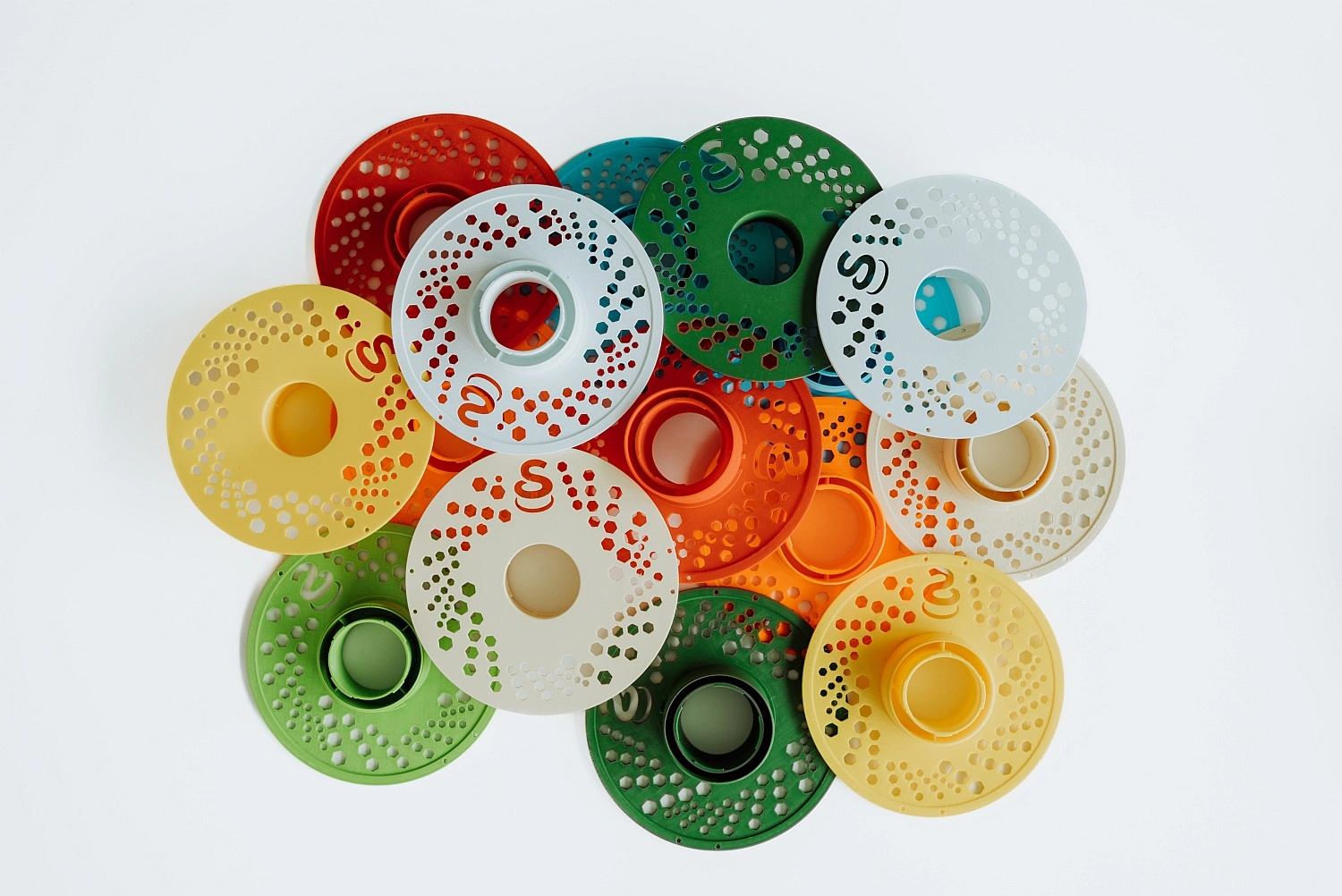
Spectrum refills. Image courtesy of Spectrum Filaments.
To me, the path forward seems clear. If Spectrum can develop more engineering filaments for end-use parts, it can thrive. To me, cosplay deserves its own perfect filament. There should be the perfect cookie-cutter and other food-article filament, the perfect material for vasculature models in hospitals, and the perfect car-repair-under-the-hood material. We’re in a holding pattern, with everyone using PLA and PETG because they’re affordable and work most of the time.
But with more true hobbyists coming into the market due to better printers, we’re getting users who do not care one iota about 3D printing. These people just want to print props for their theater or concrete molds. It’s like welcoming you to the Exacto knife industry with all sorts of knife-related terminology and choices. Who cares? I want to cut. What is the best tool to cut what I need, or for me in particular? So, a safer filament, especially for kids, is a great idea. A better burnout and casting material, a better material specifically for outdoor gear and sports equipment, too, available in the prevailing colors, is the way to go. Making materials that are perfect for these new groups of people who will only print, and typically only print for one part of the family or use case, is the best way forward.
Understanding what cosplay people need in terms of surface quality, what paints they use, what goals they have, and what they struggle with is, to me, the key to victory. At the same time, having the right ESD filament for consumer electronics will also be key. To me, in-depth user understanding and collaboration are the way Spectrum could win.
Subscribe to Our Email Newsletter
Stay up-to-date on all the latest news from the 3D printing industry and receive information and offers from third party vendors.
Print Services
Upload your 3D Models and get them printed quickly and efficiently.













You May Also Like
AM Asia Watch: China Exported 2.46 Million 3D Printers in Four Months
China’s consumer 3D printer industry seems to be reaching a new level of global dominance. According to Chinese state media outlet China Global Television Network (CGTN), China exported 2.46 million...
As Longevity Gains Momentum, Rem3dy Health Raises £14 Million for 3D Printed Nutrition
Longevity hack or healthcare trend? The answer may depend on who you ask, but investor interest in personalized nutrition is growing as consumers search for the next longevity hack. Now,...
Creality’s Listing: A Sign That China’s Consumer 3D Printing Has Entered a New Phase of Global Competition
Just days ago, the bell rang at the Hong Kong Stock Exchange (HKEX) for Creality. The company opened at HK$33.80 per share, up from the IPO price of HK$18.8, giving...
AMPulse Asia: Creality IPO Headlines APAC 3D Printing Market Roundup
Asia’s additive manufacturing sector spent the back half of May moving capital and capacity, not just demos. Chinese desktop and consumer printer makers pushed onto public markets, metal powder producers...