The Rise of IP: The First Emoji 3D Printer Is Here. Don’t Rule Out Star Wars Next.


For years, most desktop 3D printers have looked more or less the same. Some are black. Some are gray. A few are bright orange. They look like boxes. Some are open-frame machines. Some are enclosed. But most were built with function in mind. The focus has always been on what the machine could do. They are tools for hobbyists, makers, and tinkerers.
Now, a recent announcement from desktop 3D printer manufacturer ELEGOO feels quite important. The company has partnered with emoji®, the brand behind the most well-known yellow faces found on phones, websites, social media, and even a movie, to launch a special-edition version of its Centauri Carbon 2 Combo printer.
The printer features a silver-and-white design with emoji branding throughout, a customized user interface, custom startup animations, and official emoji-themed 3D models that users can print right out of the box. The special edition is priced at $489 in the United States and is available through ELEGOO’s website in markets including the U.S., Canada, Europe, Australia, Japan, and the United Kingdom.
emoji Founder and CEO Marco Hüsges said, “Together, we’re bringing digital self-expression into the physical world in a fun, creative, and completely new way. This partnership highlights how 3D printing is evolving beyond traditional maker spaces and becoming part of everyday lifestyle technology — inspiring people to create, personalize, and express themselves like never before. With the ELEGOO × emoji® Centauri Carbon 2 Combo, creativity becomes something you can truly see, hold, and share with the world.”
-
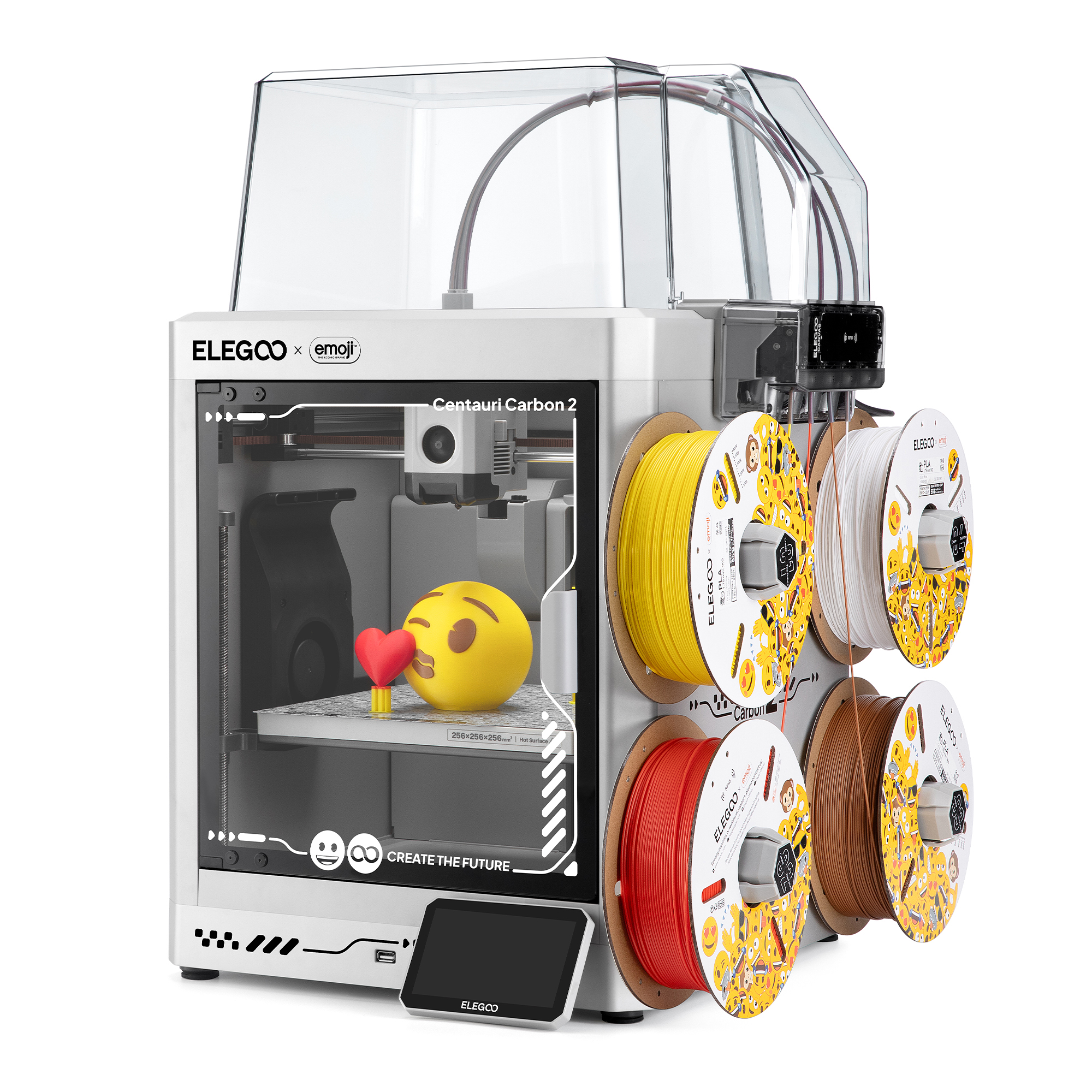
- ELEGOO × emoji® Centauri Carbon 2 Combo. Image courtesy of ELEGOO.
-
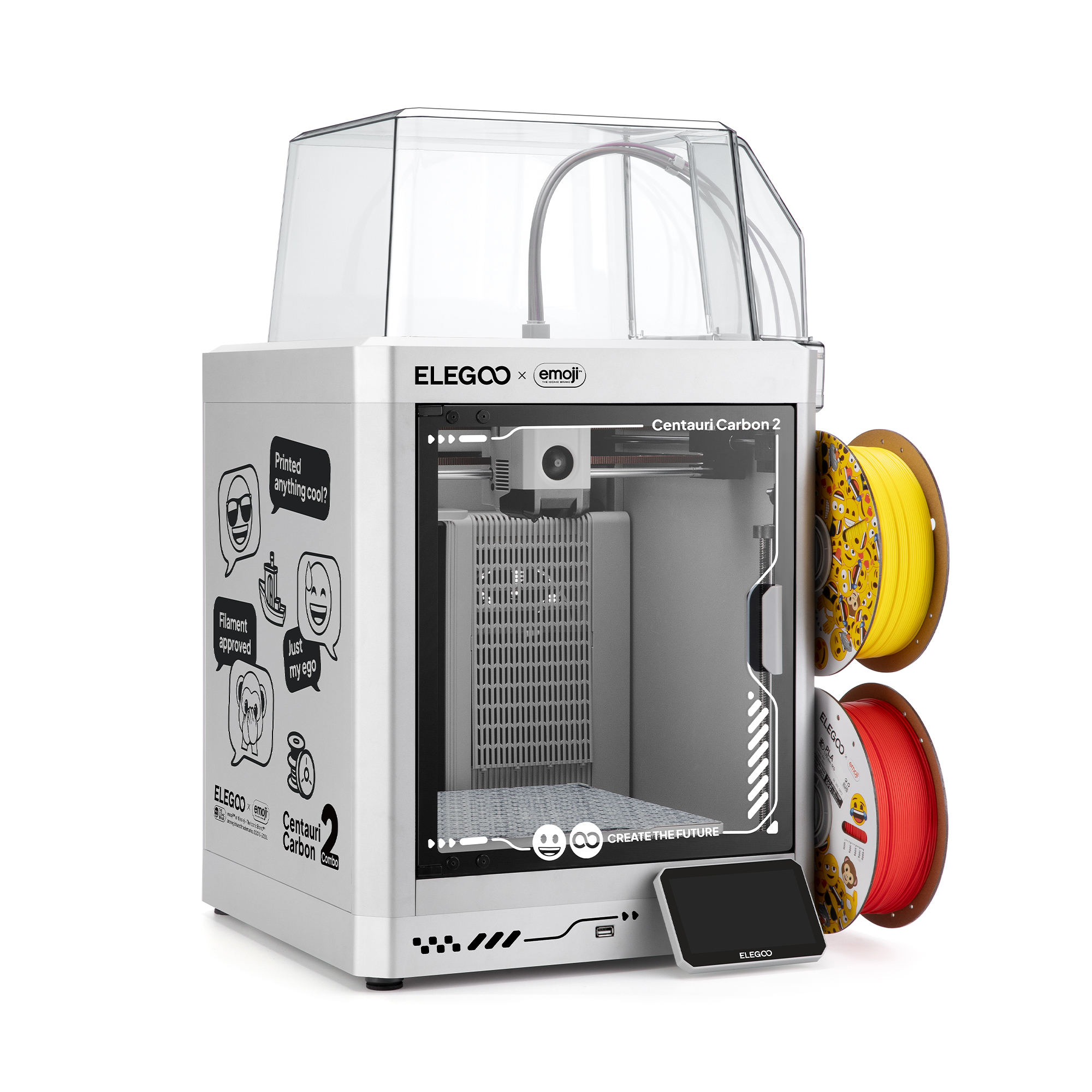
- ELEGOO × emoji® Centauri Carbon 2 Combo. Image courtesy of ELEGOO.
-
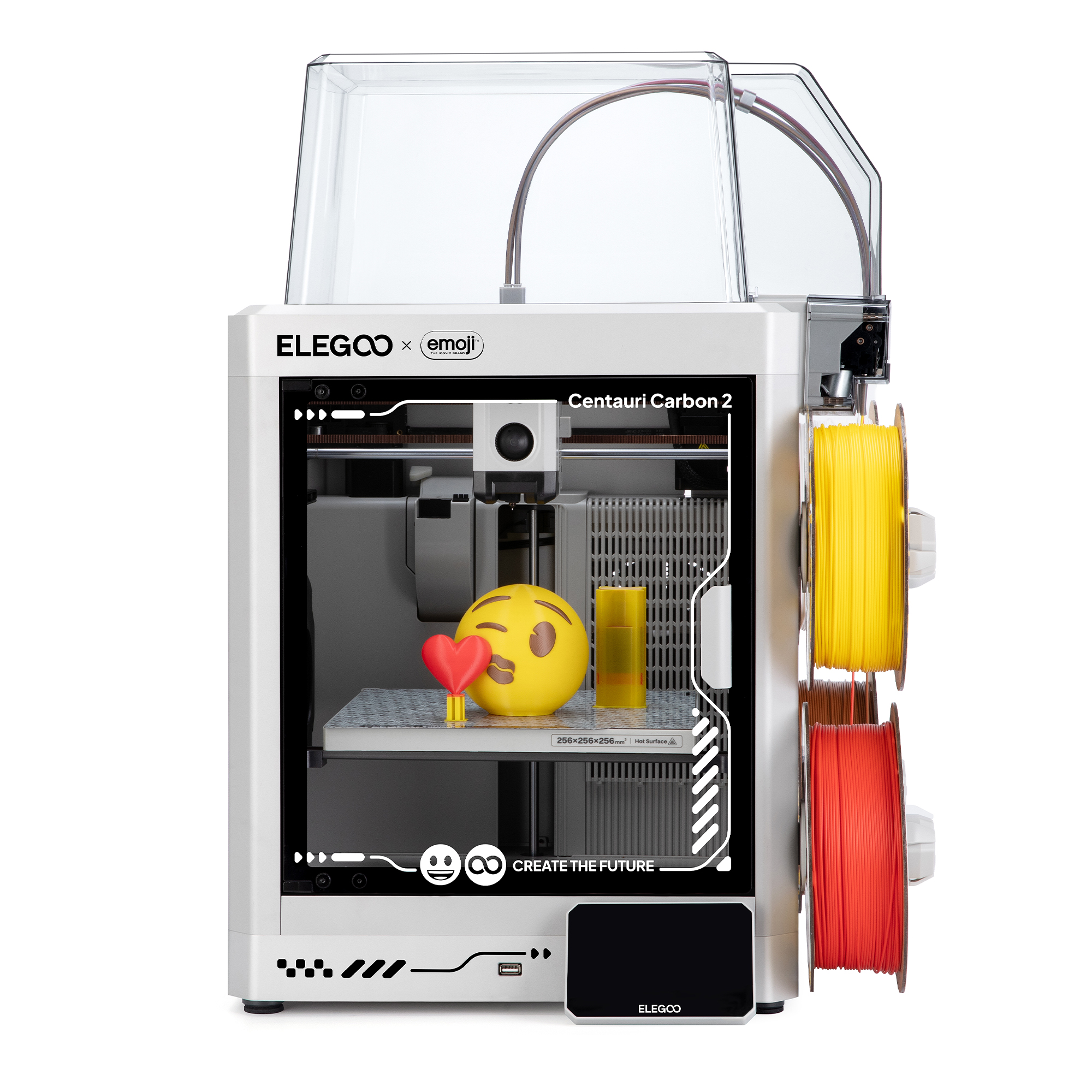
- ELEGOO × emoji® Centauri Carbon 2 Combo. Image courtesy of ELEGOO.
While on the surface, this is definitely a fun marketing collaboration, it also raises an interesting question: are 3D printers getting the same kind of branded treatment as sneakers, gaming consoles, headphones, and collectible toys? Maybe desktop 3D printing is finally becoming more of a consumer product than ever before.
And I’ll admit it, I’m probably part of the problem. I love a good collaboration. If somebody announced a Harry Potter-themed 3D printer tomorrow, or a Star Wars edition complete with lightsaber startup sounds and a Millennium Falcon-themed case, I’d be pre-ordering it. And that may be exactly why companies are starting to experiment with this kind of branding.
For much of the industry’s history, desktop manufacturers have been laser-focused on the technical specifications. Companies compete on print speed, materials, build volume, and so many other markers. Of course, those users are still the backbone of the desktop 3D printing market. But the market is getting bigger.
Over the past few years, desktop 3D printers have become easier to use, faster, and much more reliable. Features that once required users to have extensive technical knowledge are much more automated today. Many modern printers work right out of the box. As a result, the customer base is expanding beyond traditional users.
Families are buying printers. Teachers are buying printers. Students are buying printers. People who simply want to create things are buying printers. And it’s undeniable today that IP has become one of the most dominant forces in consumer products, retail, entertainment, and experiences. Really, IP seems to be everywhere. So why wouldn’t it eventually show up on 3D printers?
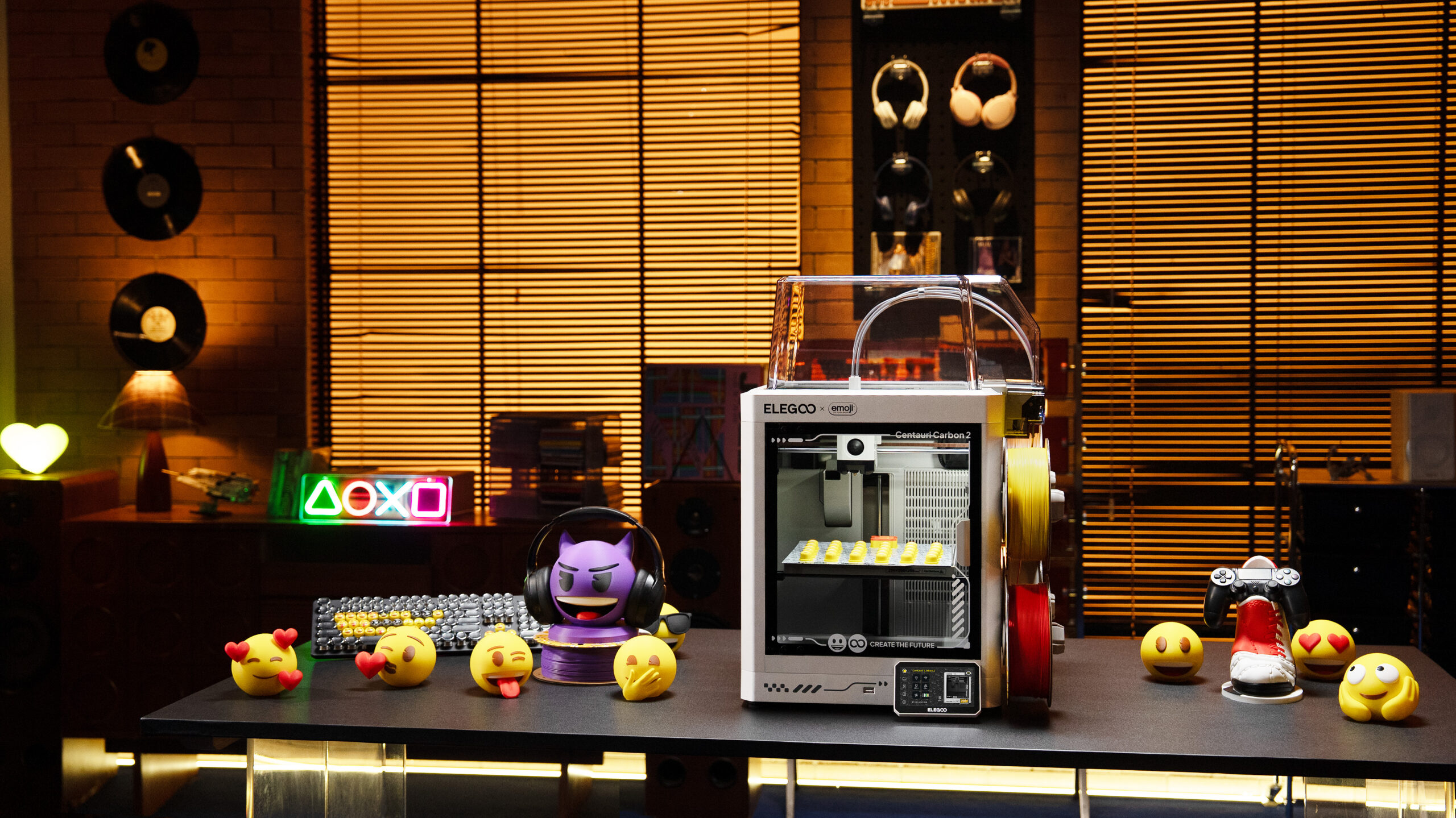
ELEGOO × emoji® Centauri Carbon 2 Combo and 3D printed emojis.
Companies like Miniso and Pop Mart have built a large part of their business around licensed characters, collectibles, and branded collaborations. For example, Pop Mart’s success has helped turn character-based merchandise into a global phenomenon.
And it’s not just retail; theme parks tell a similar story, centered on many franchises. Industry experts have described an ongoing “IP arms race” among theme park operators as well-known characters and stories have turned into the key to attracting visitors.
While an emoji-themed 3D printer may seem unexpected, plenty of thriving licensing partnerships started that way. One of the most familiar cases is LEGO. Its first major licensed franchise was Star Wars, which debuted in 1999. At the time, the company was really struggling and looking for new ways to connect with consumers. Star Wars would go on to become one of the most successful toy licensing partnerships in history, and help make licensed products a huge part of LEGO’s business. Today, you can’t walk into a LEGO store without seeing shelves full of licensed sets.
Desktop 3D printing is clearly not facing the same challenges LEGO faced. In fact, the desktop market is doing great. But that is what makes ELEGOO’s move interesting. The company may simply be looking to reach even more people.
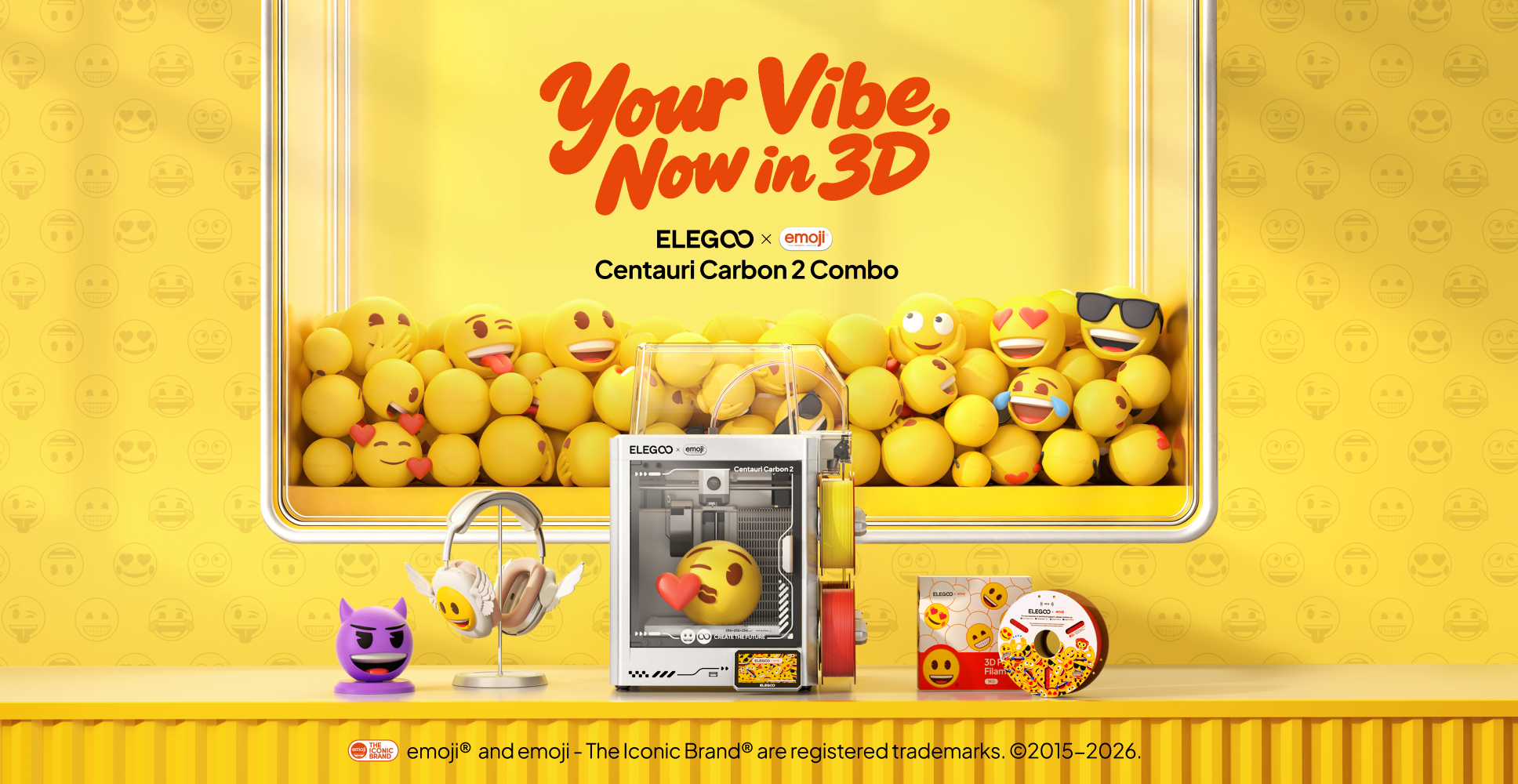
ELEGOO × emoji® Centauri Carbon 2 Combo prints emojis.
They are not necessarily looking for the fastest printer. They want a product that feels approachable, fun, and personal. That is where branding starts to matter. I mean, nobody needs an emoji-themed 3D printer, but a lot of people might want it. That is exactly why it is interesting.
The printer does not produce better emoji models than a standard machine. The branding does not improve print quality. It does not increase speed or accuracy. What it does offer is identity. It turns a technical device into something people can connect with emotionally. That may sound unusual in manufacturing, but it happens all the time in consumer products.
People buy limited-edition sneakers because of a logo. They buy themed game consoles because they like a character or franchise. They customize phones, laptops, and accessories so others can see their interests. Today, character-based merchandise is everywhere. Walk through a shopping mall, supermarket, or even your local pharmacy, and you’ll find plenty of branded merch. For example, the popularity of collectibles like Labubu shows just how powerful character-driven merch has become. People are walking around with Labubu dolls hanging from their jeans, handbags, boots, and just about everywhere else these days. So, in that context, will we also see a Labubu 3D printer?
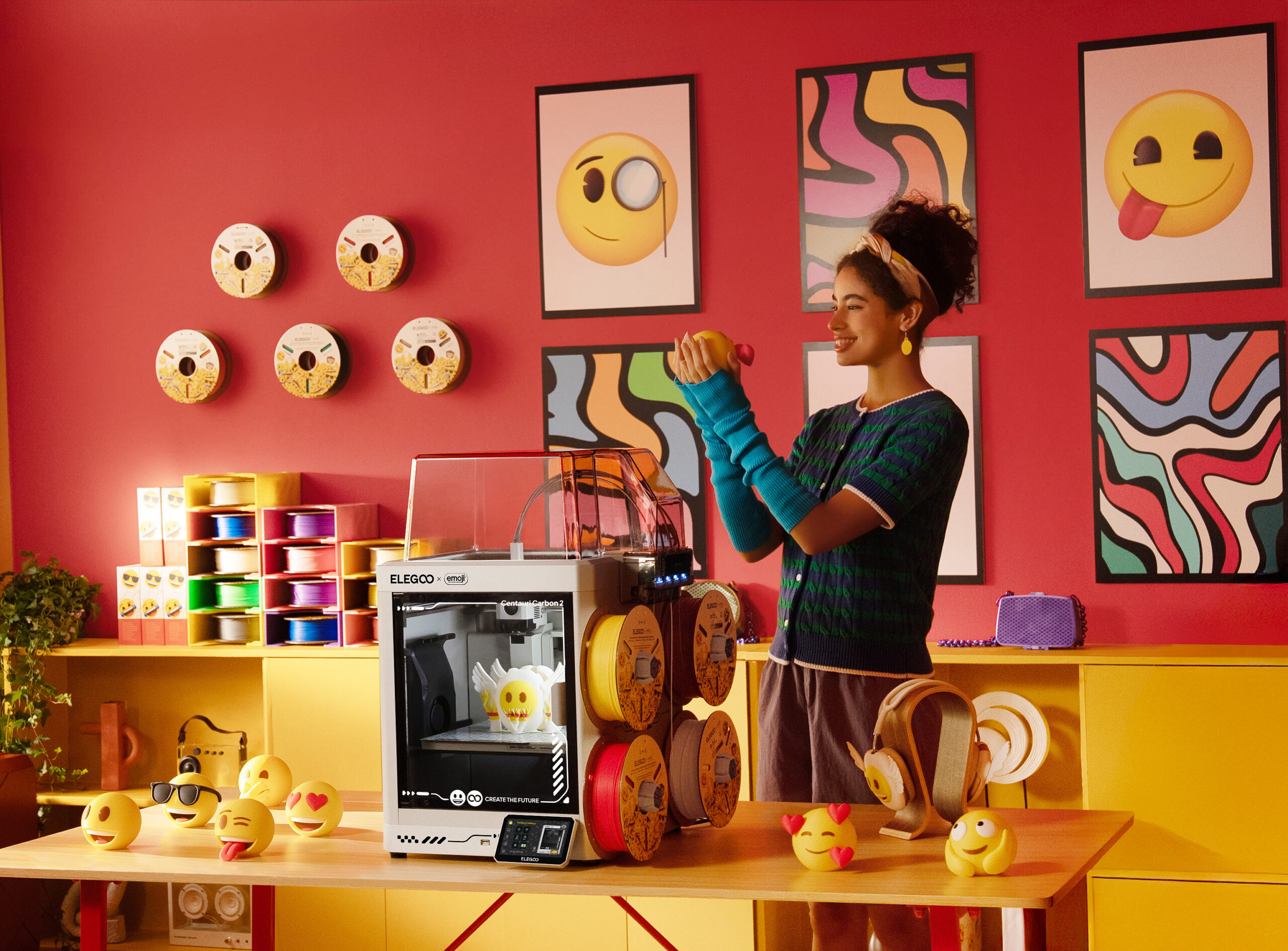
A user with the ELEGOO × emoji® Centauri Carbon 2 Combo and 3D printed emojis.
It seems that this move by Elegoo could say something about where the industry is headed. Whether you like IP-related merch or not, when companies start experimenting with licensing deals and well-known brands, it usually means they believe the market is expanding. They might be trying to reach people who may never have considered buying a 3D printer before.
Will an emoji-themed machine transform the industry? Probably not. But that may not be the point. The more interesting takeaway is what the collaboration represents. The first emoji 3D printer may seem like a novelty. But it could also be a glimpse of what comes next.
Images courtesy of ELEGOO
Subscribe to Our Email Newsletter
Stay up-to-date on all the latest news from the 3D printing industry and receive information and offers from third party vendors.
Print Services
Upload your 3D Models and get them printed quickly and efficiently.












You May Also Like
Desktop UV Printers & 3D Printing: Collision Course
UV printing has been around for ages, of course. But, since a few years ago, desktop UV printers have made their way into households, small businesses, and enterprises. These machines...
3D Printing News Briefs, June 24, 2026: Name Change, Digital Foundry, & Yeast
In today’s 3D Printing News Briefs, we’re starting with a formal name change for an African industrial technology company that’s a major user of additive manufacturing (AM) in the oil...
Fabri Raises $13.5 Million to Create Digital Foundry
Fabri is a startup that wants to create a “digital foundry,” and just raised some funds to help it reach this goal. There are far too few foundries in America....
Flashforge Unleashes Wax 3D Printer
Flashforge has released a wax 3D printer. Wax printing was pioneered by Solidscape, a company acquired by Stratasys and later sold to Prodways before being shuttered in 2024. That firm’s wax jetting...