3D People Case Study Details Development of 3D Printed POV Camera Rig

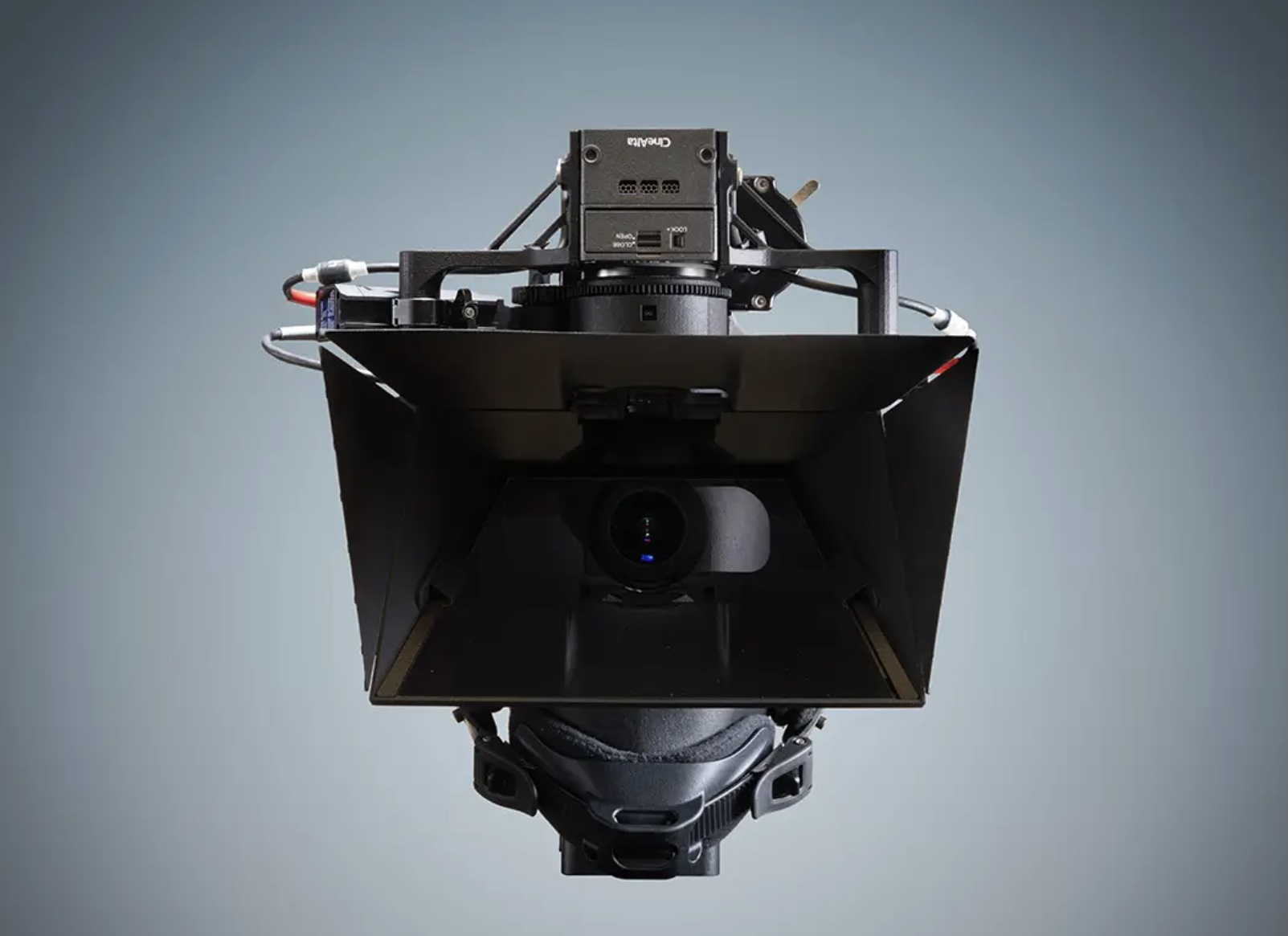
A POV, or Point of View, camera rig, is a wearable support system that helps filmographers capture first-person footage, making the images more immersive. Some good examples of movies shot with POV cameras include horror films The Blair Witch Project, Paranormal Activity, and Cloverfield. Unfortunately, these rigs aren’t foolproof. The camera setup itself either gets in the way of the shot, or the footage captured isn’t an exact match for what the human eye sees. Cyclops POV, called “the world’s first” professional POV camera system, was designed to fix both of these issues.
“Having shot many projects in the past that required a point of view solution, I was never satisfied with the on-set experience or the resulting footage,” said James Medcraft, the founder of Cyclops POV.
This geometrically complex, head-mounted rig was developed by Medcraft, a cinematographer, to capture footage precisely as the operator sees it. And, no surprise, 3D printing was used to make the Cyclops a reality. According to a case study by UK digital inventory platform and additive manufacturing (AM) service 3D People, the technology “became the foundation for how the product was built and produced.”
Specializing in production-grade parts, 3D People wants to make manufacturing more accessible, while maintaining a high level of quality. All the projects that the company works on are made in its London facility with powder bed fusion technology and high-quality finishing solutions. 3D People is no stranger to very specific requests, and makes parts for clients in a variety of industries, such as automotive, engineering, energy, construction, product design, and film.
The Cyclops POV rig doesn’t fit into a neat and orderly traditional manufacturing box. It features parts with complex geometries, they’re all fairly low-volume, and the design is still evolving. That’s why AM was so useful for this particular project. You can produce parts directly from CAD without any tooling or minimum order quantities, and, as the case study specifies, “without redesigning around manufacturing limitations.” So instead of devolving into an assembly of simpler parts, Cyclops is an integrated system.
3D printing technology was also particularly helpful in terms of efficient iteration. If any changes needed to be made to the design of Cyclops during the process, 3D People could make them and test the new design in just days, rather than weeks.
“The primary challenges were iterative testing at speed, which was where 3D People gave me some great support,” Medcraft said.
“I worked with 3D People through the prototyping stages of Cyclops and now use them for manufacturing the final parts.”
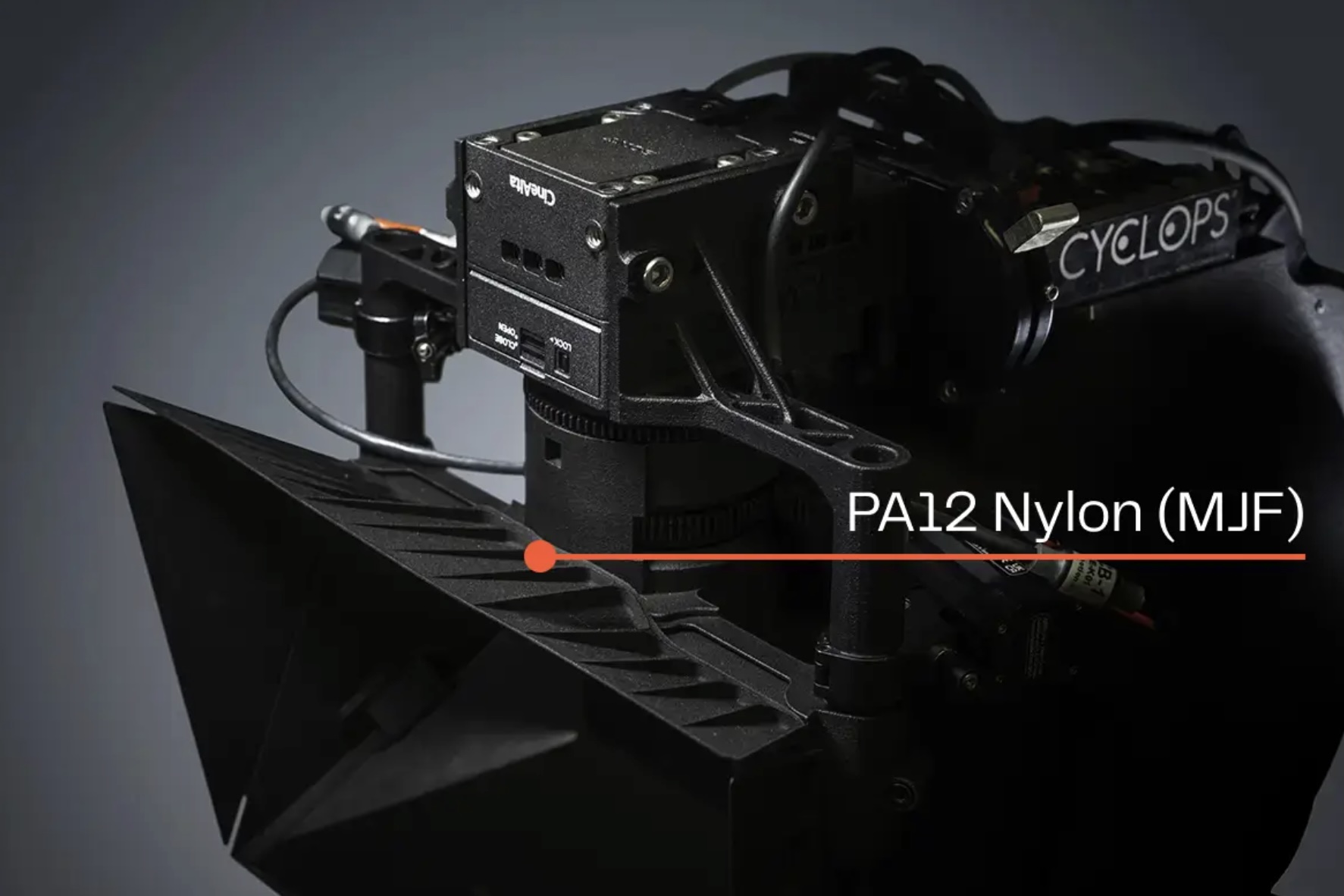
Medcraft has a background in 3D design, so he definitely knew what he was doing while working with 3D People on the Cyclops. Due to its “inherent isotropic strengths and design freedom,” PA12 was used to 3D print the POV rig parts, seemingly with HP’s Multi Jet Fusion (MJF) technology.
The rig is built around the Sony E-Mount, and is compatible with the Venice Rialto or FX3 camera extension systems. It uses custom optics to reflect the operator’s view right into the camera. This captures the natural field of view and depth of field, but because it’s head-mounted, the Cyclops leaves the operator’s hands free for more flexibility while interacting with a scene.
View this post on Instagram
Because of how specific the rig is, 3D People had to work around unusual geometries and tight packaging, while also consistently balancing strength, weight, and usability. But they were more than up to the task.
Medcraft said, “The best 3D printing service provider isn’t just a company with lots of machines but a team that understands their customers’ products.”
While it may not be a major application like submarine components or medical devices, the 3D printed Cyclops POV rig is a perfect example of using the technology when it can truly add value.
Subscribe to Our Email Newsletter
Stay up-to-date on all the latest news from the 3D printing industry and receive information and offers from third party vendors.
Print Services
Upload your 3D Models and get them printed quickly and efficiently.












You May Also Like
Why the AM Industry Should Pay Attention to Schneider Electric’s $22.6B PTC Acquisition
By late 2024, there was already enough signaling of the additive manufacturing (AM) industry opportunity in the data center infrastructure market for AM Research to write a report on the...
How Does Nike’s 3D Printing Approach Fit Into Its Restructuring Plan?
Shares of Nike stock hit all-time highs in late 2021 but have cratered in the years following, with the company losing nearly 80 percent of its market cap since peaking....
3D Printing News Briefs, October 1, 2026: Defense, Enclosures, & More
In today’s 3D Printing News Briefs, we’re starting with defense news, first from Massivit and then from AML3D. Then we’ll move on to U.S. manufacturing of a new large-format LPBF...
South Korea’s Lincsolution Lands Hanwha Defense Deal as Hanwha Invests Billions in US
I recently wrote about how the South Korean additive manufacturing (AM) firm Lincsolution is building an aerospace and defense hub, part of the company’s construction of “the largest AM facility in...