6K Energy Secures 7-Year Agreement to Supply CRG Defense with Battery Materials


Last year, the US Federal Communications Commission (FCC) announced a ban on certain components sourced from foreign suppliers, including Chinese firms, used in unmanned aerial systems (UAS). Meanwhile, the FY 2026 defense budget introduced a host of new bans on DoD sourcing of critical materials and components from foreign entities of concern (FEOC) (a list that includes China), with batteries among the principal product categories banned.
While both of those moves make sense from a strategic perspective, they obviously create near- and intermediate-term difficulties for US defense supply chains, given the extent of Chinese dominance in the production of both drones and batteries. From an inverse angle, the bans of course also create opportunities for companies like 6K Inc., as we can see from the deal that division 6K Energy just announced to supply Ohio-based contractor CRG Defense with NMC811 (Nickel-Manganese-Cobalt) cathode materials.
Via the deal, 6K Energy will supply CRG Defense for seven years, in accordance with a Quarterly Purchase Plan that should provide both parties with a long-term baseline of stability in planning operations. Beginning in early 2028, when 6K anticipates its PlusCAM facility in Jackson, Tennessee, coming online, 6K expects to ramp up supply along a similar timeline to what CRG Defense is working towards for its own production ramp-up.
6K Energy has been supported over the years by several US government grants from both the DoD and the Department of Energy (DOE), including a ~$2 million grant from the Defense Logistics Agency (DLA) in December 2025, and $50 million from DOE back in December 2023, towards the construction of the Jackson plant. Both 6K Energy and its counterpart division, 6K Additive, have also received significant venture backing over the years.
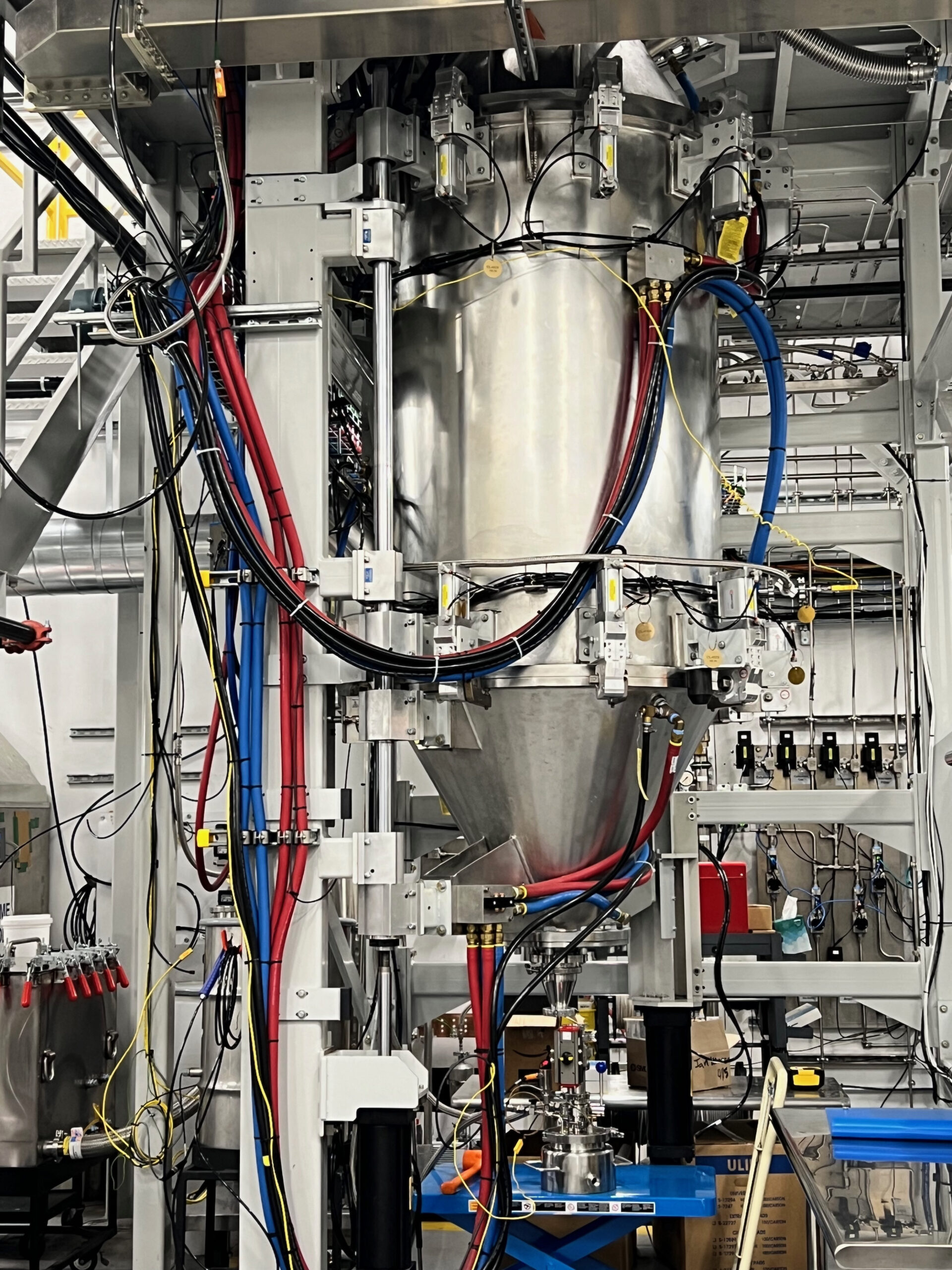
6Ks UniMelt. Image courtesy of 3DPrint.com.
In a press release about 6K Energy’s deal to supply CRG Defense with battery materials, Patrick Hood, the CEO of CRG Defense, said, “The shift to domestic sourcing for critical UAS components represents both a challenge and an opportunity for the defense industrial base. By partnering with 6K Energy, we are ensuring current and future access to the domestic materials necessary to supply our customers with secure energy solutions for critical defense applications. Our drone platforms will now be powered by technology that is truly American made from the chemistry up.”
Meanwhile, Saurabh Ullal, President of 6K Energy, indicated that, “Rebuilding a resilient US battery supply chain requires both early commitment and long‑term partnerships. This agreement marks the beginning of a strategic relationship with CRG Defense as we invest in the infrastructure and technology required to remove reliance on foreign sources. Our PlusCAM facility is designed to deliver sustainable, battery‑cathode material at scale for the most demanding defense applications.”
While the partners haven’t yet mentioned any direct connection to additive manufacturing (AM), CRG Defense does seem to have pretty robust AM capabilities. Additionally, since the firm works with customers on product development, it’s possible that even if AM has nothing to do with the company’s current plans for its battery manufacturing workflow, customer demand could end up pushing things in that direction.
Along those lines, it’s notable that drone batteries are one of the primary applications that CRG Defense seems to be targeting, as conformal batteries for drones are an emerging AM use-case being worked on by companies like Florida-based startup Material Hybrid Manufacturing. The intriguing advantage there isn’t solely the potential to increase domestic production capacity, but also the ability to reduce battery weight or increase flight-time by leveraging otherwise unused space in a drone’s internal design features.
In any case, the fact that CRG Defense is so familiar with AM implies an opportunity for synergy between 6K’s two divisions, regardless of whether or not CRG decides to 3D print batteries. The possibility of targeting customers who are exposed to both AM and batteries is certainly one of the secret weapons for 6K’s long-term business model.
Against the backdrop of what’s widely considered the worst oil supply shock of all time, batteries can no longer be viewed simply as “green energy”, whatever one’s opinions happen to be on what that phrase represents. Sustainability is security, as the world’s most powerful decison-makers have already realized for years. Everyone else is about to realize that, too.
Featured image courtesy of 3DPrint.com
Subscribe to Our Email Newsletter
Stay up-to-date on all the latest news from the 3D printing industry and receive information and offers from third party vendors.
Print Services
Upload your 3D Models and get them printed quickly and efficiently.













You May Also Like
The Frankenservice Part 1: Print the Rainbow
So far, most service bureaus and manufacturing companies stick to what they know. Not only for OCD reasons, but gleaming lines of identical LPBF machines are also arrayed on impossibly...
Beyond the Machines: What Stood Out at Formnext Shenzhen 2026
Coming away from Formnext Asia Shenzhen 2026, my biggest takeaway wasn’t “how many new printers were unveiled”; after all, quite a few established traditional 3D printing brands didn’t show up....
3D Printing Financials: New Money Flows Into Medical, Industrial and AI 3D
Money continued to move into 3D printing in the second half of August. Hike Medical raised $22.5 million as it grows its 3D printed custom medical device business. Swiss additive...
3D Printing Financials: 6K Additive Sales Rise as Aerospace and Defense Demand Grows
6K Additive (ASX: 6KA) grew rapidly in the first half of 2026 as demand for its metal powders increased, particularly from aerospace and defense customers. The newly public company also...