
Aectual Launches Boxy: A Modular, Customizable Planter System 3D Printed with Recycled Materials

I do not have a green thumb in even the broadest sense of the term. I have a black thumb. Plants die around me, I cannot keep them alive. But that doesn’t mean I don’t appreciate a nice arrangement. Planters are perfect for this, and 3D printing is perfect for planters! Dutch additive design firm Aectual has developed the modular, customizable Boxy planter system, 3D printed from recycled materials and designed to personalize your space.
I really like Aectual. I think its products—from flooring and facades to partitions and pavilions—are attractive and eye-catching, and I appreciate its mission to work with recycled waste-streams and plant-based materials to enable no-waste (or at least very little waste) commercial interiors.
Through its Circular Take Back Service, the company takes its used products and shreds them, creating materials to make new products with robotic arm 3D printing. Plus, all of its pieces are on-demand, so that helps in reducing waste.
“The building industry is responsible for ~30% of the World’s waste and ~40% of newly mined materials. Commercial interiors are changed every 5-7 years and often faster. Making interior changes a perpetual waste production and likely the largest carbon creator, next to concrete and steel in the AEC industry,” the company writes on its website.
“Over a period of 50 years, our radical recycling can reduce material use with 600%.”

Planters are one of the customizable recycled material products Aectual makes. Each of its new Boxy modules are made from a material called PolyAL; this is the polymer and aluminum left over from beverage carton recycling. The company says that on average, one of its 3D printed planters reuses 1,800 of these cartons.
The Boxy system’s modules can be connected to each other to form a continuous feature, which, as Aectual says, “adds texture, warmth, and acoustic comfort to any space.” You can basically make the dividers as long as you want, whether you just want to add a small accent, subtly divide up a space, or even create a super-long living plant wall. The height is customizable between 37-100 cm, with length ranging from 37-128 cm. As an example, a 10-meter planter could be made up of nine connected modules.
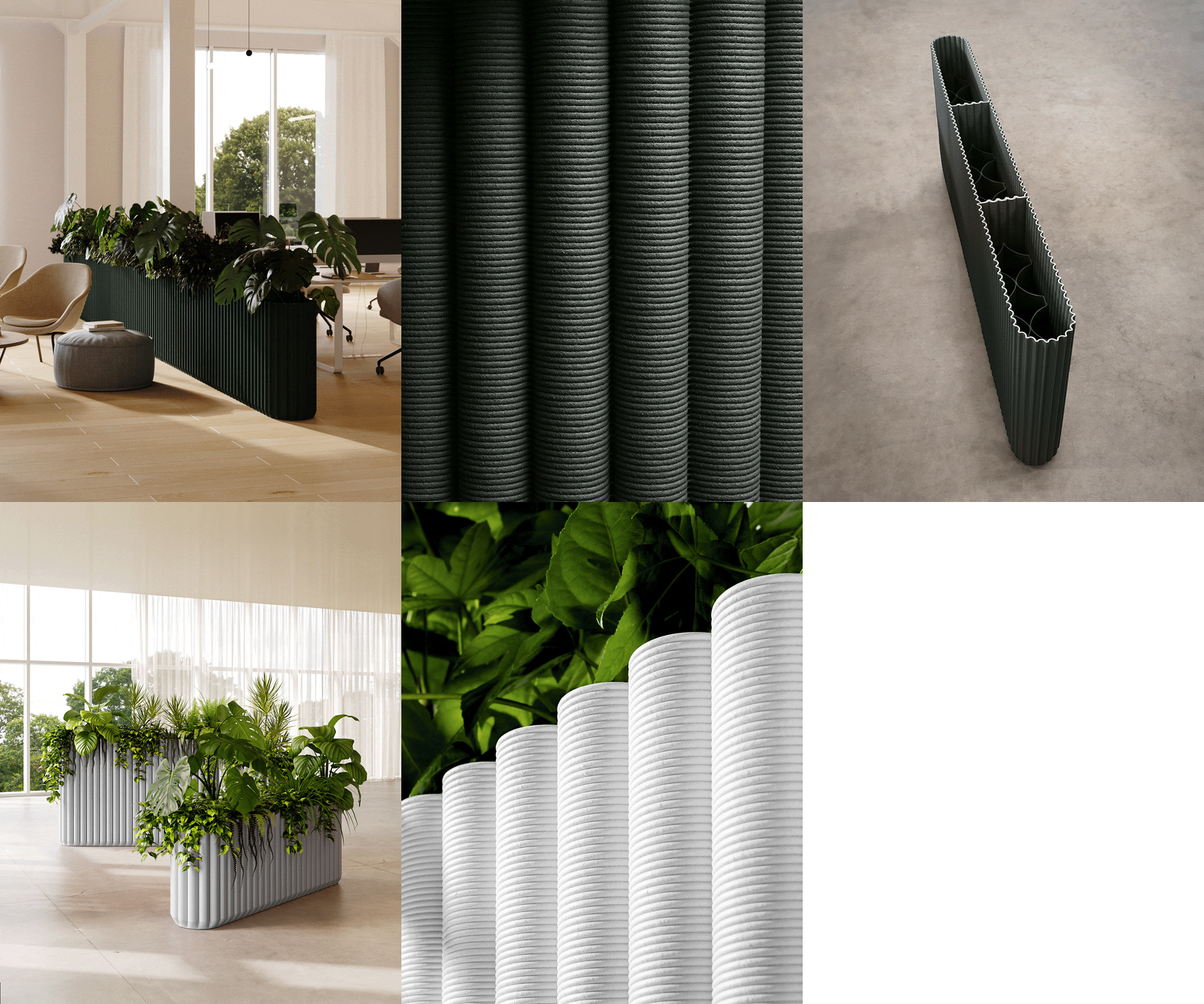
Instead of just purchasing a pre-designed Boxy system, you design your own using Aectual’s online Configurator. You can choose from 13 colors, like Terracotta Red, Pale Pink, and Marine Blue, and either a rectangular or chamfered shape. Available texture patterns are Halfpipe, Cannelure, Pleats, and Waves, which improve acoustics and align with the company’s Wrap Wall Panels for a more cohesive look. You can also add casters to the bottom of your planters, so you can move them around more easily.
Any Boxy system that you create with the Configurator includes 3D printed inner liners made of polypropylene (PP), though the number changes with the length of the modules. That 10-meter planter I talked about earlier? Each one of its nine modules would contain four of these liners.
However, if you’re interested in a really long, customized planter, you can go to the Systems page on Aectual’s website, open the Boxy Configurator, and enter the exact length you want. It will automatically generate the optimal layout for your Boxy system by calculating how many modular elements you’ll need for that length. This comes with all of the same customization choices, but the inner liners are not included.
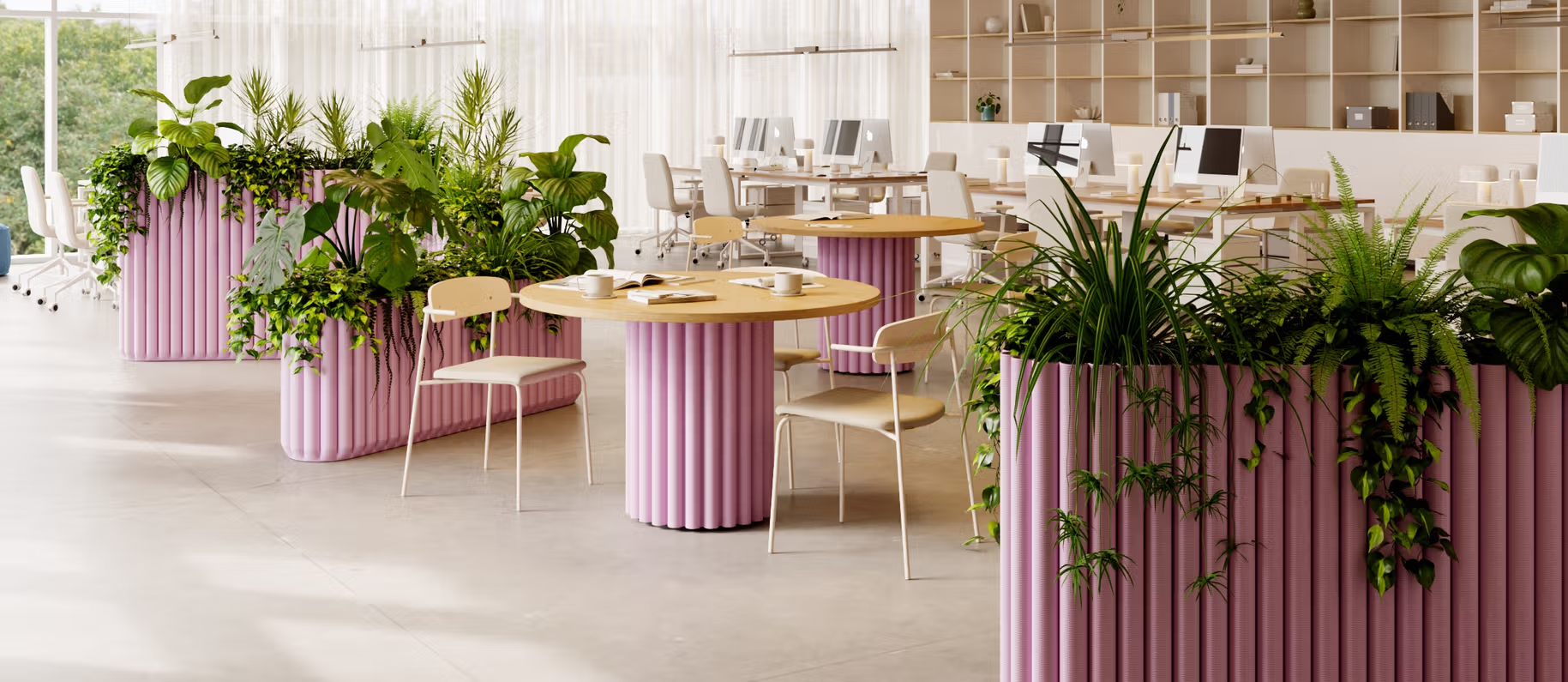
I think this kind of customizable consumer product is an ideal application for 3D printing. There are many options, but not an unlimited amount, so the decision-making doesn’t take unreasonably long. It’s a circular process, so people can feel good about the product they’re buying. The Boxy system is also versatile enough that it could be used in multiple locations. This would be a great option for something like a retail space that changes its displays a lot, but would also be just as at home in someone’s home.
Images courtesy of Aectual
Subscribe to Our Email Newsletter
Stay up-to-date on all the latest news from the 3D printing industry and receive information and offers from third party vendors.
Print Services
Upload your 3D Models and get them printed quickly and efficiently.













You May Also Like
3DPOD 315: Dirk Simon, from BASF to Farsoon to FKM, and now Square New Business
Dirk Simon had already spent years in the chemicals industry before joining and pioneering BASF‘s 3D printing effort. We get to hear how that firm looked at 3D printing and...
The Frankenservice Part 2: Have Your Cake and Eat it Too
This series of articles delves into a thought experiment. What if we let go of using a few machines very optimally, but instead use lots of different machines to meet...
3D Printing Financials: New Money Flows Into Medical, Industrial and AI 3D
Money continued to move into 3D printing in the second half of August. Hike Medical raised $22.5 million as it grows its 3D printed custom medical device business. Swiss additive...
3D Printing Financials: Aerospace and Defense Help Materialise Manufacturing Rebound
Materialise (Nasdaq: MTLS) grew revenue and profit in the second quarter of 2026, as its Medical business continued to expand, and stronger aerospace and defense demand helped its Manufacturing segment...























































