Applied Acoustics Uses Additive for Subsea Gear

Subsea equipment has to be rugged, temperature-resistant, and able to cope with the long-term effects of saltwater. Extreme pressure and pressure changes are also problems endemic to this industry. Subsea equipment is also low volume, with a lot of specialized gear being unique or available in production runs of a few dozen or hundreds. Due to this, subsea companies have turned to additive manufacturing for decades to make components.
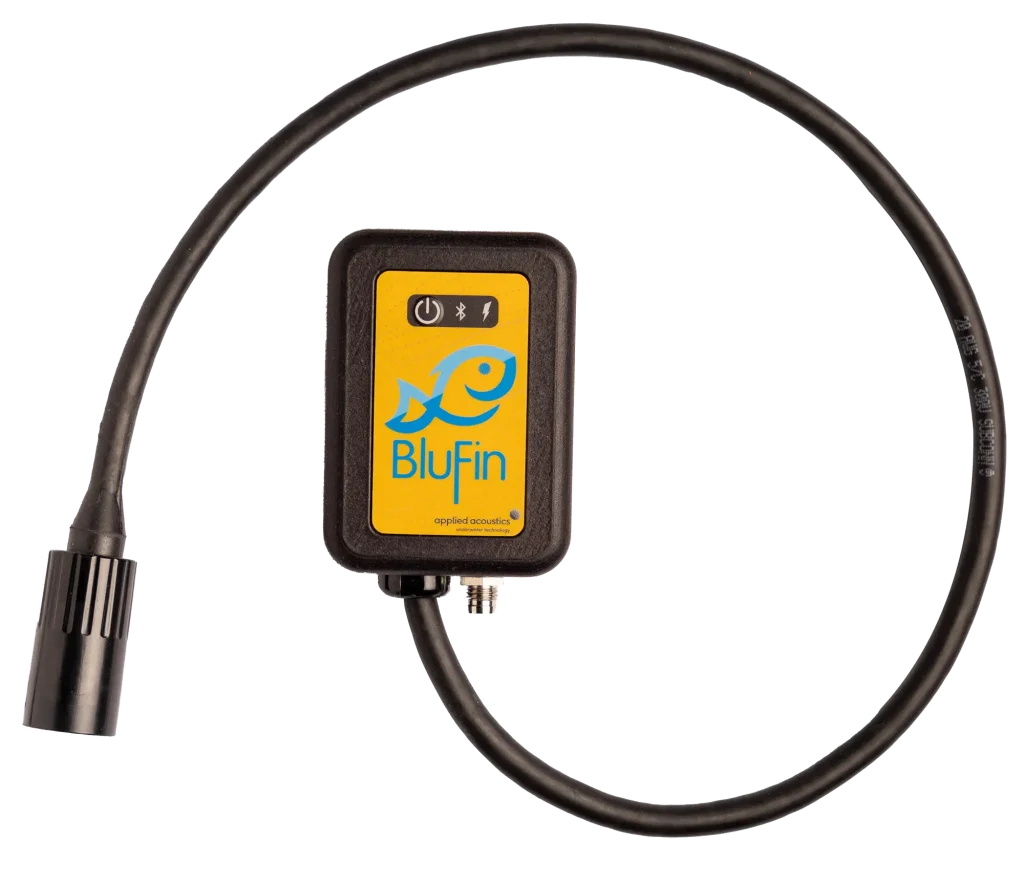
BluFin beacon tester. Image courtesy of Applied Acoustics.
Now, UK-based firm Applied Acoustics has worked with 3D People to make subsea equipment. One component was a PCB housing for its BluFin beacon tester. That could not be sourced cheaply from stock components, and tooling was cost-prohibitive given the volumes. The company initially tried to make components using desktop Material Extrusion before turning towards Powder Bed Fusion. The company said, “After many years of using conventional manufacturing processes, 3D printing has allowed us to create bespoke parts which in the past would not have been possible due to cost.” The component was made out of PA12, which was tumbled and dyed. That closed the surface of the component, making it more durable.
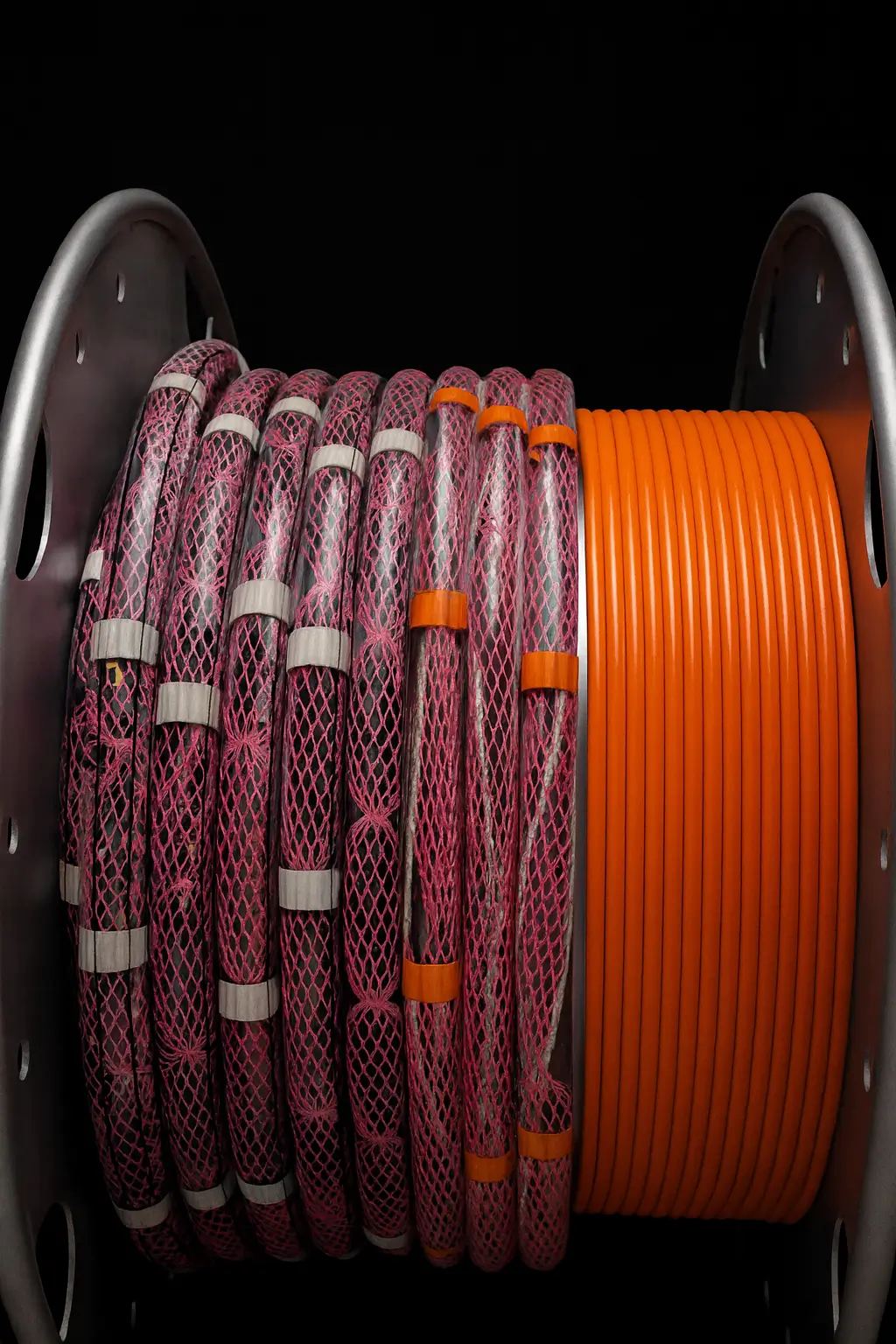
Applied Acoustics’ subsea cables equipped with 3D printed array spacers. Image courtesy of Applied Acoustics.
Another component the two companies worked on was the HydraSeis Multi-Channel Seismic Streamer. This is an in-water seismic data acquisition system. For this system, Powder Bed PA12 nylon spacers are used. These spacers are installed in an oil-and-sensor-filled cable, keeping its structural integrity and form intact. In the image above, you can see the orange and white spacers. The orange ones are there to let personnel know that this area could perhaps be stretched, whereas they should be more delicate with the areas that contain white spacers.
The components were first prototyped, then larger runs were tested, and are now produced on demand for the product’s production version. Faster time-to-market, design freedom, and lower up-front costs were among the perceived benefits of this approach. We’ve seen some previous examples of subsea components that were shepherded by DNV and delivered by firms such as Aker Solutions. In 2016, we learned that Fugro was also using 3D printing to make a LIDAR housing.
Given the limited volumes and very specific designs, housings for subsea products and components are actually a great fit for additive. Personally, for the housing, I would have looked at something like painted or sealed Material Extrusion ASA thermoplastic first. Generally, however, 3D printing methods and materials of all types are potentially suited to marine and subsea applications. Depending on depth, temperature, and long-term use, many parts will not last very long. Even then, it could still make sense. In other cases, 3D printed polymer parts can last for years of intense tough use. The subsea industry and marine in general are often overlooked in 3D printing. Through having high-value, low-volume products with specific designs and particular uses, the industry is an excellent match for additive manufacturing. More firms should explore whether 3D printing can make better housings, connectors, internal components, and mechanical components for their durable underwater components.
Subscribe to Our Email Newsletter
Stay up-to-date on all the latest news from the 3D printing industry and receive information and offers from third party vendors.
Print Services
Upload your 3D Models and get them printed quickly and efficiently.











You May Also Like
Printing Money Episode 34: Formnext Review and Q3 2025 Public 3D Printing Earnings Review with Troy Jensen, Cantor Fitzgerald
Welcome to Printing Money Episode 34, or “The one where they got back ahead of the curve.” Troy Jensen (Managing Director, Cantor Fitzgerald) returns for back-to-back appearances in the name of...
3DPOD Episode 282: 3D Printing Across Applications with Mark Reibel, SpecCoat
Mark Reibel has deep experience in Additive working for HP, ExOne, Holo, Xometry, Stratasys, and Solid Concepts. With over 23 years in 3D printing, Mark has seen it all. With...
3DPOD 281: Freemelt CEO Daniel Gidlund on E-Beam PBF Metal AM
Daniel Gidlund leads Freemelt, a company that has been steadily establishing its place in metal AM with open-source thinking and a clear technical vision. In this episode, he walks us...
3DPOD 280: Velo3D CEO Arun Jeldi
Arun Jeldi has a manufacturing firm that caters to the defense community. When Velo3D was in trouble, he swooped in to save the LPBF firm. He is now reorganizing the...