Pelagus 3D Signs On to Advance Singapore Joint Industry Project

Pelagus 3D is criminally under-talked about in additive. The Singapore-based maintenance, repair, and operations (MRO) firm is a joint venture between industrial engineering and steel company ThyssenKrupp AG and marine services firm Wilhelmsen. The German and Norwegian firms have been working together to develop an additive-forward MRO firm in Singapore. Now, they are partnering with Maritime and Port Authority of Singapore (MPA), NAMIC, and A*STAR on the joint industry project (JIP) Phase 3. NAMIC is Singapore’s national additive manufacturing organization, while A*STAR is kind of Singapore’s version of Fraunhofer, commercializing university research and helping with strategic R&D initiatives.
The team will work on a digital warehouse of qualified, 3D printed MRO parts. Rather than focus on letting users in need of parts make the parts that they need, this initiative will work with original equipment manufacturers (OEMs) of equipment that is broken and needs to be repaired or replaced. This approach is very legalistic and will benefit equipment companies and industrials, perhaps even getting them on board with additive. It will be an uphill battle convincing them, however, and the initiative risks being bogged down through legal complexities and high costs. But, if they pull it off, millions of parts could become available for repair through 3D printing. If you think that the part geometries are what will drive adoption, then this is a good approach. But, if you think it’s broken parts and interrupted commerce, you’ll focus more on scanning and repairing parts without the OEMs being involved. What is the right way to think about this? In terms of growth, we cannot be sure yet which approach works best.
In addition to OEMs, the collaborating organizations wish to work with other manufacturing companies, as well as the industrial and maritime firms that will be customers. This project has been underway since 2019, and since then, qualification, QA, and parts identification have been undertaken. The project team has worked with American Bureau of Shipping (ABS), Bureau Veritas (BV), DNV, and Lloyds Register (LR). The companies have also worked with Kawasaki Heavy Industries and Wärtsilä, among others, and have put qualified, tested parts on ships.
NAMIC CEO Dr Ho Chaw Sing, stated,
“Building on the earlier successes of Phases 1 and 2, the MPA-NAMIC JIP Phase 3 represents a big leap forward for the maritime sector to improve marine spare parts availability through digital and hybrid (additive and subtractive) manufacturing with no minimum order quantity. Through Pelagus’ on-demand manufacturing platform, OEMs will be able to provide ships with their OEM-certified spare parts produced by qualified manufacturing partners. By moving to a digital manufacturing model, we can reduce inventory overhead and tackle parts obsolescence, strengthening supply chain resilience for the maritime sector. Through close collaboration with our industry partners such as Pelagus 3D and the Maritime Port of Authority, NAMIC is committed to helping companies through technology translation and adoption for business innovation and value capture, strengthening Singapore’s position as the premier port hub and container transhipment.”
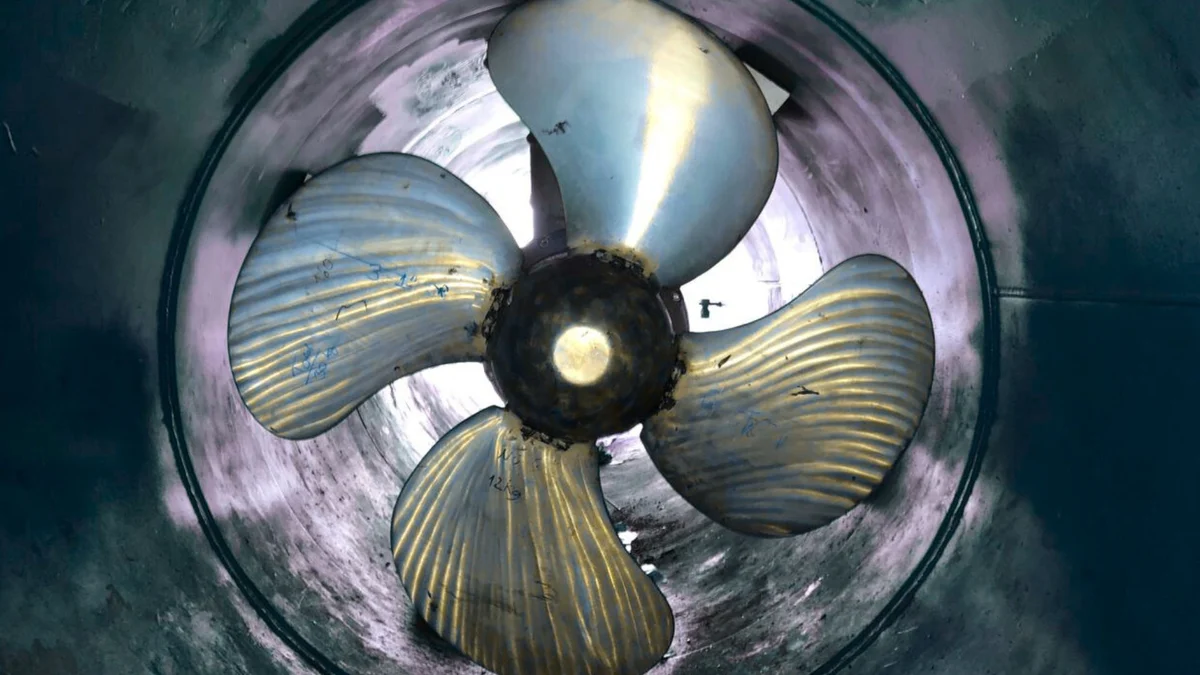
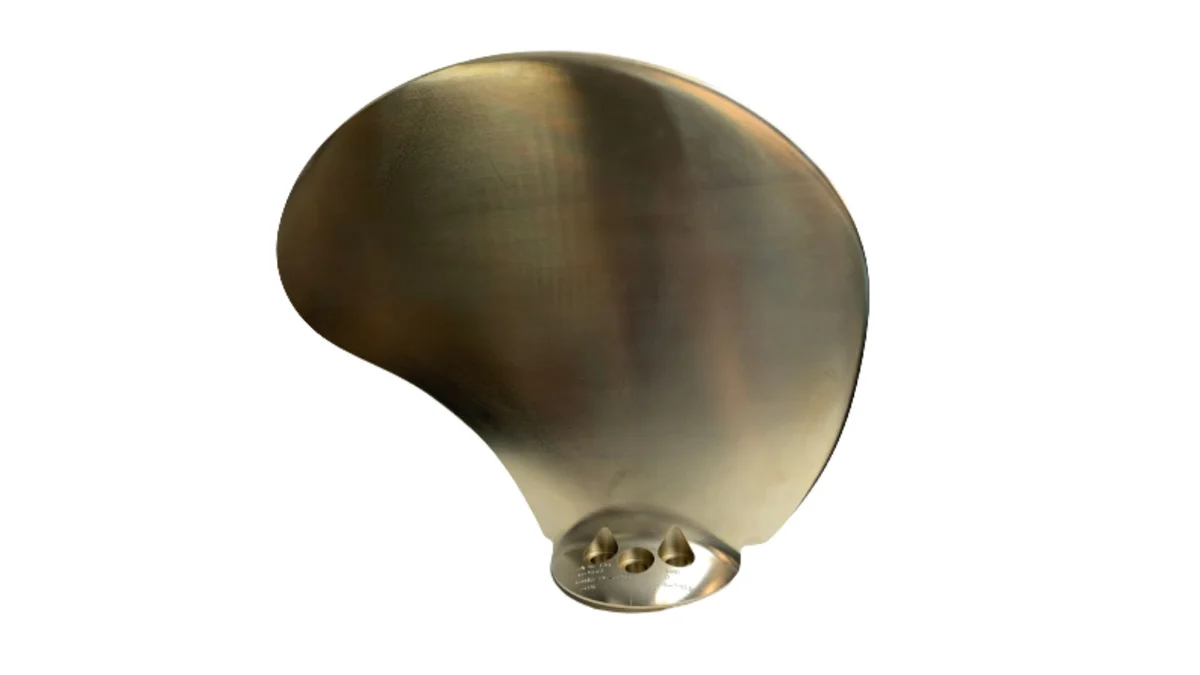
Published cases include a Kawasaki Heavy Industries-designed propeller blade for a BW Epic Kosan boat. With 50 ships, BW Epic is the largest operator of LPG vessels worldwide. The blade was printed because casting would take too long. The company used the coveted marine material Nickel Aluminum Bronze and WAAM technology to make the part, and said that its properties were in-line with casting.
Aroli Manoj, Head of Technical at BW Epic Kosan, said,
¨We are excited to partner with Pelagus 3D on this project. The WAAM propeller blade and sleeve of the bow thruster were very similar to the original existing blades, and no operational challenges were noted. We look forward to working with Pelagus 3D on other projects.”
Thomas Ting, Chief Digital Officer of the MPA, said,
“Phase 3 of the Joint Industry Project marks a major step forward for the maritime sector, moving from pilot trials to scalable digital manufacturing. This new phase strengthens the entire value chain — from digital inventories to streamlined certification, enabling reliable marine parts to be printed on demand. This capability will enable additional services for ships calling at Singapore and further reinforce our position as a leading hub for ship supplies, repair, and additive manufacturing innovation.”
One important aspect of this new way of making parts is certification. Together with ABS, a new certification process was initiated.
Dr. Gu Hai, ABS Vice President of Technology Pacific, added,
“ABS is proud to work with Pelagus 3D in advancing additive manufacturing for the maritime industry. Through JIP Phase 3, we aim to further streamline the certification process for critical components, integrating digital validation and verification methods to promote safety, reliability, and efficiency. This initiative demonstrates ABS’s commitment to supporting innovation that enhances supply chain resilience and to setting new benchmarks for performance in maritime operations.”
Pelagus aims to further develop testing and inspection protocols, as well as expand its digital inventory. I think that this is an absolutely fantastic business. If the company dials in production methods such as WAAM with NAB for certified end-use marine parts, it will steal a march on nearly everyone else. WAAM is inexpensive, but finishing and testing can make parts pricey. And if you’d like to compete with them, you’ll probably not be able to get so many standards and certification people in the room. It would take you years of work to get the same level of reliability and traceability as well. So an inexpensive part becomes valuable through process control and signatures. And the craziest thing is that almost no one is competing with Pelagus.
Subscribe to Our Email Newsletter
Stay up-to-date on all the latest news from the 3D printing industry and receive information and offers from third party vendors.
Print Services
Upload your 3D Models and get them printed quickly and efficiently.













You May Also Like
The Money Behind AM: What to Watch at AM Investment Strategies 2026
For years, simply being a 3D printing company could attract attention from investors. New machines, new materials, faster speeds, and the promise of mass production were often enough to get...
Metal AM in a Multipolar World: Resilience, Regional Production and a Changing Market
Technology develops in response to forces driving change. That was the starting point for a keynote I presented with Mikael Schuisky at AM Meetup 2026, held in Karlstad, Sweden, on...
EOS Bets on Mexico’s AM Market with Axiomatek Sales Channel Deal
Mexico is one of the biggest beneficiaries of the push to diversify manufacturing out of China. This development is perhaps inevitable given the current global trade environment, but even with...
3D Printing Market Hits $4.48B After Six Straight Quarters of Growth
The additive manufacturing market continued to grow in the second quarter of 2026, adding another quarter to what is becoming a much more consistent expansion for the industry. Worldwide revenue...